

Medical Disclaimer
The information in this guide regarding Pregabalin is for educational and pharmaceutical research purposes only. It does not constitute medical advice, diagnosis, or clinical treatment recommendations. Pregabalin is a potent anticonvulsant and neuropathic agent that must only be used under the direct supervision of a licensed healthcare provider. Readers are strongly advised to consult a physician or pharmacist before starting treatment to understand the full safety profile, potential for drug interactions, and appropriate tapering protocols.
Pregabalin and gabapentin are frequently discussed together because they belong to the same broad class of medicines and are often considered in similar clinical contexts. Patients, caregivers, and online health resources commonly ask which is better pregabalin or gabapentin, but this framing can be misleading if taken too literally. In medical practice, “better” is rarely a fixed or universal concept—it depends on context, regulation, and individual patient factors.
This article provides a neutral, educational comparison of pregabalin and gabapentin. Rather than recommending one medicine over the other, it explains why they are compared, where their similarities lie, and what clinicians typically consider when evaluating them. The goal is to support informed conversations alongside professional medical advice, not to replace it.
What Are Pregabalin and Gabapentin?
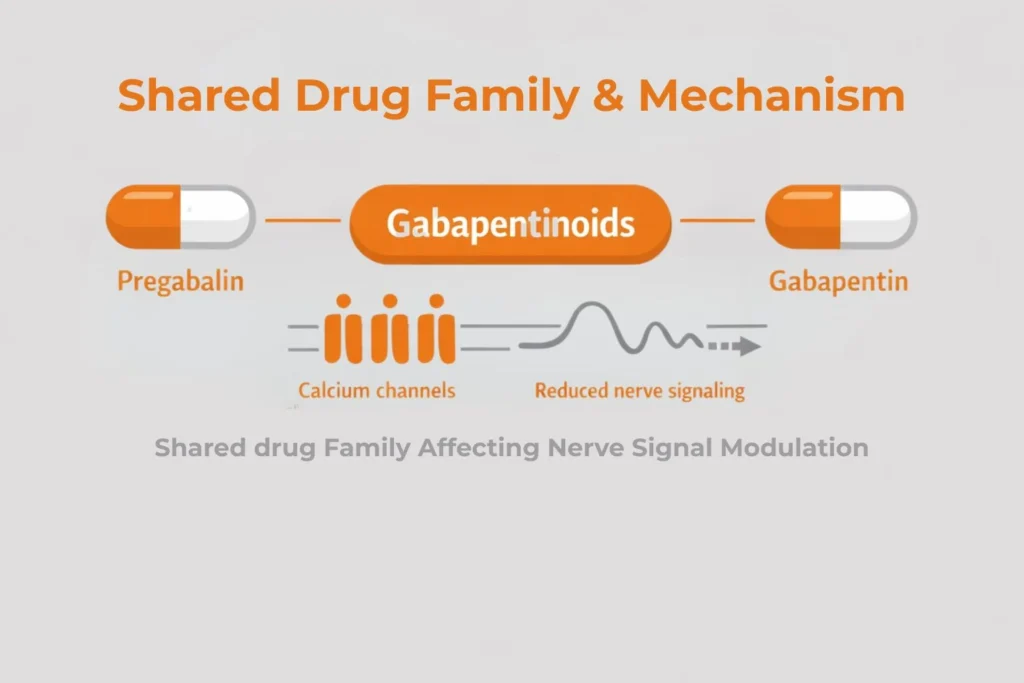
Pregabalin and gabapentin are prescription-only medicines that belong to the same drug family, commonly known as gabapentinoids. This group of medicines emerged from neurological research focused on understanding how nerve signalling can become altered in certain medical conditions. Over time, both medicines have become widely recognised in clinical discussions involving the nervous system, particularly where abnormal or excessive nerve activity plays a role.
Gabapentin was introduced first and has been used in clinical practice for several decades. Its longer history means it is well documented across multiple healthcare systems. Pregabalin was developed later as a closely related compound, with the intention of refining certain pharmacological characteristics observed with gabapentin. As a result, pregabalin is often described as having more predictable behaviour in the body, particularly in how it is absorbed and processed, although this does not imply that it is universally preferable.
Despite their shared origins and similar mechanisms of action, pregabalin and gabapentin are licensed and regulated as separate medicines. They have distinct prescribing information, regulatory classifications, and monitoring considerations. This distinction is important, as it means they are not considered interchangeable without medical oversight, even though they are frequently discussed together.
Both medicines act on the central nervous system and are commonly referenced during diagnosis, treatment planning, or medication reviews that involve altered nerve signalling. Patients may encounter both names when exploring treatment options or when a clinician is reassessing therapy based on response, tolerability, or regulatory guidance. Their frequent appearance in the same conversations is a key reason why questions such as which is better pregabalin or gabapentin arise so often.
For readers seeking a more focused educational explanation of pregabalin, including how it is commonly discussed in clinical contexts, the following internal resource provides additional background:
What Is Pregabalin 75 mg Used For?
Key Takeaways
- Pregabalin and gabapentin are part of the same gabapentinoid medication family.
- Both are prescription-only medicines that act on the nervous system.
- Gabapentin has a longer history of clinical use, while pregabalin was developed later as a related compound.
- Shared characteristics often lead to direct comparison, but they remain distinct medicines with separate regulation and prescribing considerations.
How Pregabalin and Gabapentin Work (High-Level Overview)
At a simplified level, both pregabalin and gabapentin influence how signals are transmitted within the nervous system. They do not act directly on pain receptors or emotional centres. Instead, they bind to specific calcium channels involved in nerve communication.
By modulating these channels, both medicines can reduce excessive or abnormal nerve signalling. This explains why they are frequently discussed in neurological and nerve-related contexts. Their action is indirect and modulatory rather than suppressive.
Although their core mechanism is similar, subtle differences in how they are absorbed and processed by the body can influence prescribing decisions. These differences are important clinically, but they do not automatically answer the question of which is better pregabalin or gabapentin.
Key Takeaways
- Both medicines influence nerve signal transmission.
- Their mechanisms explain overlapping medical discussions.
- Differences are clinical nuances, not value judgments.
Common Medical Contexts Where Pregabalin and Gabapentin Are Discussed
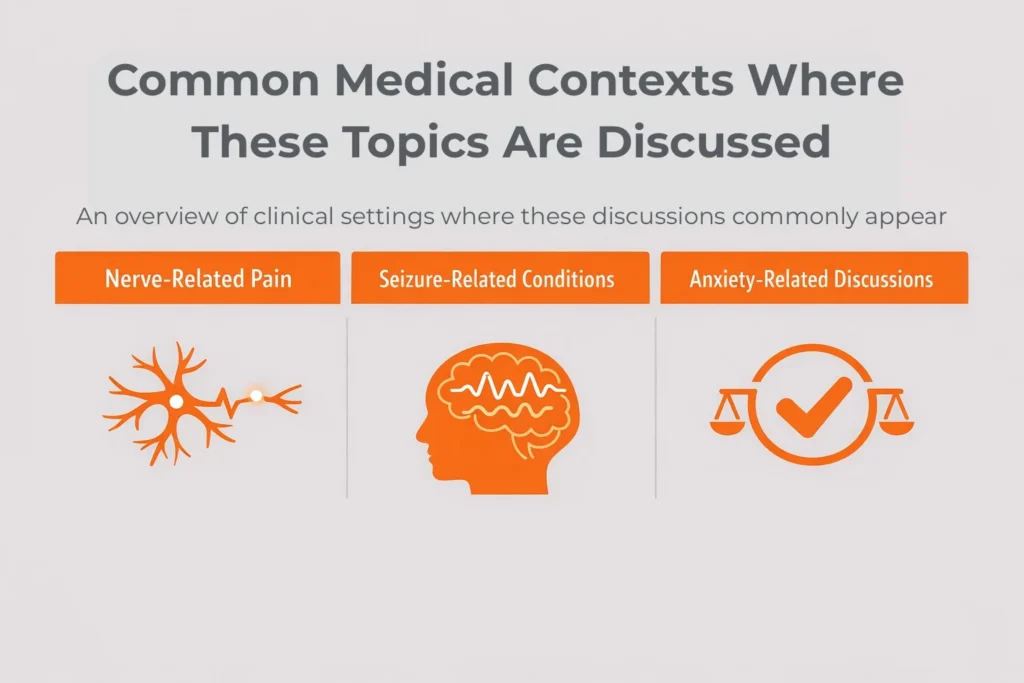
Pregabalin and gabapentin are most often compared because they appear in overlapping clinical discussions rather than because they are interchangeable. Their shared mechanism of action places them in similar therapeutic conversations, particularly those involving altered nerve signalling. Understanding why they are discussed in these contexts helps clarify why the question of which is better pregabalin or gabapentin does not have a single, universal answer.
Nerve-Related Pain
One of the most common contexts in which pregabalin and gabapentin are discussed is neuropathic, or nerve-related, pain. Unlike pain caused by inflammation, injury, or tissue damage, neuropathic pain arises from dysfunction or abnormal signalling within the nervous system itself. Patients may describe it as burning, tingling, shooting, or electric-like sensations.
Because both medicines influence how nerves transmit signals, they are often evaluated in this setting by healthcare professionals. Their role is not to block pain directly, but to modulate abnormal nerve activity that contributes to persistent symptoms. This shared role explains why patients may encounter both options during consultations, medication reviews, or treatment adjustments.
Importantly, the presence of both medicines in neuropathic pain discussions does not imply that one is inherently superior. Clinical decisions are shaped by factors such as patient history, response to previous treatments, tolerability, and regulatory guidance.
Seizure-Related Conditions
Pregabalin and gabapentin were originally developed through epilepsy and seizure research, which remains an important part of their clinical identity. Both medicines may be discussed as adjunctive, or add-on, therapies in certain seizure-related conditions rather than as standalone treatments.
Their use in this area reflects their ability to stabilise abnormal electrical activity in the brain. This stabilising effect is linked to their action on calcium channels involved in neuronal communication. While their neurological effects are central to this discussion, they are not classified as traditional sedatives, and their role in seizure management is distinct from that of older anticonvulsant medicines.
The historical connection to epilepsy research also explains why these medicines are frequently grouped together in educational materials and clinical comparisons.
Anxiety-Related Discussions (Regional Differences)
In some regions, particularly within specific regulatory frameworks, pregabalin is discussed in relation to anxiety disorders. These discussions are shaped by formal approvals and national prescribing guidelines rather than by informal comparisons of effectiveness. In contrast, gabapentin is less commonly referenced in anxiety-related contexts, although off-label discussions may occur in certain healthcare systems.
These differences often cause confusion among patients, leading to assumptions that one medicine is “better” for anxiety than the other. In reality, regulatory approval reflects evidence review and policy decisions within a given region, not a universal hierarchy between the two medicines.
As with other contexts, healthcare professionals consider individual patient factors, regulatory guidance, and safety considerations when discussing either medicine in relation to anxiety.
Key Takeaways
- Pregabalin and gabapentin are commonly discussed in neuropathic pain because they influence abnormal nerve signalling.
- Their seizure-related use reflects their origins in neurological and epilepsy research.
- Anxiety-related discussions vary significantly by country and regulatory approval, not by inherent superiority.
- Overlapping contexts explain why comparisons arise, but they do not establish that one option is universally better than the other.
Key Differences Between Pregabalin and Gabapentin
Although closely related, pregabalin and gabapentin are not interchangeable. Clinicians consider several high-level differences when evaluating them.
Some educational resources also focus on how different pregabalin strengths are referenced in clinical discussions, independent of comparison with other medicines.
Absorption and Processing
One commonly discussed distinction involves how predictably each medicine is absorbed. Pregabalin is often described as having more consistent absorption, while gabapentin’s absorption may vary depending on individual factors. This does not imply superiority, but it helps explain why they are assessed differently.
Regulatory Classification
In countries such as the UK, both medicines fall under controlled medicine regulations due to concerns about misuse and dependence. These classifications reflect safety oversight rather than inherent danger when used appropriately. For more context on this topic, see:
Is Pregabalin 150 mg a Narcotic? Drug Classification Explained
Monitoring Considerations
Because both medicines act on the central nervous system, healthcare professionals may apply monitoring strategies tailored to individual patient needs. Differences in regulation and pharmacology influence how this monitoring is approached.
Key Takeaways
- Absorption patterns differ conceptually.
- Regulatory status varies by jurisdiction.
- Monitoring decisions are individualised.
Safety, Dependence, and Regulatory Considerations
Safety discussions around pregabalin and gabapentin often focus on tolerability, misuse potential, and regulatory oversight. Both medicines are considered effective when used appropriately under medical supervision, but neither is without risk.
In the UK, both medicines are classified as controlled substances, reflecting increased awareness of misuse and dependence potential. Similar approaches exist internationally, although classifications vary. These measures are designed to support safe prescribing rather than to label either medicine as unsafe.
Patients may encounter warnings related to drowsiness, coordination, or withdrawal considerations. Such warnings are common with centrally acting medicines and do not imply that one option is categorically safer. Authoritative guidance from sources such as NHS prescribing information and the European Medicines Agency assessment of pregabalin emphasises professional oversight and patient-specific evaluation.
Is One Considered “Better” or “Safer”?
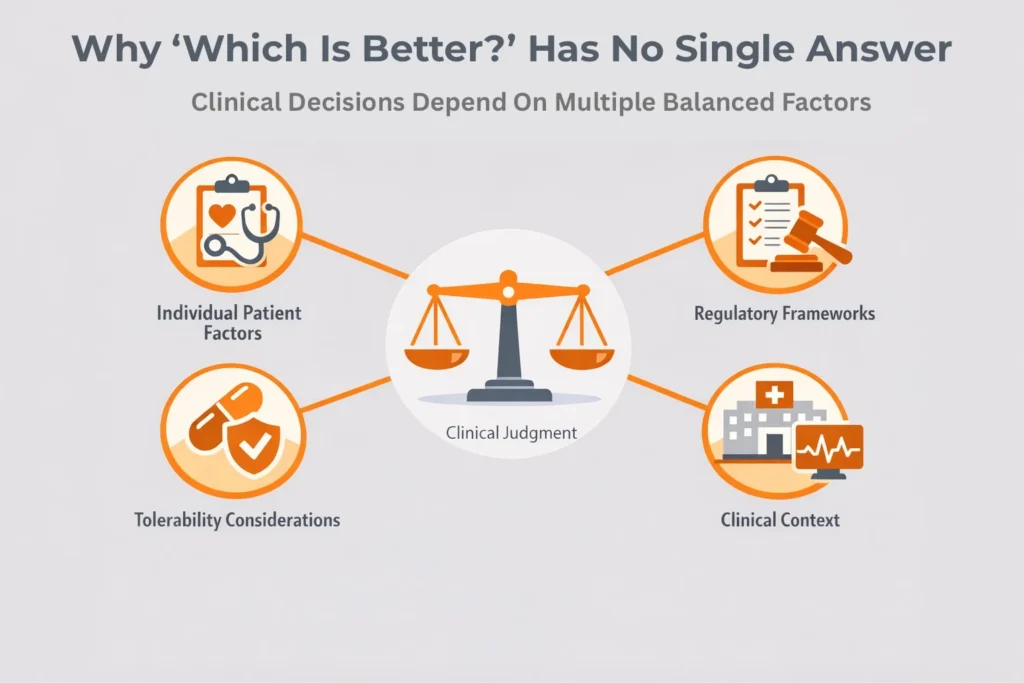
The question which is better, pregabalin or gabapentin is understandable but overly simplistic. In real-world clinical practice, healthcare professionals avoid absolute comparisons.
Neither medicine is universally regarded as better or safer in all circumstances. Instead, decisions are based on diagnosis, previous treatment response, co-existing conditions, regulatory frameworks, and safety considerations. What is appropriate for one patient may not be appropriate for another.
This is why medical guidance consistently emphasises individualised decision-making rather than ranking medicines against each other. The comparison itself is meant to inform, not to deliver a verdict.
Frequently Asked Questions
No. They are related and belong to the same drug family, but they are distinct medicines with separate approvals and considerations.
They work in similar ways and are discussed in overlapping neurological and nerve-related contexts.
Clinical discussions rarely use the term “stronger.” Suitability and patient response are more important than potency labels.
Yes. In the UK and many other countries, both require a prescription and medical supervision.
Yes. Classification and monitoring requirements vary internationally based on local regulatory decisions.
In educational resources, questions around medicine naming, brand versus generic terminology, and how alternatives are described often arise alongside clinical comparisons. These topics are addressed separately within a dedicated pregabalin FAQs and alternatives resource to maintain clarity without repeating core comparison content.
Discussions comparing pregabalin and gabapentin are often accompanied by broader questions about cost and access. To avoid conflating economic considerations with clinical comparison, contextual information on pregabalin pricing, standard pack formats, and regional availability is addressed separately.
Considerations around dosing frequency can also arise when comparing medicines within the same therapeutic class. To maintain a clear separation between clinical comparison and dosage discussion, general information on how pregabalin dosing frequency is discussed in clinical settings is addressed separately.
Conclusion
Pregabalin and gabapentin are closely related medicines that share important similarities while also having meaningful differences. Their frequent comparison has led many people to ask which is better or safer, but such questions rarely have universal answers.
From a clinical perspective, the choice between them depends on context, regulation, and individual patient factors—not hierarchy or preference. Understanding how they are alike and how they differ can help patients and caregivers engage more confidently in discussions with healthcare professionals.
Educational comparisons like this are intended to support informed, balanced conversations grounded in medical guidance rather than assumptions or oversimplified conclusions.
Author Note
This pillar guide was authored and clinically reviewed by Paul Harris, a highly skilled pharmacologist and writer for globalpharmacares.com. Paul holds a Doctor of Pharmacy (PharmD) degree from a top-tier US university and has extensive experience collaborating with hospitals and drug manufacturers to ensure the accuracy of pharmaceutical data. With a deep academic background in the mechanism of action and pharmacokinetics of anticonvulsants, Paul ensures that this comprehensive overview of Pregabalin provides readers with reliable, patient-centered, and medically accurate information.