
Medical Disclaimer
The information provided in this guide regarding Pregabalin 75 mg (branded as Lyrica) is for educational and pharmaceutical research purposes only. It is not intended as a substitute for professional medical advice, diagnosis, or treatment. Pregabalin is a prescription-only neurological medication that must be managed under the strict supervision of a licensed healthcare professional. Due to its classification as a controlled substance in various regions, users must be aware of potential side effects, drug interactions, and the risks of dependence. globalpharmacares.com does not provide medical consultations or endorse self-medication; this content is designed to support patient health literacy and informed clinical discussions.
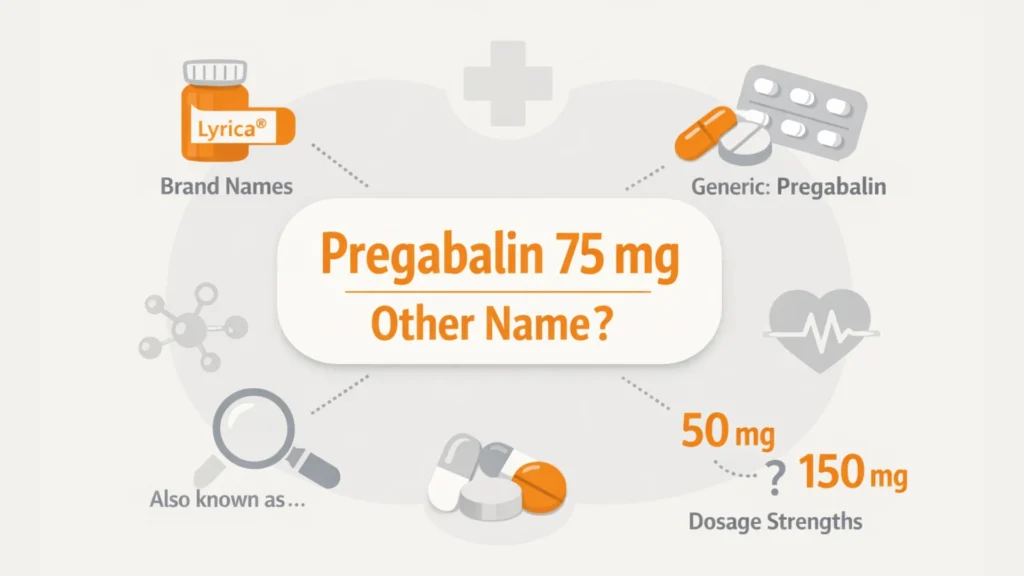
People often search for pregabalin-related information because medicine terminology can feel confusing—especially when generic names, brand names, and strength numbers are used interchangeably. One of the most common search queries, pregabalin 75 mg other name, reflects a simple but important question: is this a different medicine, or just another way of referring to the same one?
This article is written to clear up that confusion. It explains how pregabalin is named, what people usually mean when they ask about “other names,” and how alternatives are discussed in healthcare settings. Everything here is educational only, designed to support understanding—not to guide treatment decisions or provide medical advice.
What Is Pregabalin? (Quick Overview)
Pregabalin is a prescription medicine that belongs to a group of drugs known as gabapentinoids. Medicines in this class are commonly discussed in relation to nerve-related conditions and certain neurological or pain-related symptoms.
At a very high level, pregabalin works by influencing how specific signals are passed along nerves in the body and brain. Rather than acting like a traditional painkiller, it affects nerve signalling pathways associated with sensitivity and overactivity. This explanation is intentionally non-technical and provided purely for general understanding.
Pregabalin is used in many countries under both generic and brand names, which is where much of the naming confusion begins. For authoritative public guidance, readers can refer to the official NHS information on pregabalin.
Key Takeaways
- Pregabalin belongs to the gabapentinoid class of medicines
- It works on nerve signalling rather than acting as a standard painkiller
- It is known by both generic and brand names internationally
What Is the Other Name for Pregabalin 75 mg?
The short answer is straightforward: pregabalin 75 mg does not have a different medical name because of its strength. The wording of this question often causes confusion, but the explanation is simpler than it appears.
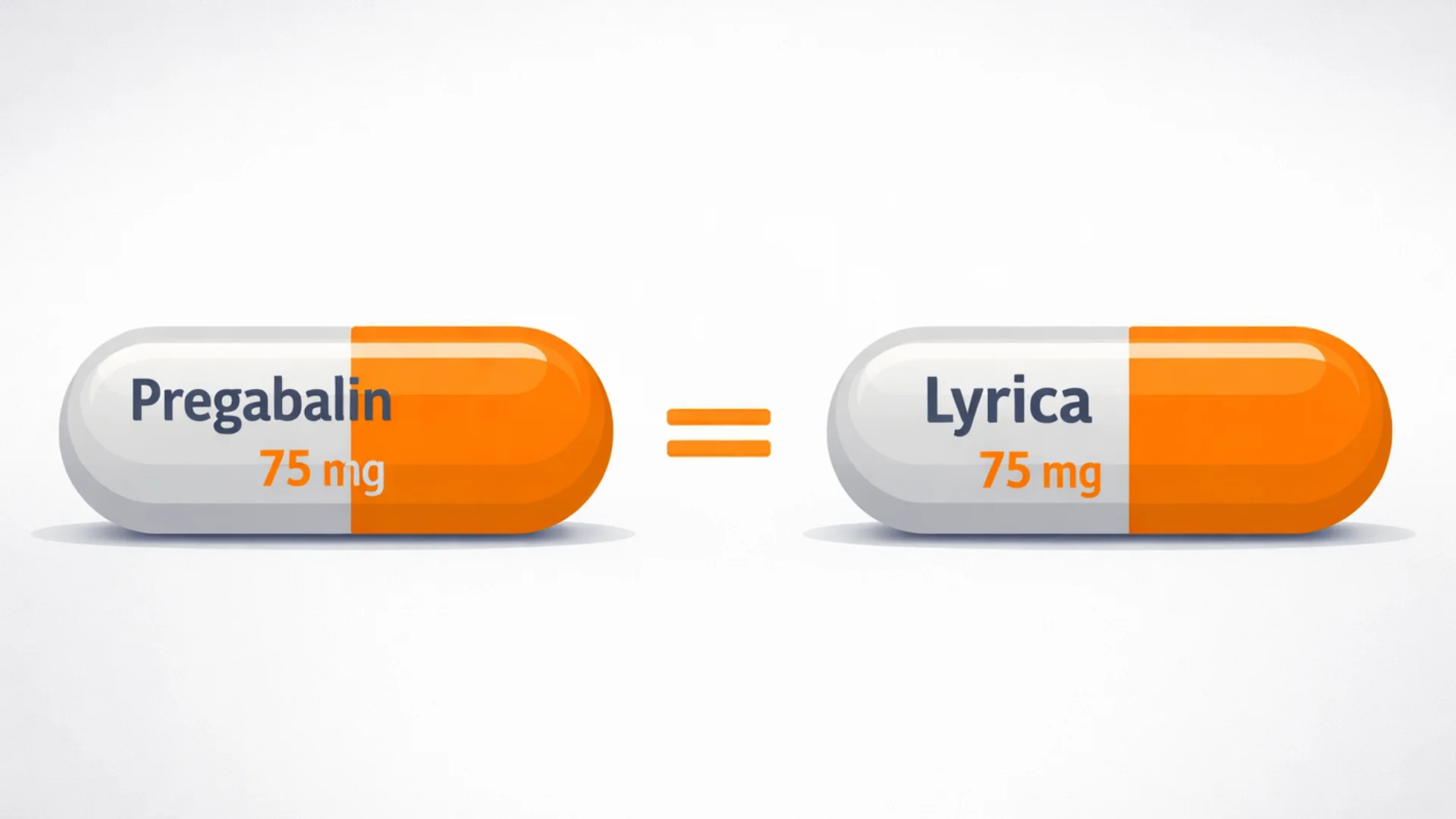
Pregabalin is the generic (non-branded) name of the medicine. In many countries, including the UK and several others worldwide, the same active substance has also been marketed under a brand name—most commonly Lyrica. Whether someone refers to pregabalin or Lyrica, they are talking about the same active ingredient, not two different medicines.
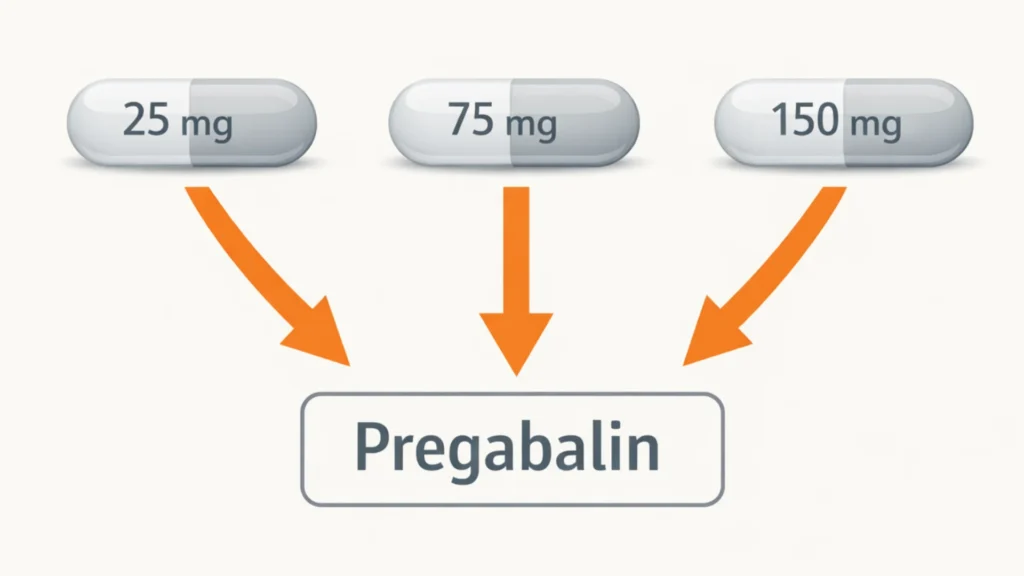
The number “75 mg” only describes the strength of the capsule or tablet. It indicates how much pregabalin is present in a single dose unit. This number does not change the medicine’s identity, chemical structure, classification, or how it is recognised medically. Strength-based labels exist purely for dosing precision and prescribing clarity, not for naming purposes.
Because of this, people searching for pregabalin 75 mg other name are usually encountering two different naming systems:
- Generic naming, used by healthcare systems and pharmacies
- Brand naming, created by manufacturers for commercial identification
In practical terms, the following labels describe the same medicine:
- Pregabalin 75 mg (generic name + strength)
- Lyrica 75 mg (brand name + strength)
The only difference between these terms is branding, not composition or identity. This distinction is common across many prescription medicines and is not unique to pregabalin.
Because generic pregabalin and brand-name Lyrica are medically identical, patients can choose based on preference or availability. You can view Pregabalin 75 mg options and current availability to compare generic and branded formulations.
Key Takeaways
- Pregabalin is the generic name of the medicine
- Lyrica is a brand name that contains pregabalin
- The strength (such as 75 mg) only indicates quantity, not a different drug
- “Pregabalin 75 mg” and “Lyrica 75 mg” refer to the same active substance
Is Pregabalin the Same as Lyrica?
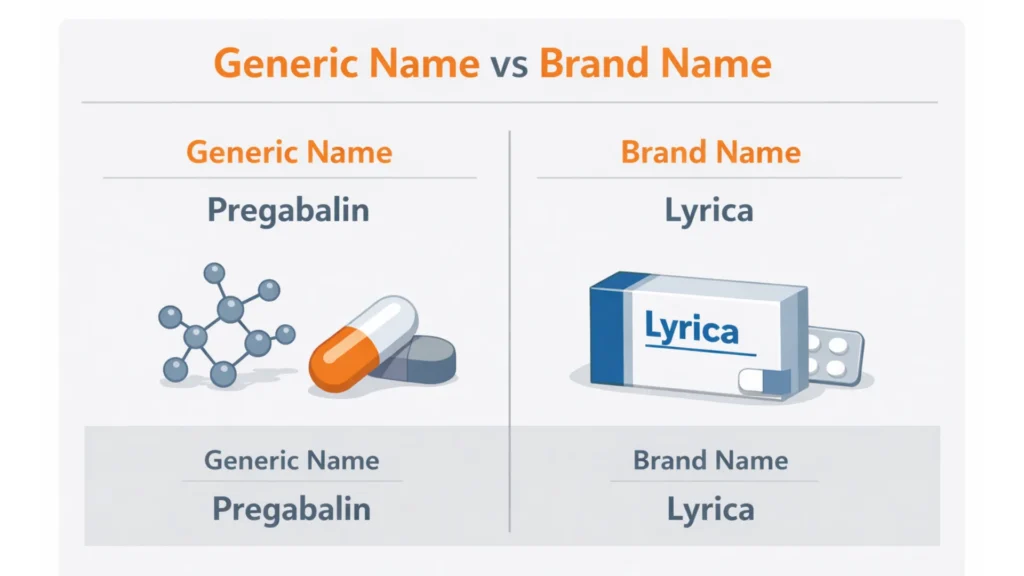
Yes—pregabalin and Lyrica are the same medicine when it comes to their active ingredient. Both contain pregabalin as the active substance, which means they are medically recognised as the same drug.
The key difference lies in naming and branding, not in how the medicine works. Pregabalin is the generic name, used internationally by healthcare systems, regulators, and pharmacies. Lyrica is a brand name originally created by a pharmaceutical manufacturer to market the same medicine under a distinct label. Once patent protections expire, the generic name becomes more widely used, while the brand name often remains familiar to the public.
It is very common for brand names to stay in everyday use long after generic versions become available. Many people continue to refer to medicines by the brand name they first encountered, even when the generic equivalent is routinely prescribed or dispensed. This preference is cultural and habitual, not clinical.
Importantly, using a brand name instead of a generic name does not indicate any difference in:
- Chemical composition
- Intended medical classification
- How the medicine functions in the body
Questions about suitability, safety, or individual response are separate from naming. These factors are assessed by healthcare professionals based on clinical context, not on whether a medicine is labelled with a brand or generic name.
Understanding this distinction helps clarify why searches like pregabalin vs Lyrica are common, even though the two terms refer to the same active medicine.
Key Takeaways
- Pregabalin and Lyrica contain the same active substance
- The difference between them is branding, not function
- Brand names may persist in everyday language after generics become available
- Naming does not affect how the medicine works or how it is evaluated clinically
Alternatives to Pregabalin (High-Level Overview)
When people ask about alternatives to pregabalin, this usually refers to other medicines discussed in similar symptom categories, not direct replacements.
One medicine frequently mentioned in educational resources is gabapentin, which also belongs to the gabapentinoid family. Because of this shared classification, the two are often discussed together in general comparisons.
However, it’s important to understand:
- Being in the same class does not mean medicines are identical
- Similar discussion contexts do not imply equal effects
- Decisions are always individualised
For a broader educational comparison, readers may find this internal guide helpful:
Pregabalin vs Gabapentin: Which Is Better & Safer?
Key Takeaways
- “Alternatives” refers to medicines discussed in similar contexts
- Gabapentin is commonly mentioned alongside pregabalin
- Same class does not mean direct substitution
When Are Alternatives Considered in Healthcare?
In healthcare settings, discussions about alternatives are shaped by individual clinical assessment, not naming conventions. Clinicians may consider factors such as:
- Overall health profile
- How symptoms change over time
- Previous treatment history
- Regulatory or guideline considerations
Brand names or dosage strengths do not drive these decisions. Understanding terminology simply helps people communicate more clearly with healthcare professionals.
Key Takeaways
- Alternatives are considered case by case
- Decisions are based on clinical context, not names
- Clear understanding supports better communication
Frequently Asked Questions About Pregabalin 75 mg
It usually refers to whether pregabalin 75 mg is known by another name, such as Lyrica. The medicine itself is the same; only the branding differs.
Yes. Lyrica is a brand name, while pregabalin is the generic name. Both contain the same active ingredient.
The generic name pregabalin remains consistent worldwide, but brand names may vary depending on the country and manufacturer.
No. Strengths such as 25 mg, 75 mg, or higher only describe the amount of active ingredient and do not change the medicine’s name.
No. Pregabalin is not a narcotic. In some countries it is regulated as a controlled medicine, but this is different from opioid or narcotic classification.
Conclusion
Confusion around medicine names is extremely common, and pregabalin 75 mg other name is a clear example of how generic names, brand names, and strengths can blend together in online searches. The key takeaway is simple: pregabalin is the medicine, Lyrica is a brand name, and 75 mg only describes strength.
Understanding these basics can make healthcare conversations less intimidating and help people interpret information more confidently. While names don’t change how a medicine works, clarity improves communication.
For further background reading, you may find this internal guide useful:
What Is Pregabalin 75 mg Used For?
As always, individual treatment decisions should be discussed directly with a qualified healthcare professional.
Author Note
This supporting educational guide was authored and clinically reviewed by Paul Harris, PharmD. Paul is a Doctor of Pharmacy with over 15 years of experience in clinical pharmacology and community pharmacy management. His expertise lies in simplifying complex medication terminology, specifically within the gabapentinoid class, to ensure patient safety and medication adherence. By bridging the gap between pharmaceutical manufacturing and patient understanding, Paul provides evidence-based insights that help readers navigate naming conventions and product classifications with confidence and clarity.