
Medical Disclaimer
The information provided in this guide about Modalert (modafinil) is for educational and informational purposes only and does not constitute medical advice, diagnosis, or treatment. This content is not intended to promote or encourage the use of Modalert or any prescription medication without proper medical oversight. Always consult your physician or another licensed healthcare provider regarding any medical condition, treatment options, or concerns about medicines. Never disregard professional medical advice or delay seeking it because of information found on this website.
Australians continue to search for modalert as awareness grows around sleep health, shift work fatigue, and cognitive performance discussions. Modalert is a brand of modafinil tablets, a prescription medicine classified as a wakefulness-promoting agent. Because modalert affects the central nervous system and is regulated differently across countries, it is essential to understand its medical uses, safety considerations, and legal framework before considering access.
This evidence-informed guide provides a medically neutral overview tailored primarily for Australian readers while remaining relevant globally.
What Is Modalert and How Does It Work?
Modalert is a branded formulation of modafinil, a non-amphetamine wakefulness-promoting medicine. It is commonly available in 200 mg strength formulations. For product-specific information, see
👉 Modalert 200 mg details
A common question among readers is whether the medication improves concentration or primarily supports alertness. Our detailed article Does Modalert Improve Focus or Just Wakefulness? explains how modafinil affects wakefulness pathways and why improved focus is often an indirect result of reduced fatigue.
For readers researching this strength in more detail, our guide Modalert 200 mg: What First-Time Users Should Know explains safety considerations, regulatory context, and beginner-focused questions.
A more detailed pharmacological comparison is covered in our guide Modalert vs Waklert: Differences in Effects, Duration & Research Context, where the differences between modafinil and armodafinil are explained in greater scientific context.

Understanding Modafinil
Modafinil is categorised as a wakefulness-promoting agent rather than a classic stimulant. Unlike traditional stimulants that broadly activate the central nervous system, modafinil appears to selectively influence neurotransmitters associated with alertness, including dopamine, norepinephrine, and histamine pathways.
Its precise mechanism is not fully understood. However, peer-reviewed research indexed on PubMed suggests it enhances activity in brain regions responsible for vigilance and executive function.
Importantly, Modalert does not replace natural sleep and is not a cure for sleep deprivation.
Readers who want a closer look at sleep quality, bedtime timing, and nighttime rest can also explore our guide on Modalert and sleep.
How It Differs from Traditional Stimulants
Compared to amphetamines:
- Lower documented dependence profile (though still prescription-only)
Readers who want a more detailed look at long-term response, perceived reduced effect over time, and the difference between tolerance and dependence can explore our guide on Modalert tolerance
- Generally less peripheral stimulation (e.g., jitteriness)
- Prescribed for clearly defined medical conditions
Despite these differences, modalert requires proper medical evaluation.
Approved Uses and Off-Label Discussions
Narcolepsy
One of the primary approved uses of modafinil is for excessive daytime sleepiness associated with narcolepsy. Narcolepsy is a chronic neurological disorder affecting sleep-wake regulation. Clinical background is available via the NHS overview of narcolepsy.
Modafinil may help maintain daytime wakefulness but does not treat the underlying cause.
Shift Work Sleep Disorder (SWSD)
Shift Work Sleep Disorder affects individuals working outside traditional hours. Healthcare professionals may prescribe modafinil to manage excessive sleepiness linked to circadian rhythm disruption.
Given Australia’s significant shift-based workforce, this indication is particularly relevant locally.
Obstructive Sleep Apnoea (Adjunct Context)
In obstructive sleep apnoea, modafinil may be considered for residual sleepiness when primary therapies (such as CPAP) are already in use. It does not treat airway obstruction itself.
Cognitive Enhancement Discussions
Beyond approved uses, modalert is sometimes discussed in academic or professional settings for focus and productivity. These uses are considered off-label. In Australia, off-label prescribing remains at the discretion of a qualified healthcare provider.
Safety Profile and Potential Side Effects
Understanding modalert side effects is critical for informed decision-making. For a comprehensive overview of common, less frequent, and serious reactions across all strengths, see our dedicated safety guide:
👉 Modalert Side Effects: What to Know About Safety & Risks
If you are specifically using the 200 mg strength, you may also find our strength-focused guide helpful:
👉 Everything You Need To Know About Modalert 200 Mg Side Effects and How to Avoid Them
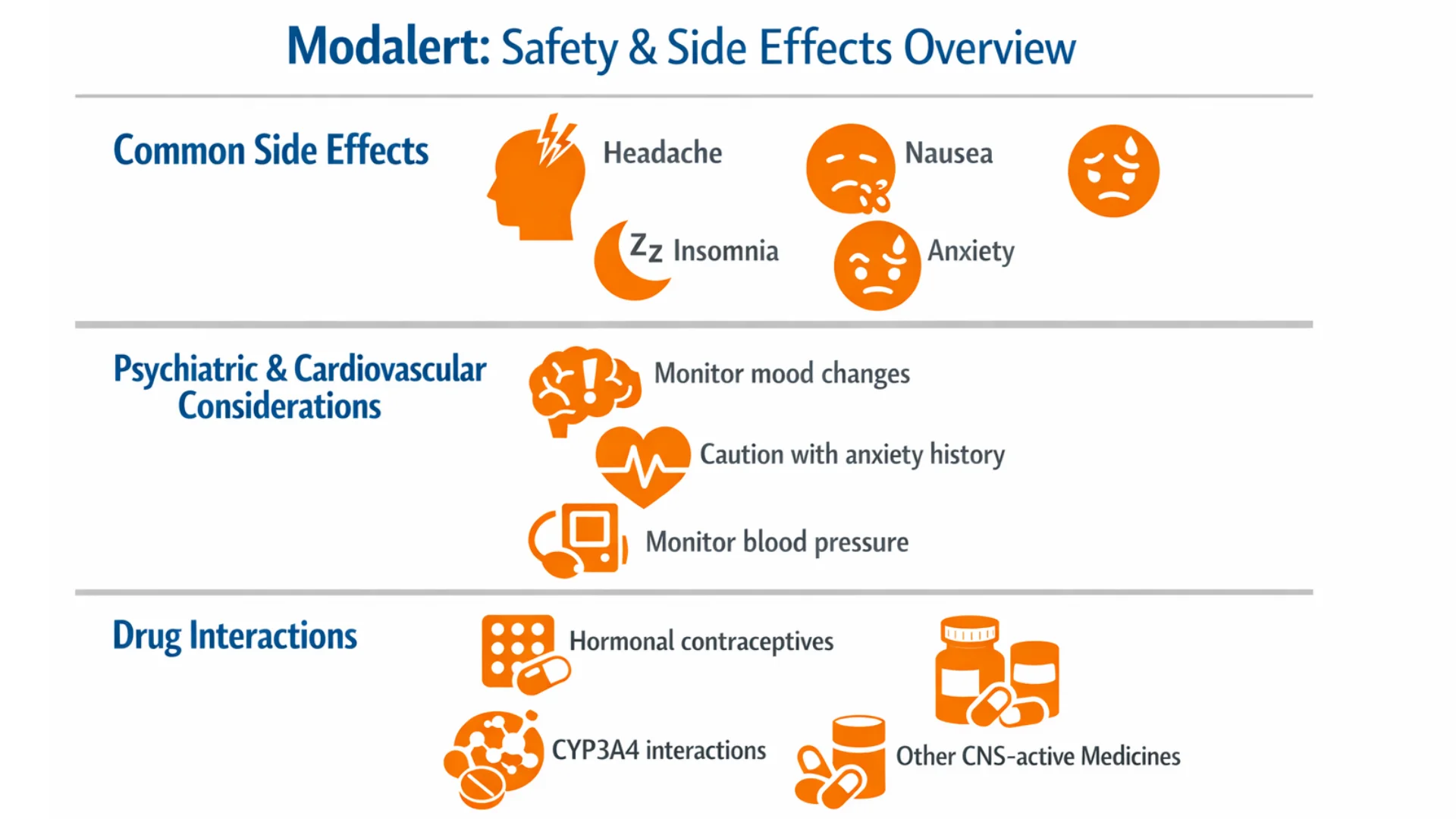
Common Side Effects
Reported side effects may include:
- Headache
- Nausea
- Dry mouth
- Insomnia
- Anxiety
- Dizziness
Official prescribing safety information is available via Modafinil prescribing information (DailyMed).
Psychiatric Considerations
Modafinil may influence mood or behaviour. Individuals with a history of anxiety, bipolar disorder, depression, or psychosis should seek medical advice before considering modalert.
Cardiovascular Considerations
Modafinil may increase heart rate or blood pressure in some individuals. A cardiovascular assessment may be necessary before use.
Rare but Serious Reactions
Although rare, serious dermatological or hypersensitivity reactions have been reported. Immediate medical attention is required if severe rash or systemic symptoms develop.
Drug Interactions
Modafinil may interact with:
- Hormonal contraceptives (reducing effectiveness)
- Antidepressants
- Anticoagulants
- Blood pressure medications
Full medication disclosure to a healthcare professional is essential.
Is Modalert Legal in Australia?
A common question is whether modalert is legal in Australia. For readers who want a broader international breakdown, see our detailed guide: Is Modalert Legal? UK, US & Australia Regulations Explained.
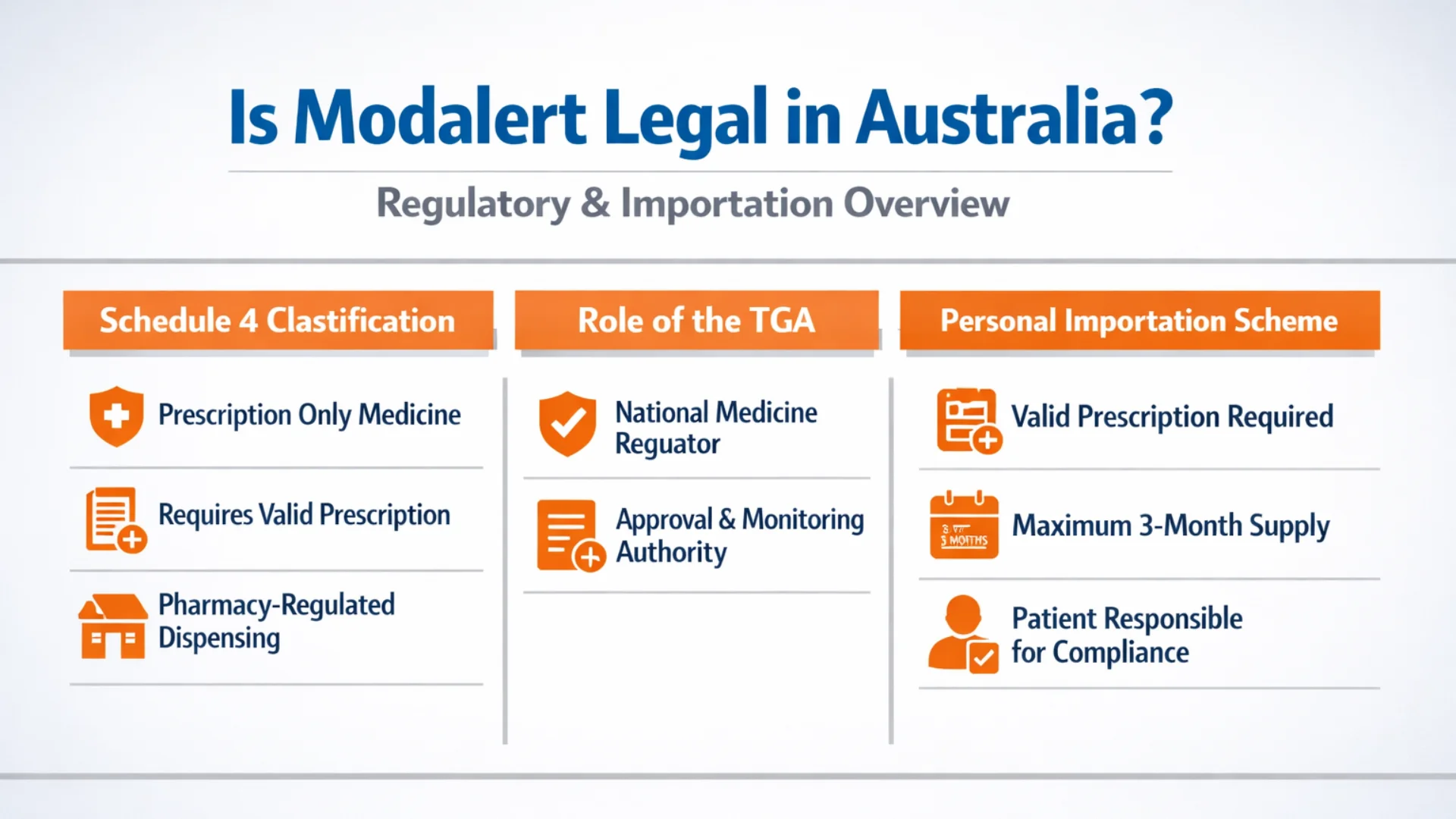
The infographic below summarises Modalert’s legal classification in Australia, including its Schedule 4 status, TGA oversight, and Personal Importation Scheme conditions.
Schedule 4 Classification
Modafinil is classified as a Schedule 4 (Prescription Only Medicine) under the Poisons Standard (Schedule 4 classification).
This means:
- A valid prescription is required
- Only authorised professionals may prescribe it
- Pharmacies must comply with dispensing regulations
Role of the TGA
The Therapeutic Goods Administration (TGA) regulates medicines in Australia, including approval and post-market monitoring.
Personal Importation Scheme
Under Australia’s Personal Importation Scheme:
- A valid prescription is required
- Maximum three-month supply
- The medicine must not be prohibited
Individuals remain responsible for compliance when ordering modalert internationally.
Buying Modalert Online What Australians Should Consider
Searches for buy modalert online continue to increase, but caution is necessary.
1. Legitimacy and Transparency
A legitimate online pharmacy should:
- Provide verifiable contact information
- Display business registration details
- Require prescriptions where applicable
- Use secure payment systems
2. Product Authenticity
Counterfeit medicines are a global concern. The WHO fact sheet on substandard and falsified medical products outlines public health risks.
Look for:
- Manufacturer details
- Batch identification
- Clear labelling
Safety should always take priority over price.
3. Risk vs Convenience
While online purchasing may offer convenience, it does not remove legal or medical responsibilities associated with modalert.
Modalert vs Other Modafinil Brands
When researching modalert, many readers want to understand how it compares with other modafinil-based brands. While these medicines often contain the same or closely related active ingredients, differences may exist in manufacturing processes, pharmacological profile, pricing structure, and patient response.
It’s important to remember that brand comparisons should always be interpreted within a medical context. No product should be considered universally “better” without professional guidance.
Comparisons are also sometimes made between modafinil-based medicines and traditional stimulant medications used for attention and wakefulness disorders. A detailed educational overview of these differences is available in our guide Modalert vs Adderall vs Vyvanse: An Educational Comparison.
Modvigil
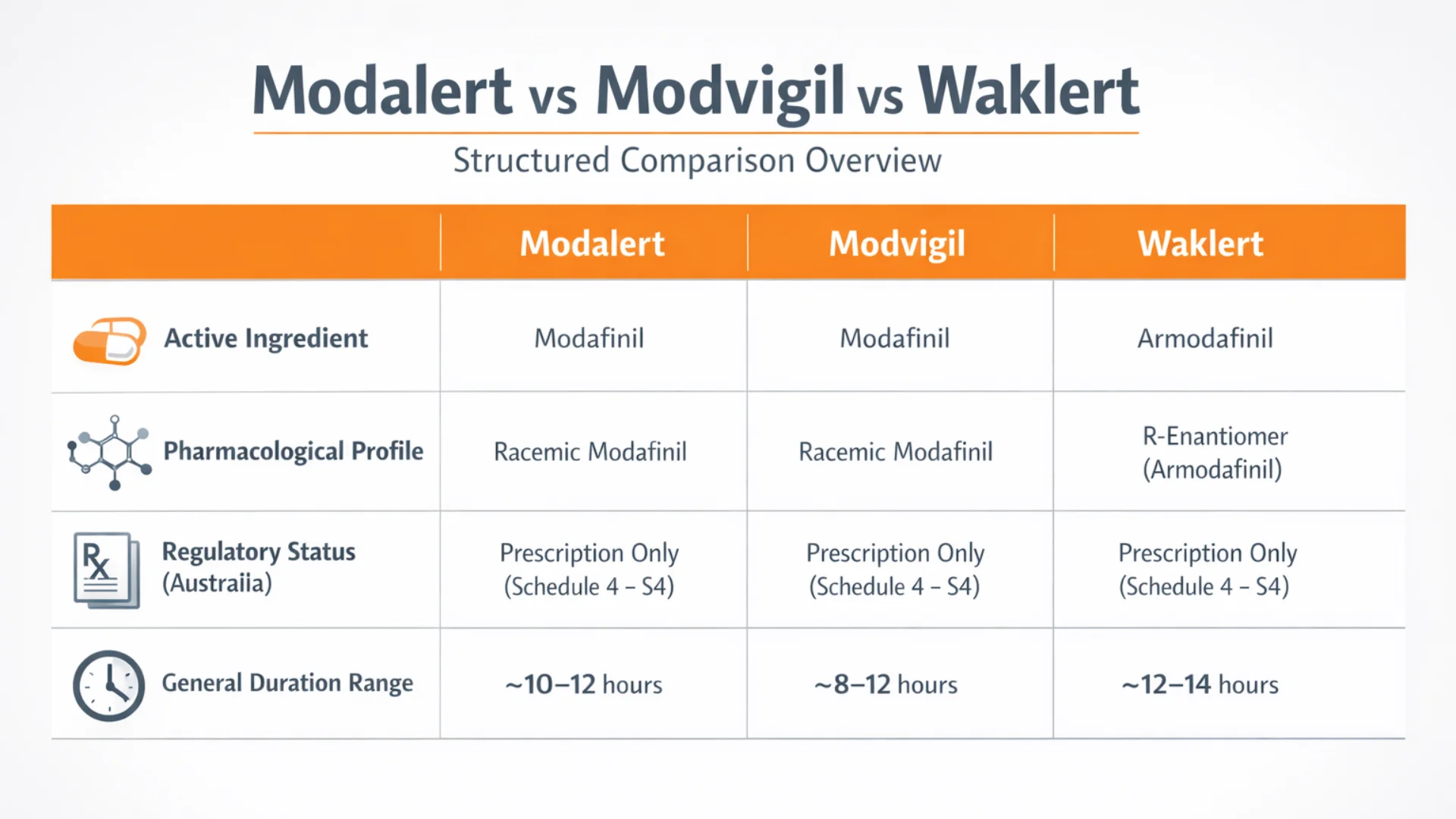
Modvigil contains the same active ingredient as modalert modafinil. Both are manufactured by Sun Pharmaceutical Industries and are commonly discussed interchangeably in online communities.
Key comparison considerations include:
- Active ingredient: Both contain modafinil
- Mechanism of action: Identical pharmacological pathway
- Brand positioning: Modalert is often positioned as the premium Sun Pharma variant, while Modvigil is sometimes considered a more budget-oriented alternative
- User perception: Some consumers report subjective differences, though clinical literature does not formally distinguish efficacy between branded generics
For a detailed brand-level comparison covering regulation, safety profile, and practical differences, see our guide Modalert vs Modvigil: Key Differences Explained.
From a regulatory perspective, both remain prescription-only medicines in jurisdictions like Australia. Selection between modalert and Modvigil should be guided by medical advice and product authenticity verification.
Waklert (Armodafinil)
Waklert differs from modalert because it contains armodafinil, the R-enantiomer of modafinil. While closely related, armodafinil is pharmacologically distinct.
Key distinctions include:
- Active compound: Waklert contains armodafinil; modalert contains modafinil
- Pharmacokinetics: Armodafinil may have a longer-lasting plasma concentration profile in some individuals
- Duration perception: Some users describe Waklert as having a more sustained wakefulness effect, though individual variability is significant
- Regulatory classification: In Australia, armodafinil is also Schedule 4 (Prescription Only Medicine)
For a detailed comparison analysis, see:
👉 Modalert vs Waklert comparison guide
It’s essential to emphasise that armodafinil is not simply a “stronger” version of modafinil. They are related but distinct compounds with different pharmacological profiles.
Brand Authenticity and Manufacturer Background
When evaluating modalert or similar brands, manufacturer credibility is an important factor. Modalert is produced by Sun Pharmaceutical Industries, one of the largest pharmaceutical manufacturers globally.
Brand-level considerations may include:
- Manufacturing standards
- Packaging consistency
- Batch traceability
- Market distribution channels
For deeper brand analysis, refer to:
👉 Sun Pharma Modalert Review: Authenticity, Benefits, and How It Compares to Other Modafinil Brands
Given the global issue of counterfeit medicines, authenticity verification is critical — particularly when purchasing modalert through online platforms.
Key Comparison Summary
- Modalert and Modvigil contain the same active ingredient (modafinil).
- Waklert contains armodafinil, a related but distinct compound.
- Differences are typically related to formulation profile, manufacturer positioning, and pharmacokinetic variation.
- No brand should be selected without appropriate medical consultation.
Frequently Asked Questions
Yes. Modalert is a brand name for tablets containing modafinil as the active ingredient.
Modafinil is classified as a Schedule 4 (Prescription Only Medicine) in Australia and requires a valid prescription.
Online purchase may fall under the Personal Importation Scheme if specific conditions are met, including possession of a valid prescription.
Commonly reported effects include headache, nausea, insomnia, nervousness, and dizziness. Serious reactions are rare but possible.
While sometimes discussed in professional contexts for focus, approved uses are primarily related to diagnosed sleep disorders. Off-label use requires medical supervision.
Key Takeaways
- Modalert is a brand of modafinil, a prescription-only wakefulness-promoting medicine used for specific sleep-related conditions.
- In Australia, modafinil is classified as a Schedule 4 (Prescription Only Medicine) and requires valid medical supervision.
- Modalert does not replace natural sleep and is not intended as a lifestyle or productivity supplement.
- Side effects may include headache, insomnia, anxiety, and nausea, and medical history should be reviewed before use.
- Online purchasing must comply with Australia’s Personal Importation Scheme, including possession of a valid prescription
- Brand comparisons (Modalert, Modvigil, Waklert) involve differences in formulation and pharmacology, but selection should always be medically guided.
Conclusion
Modalert is a branded form of modafinil, a prescription-only wakefulness-promoting medicine used primarily for medically diagnosed sleep disorders. In Australia, it is classified as a Schedule 4 medicine under national regulatory oversight.
While interest in modalert continues to grow—particularly in discussions around shift work and cognitive performance—responsible use requires careful consideration of safety, legality, and individual health factors. Modafinil is not a lifestyle supplement and should never replace professional medical advice.
Explore More Modalert Guides
If you want to explore Modalert in more detail, these related guides cover first-time use questions, side effects, legal status, comparisons, sleep concerns, focus, and long-term considerations.
Modalert 200 mg What First-Time Users Should Know
A practical guide for readers researching Modalert 200 mg, including general first-time considerations and product context.Modalert vs Modvigil: Key Differences Explained
An educational comparison of two modafinil-based options and how they differ in positioning and reader interest.Modalert Side Effects: What to Know About Safety & Risks
A closer look at common side effects, safety questions, and why medical guidance matters.Is Modalert Legal? UK, US & Australia Regulations Explained
A region-specific overview of legality, prescription status, and buying considerations.Modalert vs Waklert: Differences in Effects, Duration & Research Context
A useful comparison for readers weighing modafinil against armodafinil-based alternatives.Modalert vs Adderall vs Vyvanse: An Educational Comparison
A broader educational comparison covering different categories of wakefulness and attention-related medicines.Does Modalert Improve Focus or Just Wakefulness?
A focused guide on the difference between alertness, concentration, and perceived productivity.Modalert and Sleep: Effects on Sleep Quality & Timing
An article exploring how wakefulness support may relate to sleep timing, sleep quality, and overnight rest.Modalert Tolerance: Long-Term Use & Considerations
A long-term perspective on perceived reduced effect, tolerance concerns, and when professional input may be appropriate.
Author Note
Paul Harris, Pharm.D., is a healthcare content consultant with over 15 years of experience in pharmaceutical education and clinical information review. After earning his Doctor of Pharmacy degree, he has worked across hospital and community pharmacy environments with a focus on neurological and wakefulness-related medicines. At GlobalPharmacare.net, Paul contributes evidence-informed, medically neutral content designed to improve public understanding of regulated medicines and promote safe, responsible decision-making. His work emphasises patient safety, sleep health awareness, and regulatory compliance.