
Medical Disclaimer
This article is for educational purposes only and does not replace professional medical advice, diagnosis, or treatment. In discussions around modalert sleep, individual responses can vary. Modalert (modafinil) is associated with wakefulness, so some people may notice changes in sleep timing, sleep quality, or overall restfulness. Readers with ongoing insomnia, disrupted sleep patterns, or existing sleep concerns should seek advice from a qualified healthcare professional. This content is intended to support informed reading, not to replace natural, restorative sleep or professional guidance.
People often look into wakefulness-supporting products for daytime alertness first, then start asking how those products may affect rest at night. That is exactly why modalert sleep is a common search topic. The key question is not only whether sleep changes, but how it may change. Some individuals may notice later bedtimes, lighter sleep, or less restorative rest, while others may notice little difference. In most cases, the experience can vary based on timing, individual sensitivity, and existing sleep habits.
Why Modalert May Affect Sleep
Modalert contains modafinil, a wakefulness-promoting medicine associated with increased alertness. According to MedlinePlus, modafinil is used to promote wakefulness, which helps explain why sleep-related questions often follow its use.
However, feeling alert is not the same as feeling ready for sleep. A person may feel focused and productive during the day, yet still find that bedtime feels delayed or that natural sleepiness arrives later than expected. As a result, modalert sleep concerns often center on changes in sleep timing rather than one simple sleep problem.
This is also why many readers look for broader background before focusing on sleep-related effects. For a general overview, they can start with the Modalert Guide.
Key Takeaways
- Modalert is associated with wakefulness, so it may affect how ready some people feel for sleep later in the day.
- Feeling alert and feeling ready for restorative sleep are not always the same.
- Sleep questions may arise even when the original goal is daytime productivity or wakefulness.
Modalert Sleep Quality vs Sleep Timing
One of the most useful distinctions in any modalert sleep discussion is the difference between sleep timing and sleep quality.
Sleep timing refers to when a person falls asleep. For example, someone may go to bed later than usual or take longer to drift off. In contrast, sleep quality refers to how restful that sleep feels once it happens.
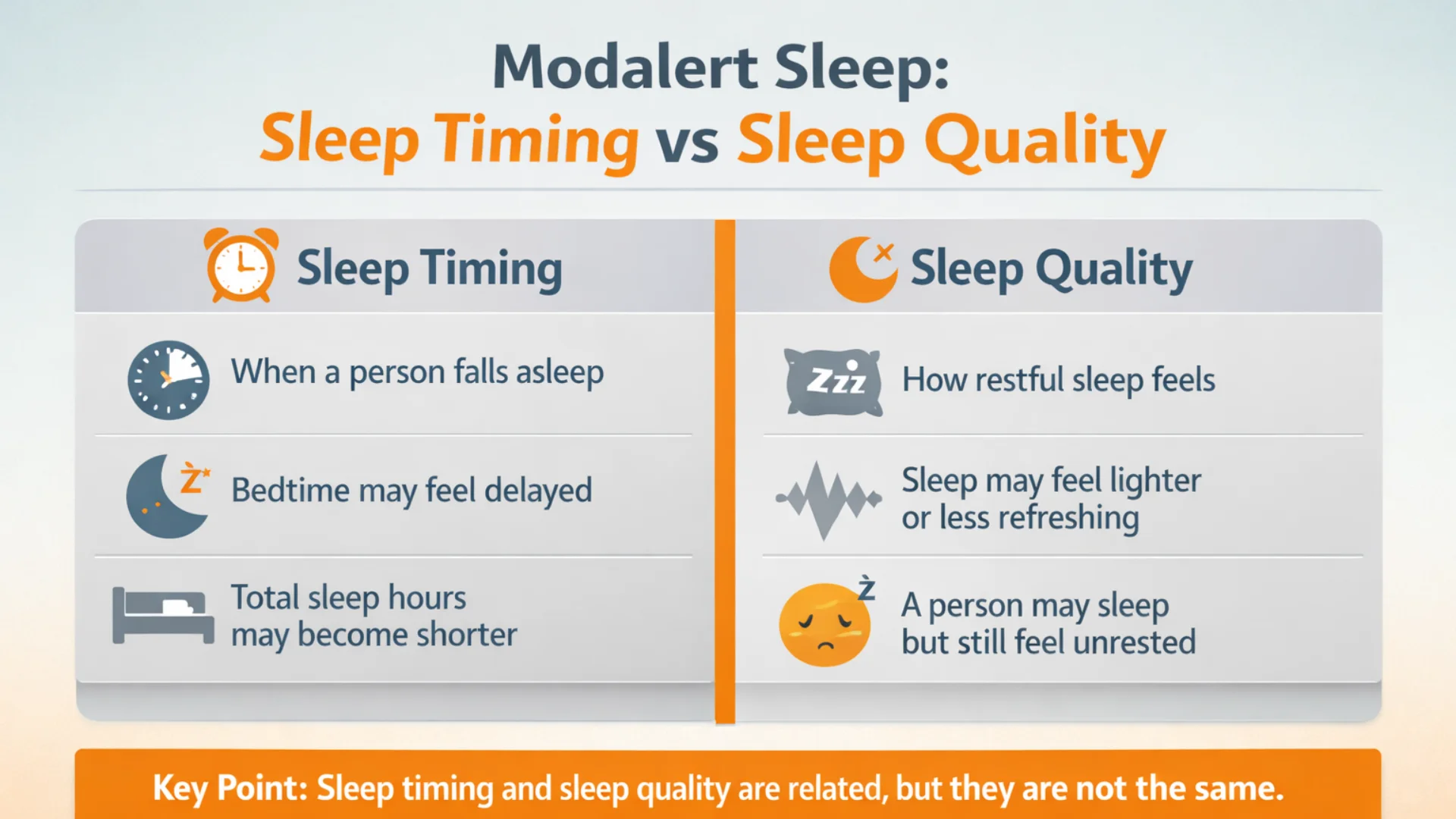
The Sleep Foundation explains that sleep duration and sleep quality are related but not identical. Therefore, a person may still get several hours of sleep but wake up feeling less refreshed, lighter in sleep, or not fully restored.
This is why questions such as “does Modalert affect sleep?” do not always have a simple yes-or-no answer. Some individuals may notice delayed bedtime. Others may notice shorter sleep duration or less restorative rest. In some cases, these experiences overlap.
That distinction also matters when comparing alertness with broader mental performance. Readers exploring that side of the topic may find useful context in Does Modalert Improve Focus or Just Wakefulness?.
Quick Answer
Yes, Modalert may affect sleep for some individuals, but the effect can differ. Some people notice later sleep onset, while others notice lighter or less refreshing sleep.
Key Takeaways
- Falling asleep later and sleeping poorly are related concerns, but they are not the same.
- Some people notice shorter sleep duration, while others notice less restorative sleep.
- Daytime alertness does not always mean a person will feel well-rested overall.
Factors That Can Influence How Modalert Affects Sleep
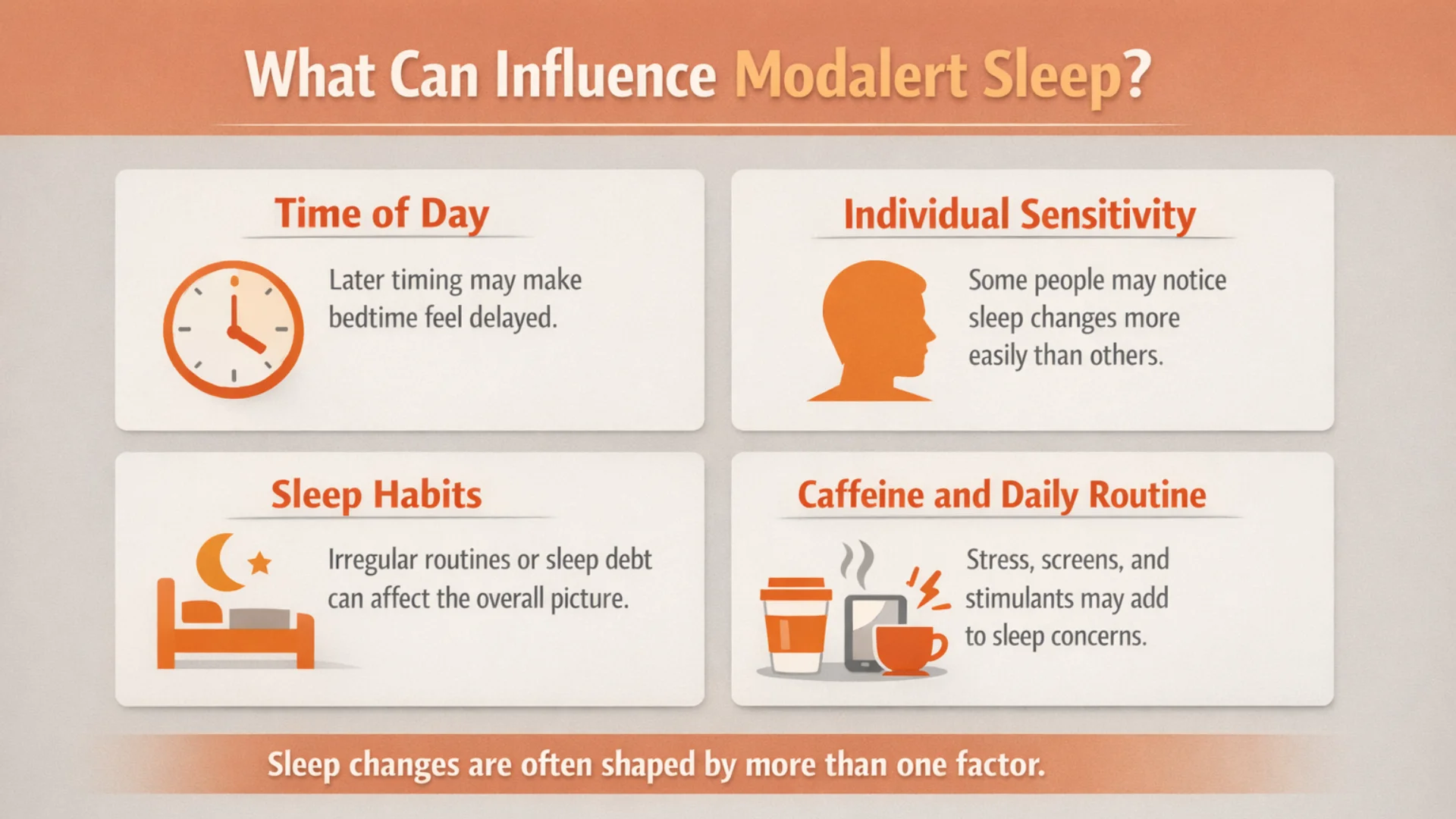
Sleep-related experiences rarely come down to one single cause. Instead, several factors may shape whether modalert sleep timing changes or modalert insomnia concerns become noticeable.
Time of Day
Timing can play a major role in how nighttime sleep feels. Wakefulness support that seems helpful earlier in the day may feel very different if alertness carries too close to bedtime. Consequently, some individuals may find it harder to settle into their normal sleep routine.
A person may feel fine while working or studying, then realize in the evening that sleep onset feels later than usual. That shift alone can shorten total sleep time if wake-up time stays the same.
Individual Sensitivity
Not everyone responds in the same way to wakefulness-promoting effects. Some individuals may be more sensitive to changes in alertness and notice sleep disruption more easily. On the other hand, others may experience little obvious change in overnight rest.
This variation is important because it helps explain why one person may report minimal impact, while another may clearly notice delayed sleep onset or lighter-feeling rest. In other words, individual response plays a major role in modalert and sleep discussions.
Existing Sleep Habits
Pre-existing sleep patterns can strongly shape the experience. Irregular bedtimes, accumulated sleep debt, and inconsistent routines may already affect sleep quality before any wakefulness-supporting product enters the picture.
The NHS insomnia guidance highlights the importance of regular sleep habits and a supportive sleep environment. Therefore, it can be difficult to separate product-related effects from the impact of poor sleep hygiene alone.
Caffeine, Stimulants, and Daily Routine
Other lifestyle factors can further complicate the picture. Caffeine intake, evening screen use, stress, long work hours, and irregular schedules may all influence how a person experiences changes in sleep.
For that reason, it helps to take a balanced view. It is easy to attribute everything to one factor, but daily habits and baseline sleep health often matter as well.
Key Takeaways
- Timing, sensitivity, and routine can all shape how sleep feels.
- Irregular sleep habits may make changes more noticeable or harder to interpret.
- Caffeine and lifestyle habits may add to bedtime or sleep quality concerns.
Common Sleep-Related Concerns Readers Ask About
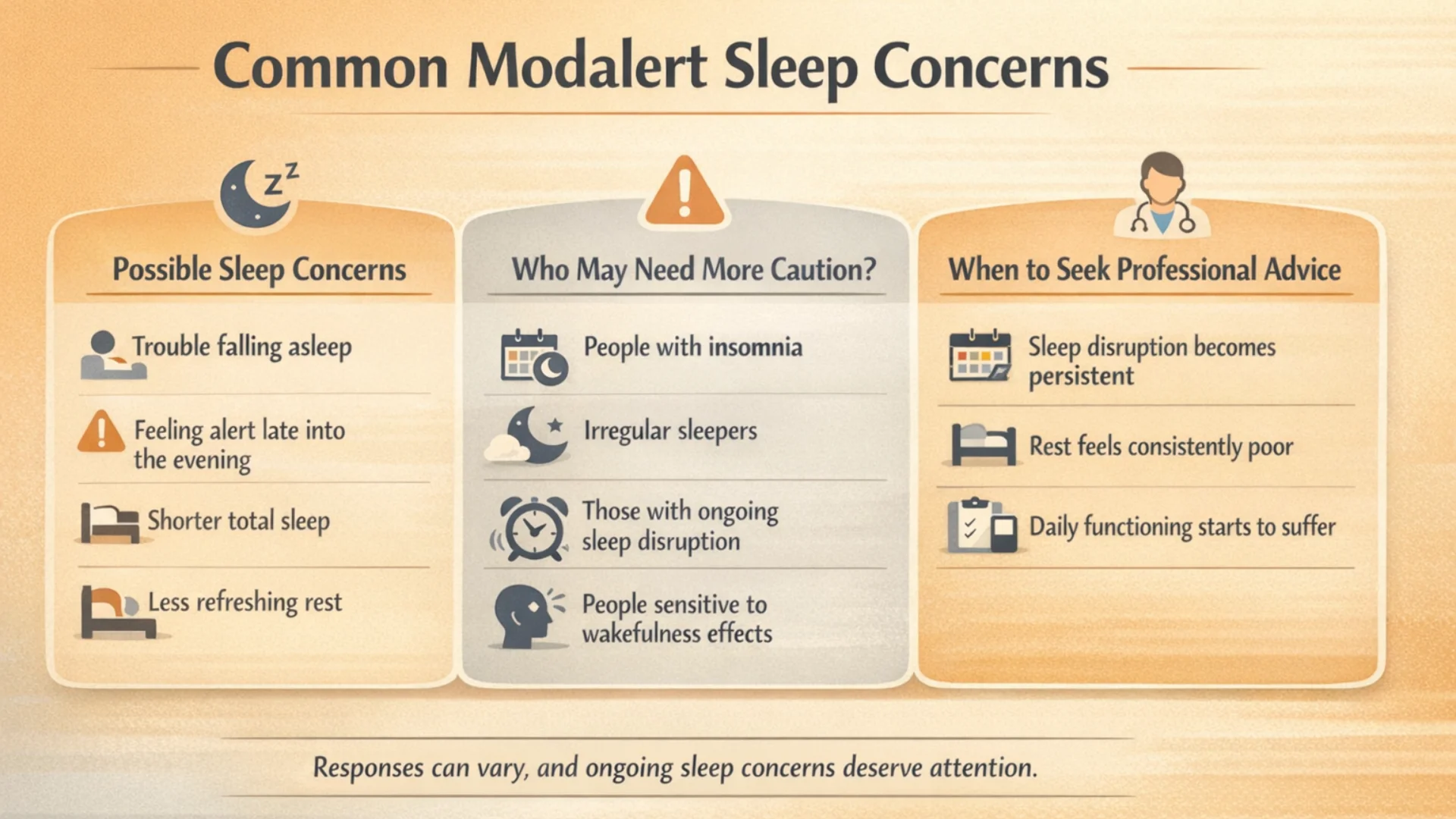
Many readers ask whether Modalert can make it harder to fall asleep. For some individuals, that may happen. Bedtime may arrive, but sleep may not come as easily as usual. Others may feel mentally alert late into the evening, even when physically tired.
This concern makes sense because the FDA medication guide for modafinil also describes it as a medicine used to promote wakefulness. As a result, questions about bedtime delay and nighttime rest are common.
Another concern is reduced total sleep time. If bedtime shifts later while the morning schedule stays fixed, a person may simply sleep fewer hours. That does not always mean the sleep itself was poor, but it can still leave someone feeling less recovered the next day.
Readers who want to explore broader tolerability questions can also review Modalert Side Effects.
A different pattern is sleeping through the night but still waking up feeling less refreshed. In that situation, some readers may wonder whether the issue is temporary, whether outside factors are involved, or whether a broader sleep problem is already present.
These questions do not have one universal answer. However, persistent sleep disruption deserves more attention than a brief change. Sleep remains central to concentration, mood, and overall wellbeing.
Key Takeaways
- Common concerns include trouble falling asleep, feeling alert late, and getting fewer hours of sleep.
- Some people still sleep but feel less refreshed the next day.
- Temporary disruption and ongoing sleep problems should not be viewed the same way.
When to Be More Cautious About Modalert Sleep Changes
Some readers may need to think more carefully about modalert sleep effects from the outset. This includes people who already deal with insomnia, poor sleep quality, or highly irregular sleep schedules. When sleep is already fragile, even a modest shift in alertness may feel more significant.
Readers who want a practical product-specific reference can also review what to know about Modalert 200 mg as part of the wider context, while keeping sleep expectations realistic and medically neutral.
Caution may also be sensible for people with shift-work routines, changing schedules, or chronic sleep debt. In these situations, it can be harder to tell whether the main issue is the product, the routine, or a combination of both.
Most importantly, persistent sleep disruption should not be ignored. The Cleveland Clinic notes that ongoing sleep problems deserve proper attention, especially when they begin affecting daily functioning or overall wellbeing.
Key Takeaways
- Existing insomnia or poor sleep habits may increase the chance of noticeable sleep concerns.
- Some individuals are more sensitive to wakefulness-related effects than others.
- Persistent sleep disruption is a sensible reason to seek professional guidance.
Practical Ways to Think About Modalert and Sleep
A useful way to approach modalert sleep quality questions is to observe patterns rather than jump to one conclusion. For example, a person may notice that bedtime shifts later, that sleep feels lighter, or that next-day restfulness changes over time.
Moreover, it helps to look at the full picture. Stress, caffeine, screen exposure, and inconsistent schedules may all influence nighttime rest alongside wakefulness-related effects. When several factors overlap, clear patterns become more important than assumptions.
Readers who want to explore the wider category can browse the Nootropics category.
Quick Answer
Does Modalert always cause insomnia? No. Responses can vary, and some individuals may notice no major sleep issue while others may be more sensitive to changes in alertness.
Frequently Asked Questions
It may for some individuals. Because Modalert is associated with wakefulness, some people may find it harder to fall asleep or may notice bedtime shifting later than usual.
No. Responses can vary from person to person. Some individuals may notice little change, while others may be more sensitive to wakefulness-related effects.
Yes, it may. A person can still sleep but feel that the sleep was lighter, shorter, or less restorative than usual.
Because delayed sleep onset can reduce total sleep time and affect how refreshed a person feels the next day, even if they eventually fall asleep.
Professional advice is sensible when sleep disruption becomes persistent, worsens over time, or starts affecting daily functioning and overall wellbeing.
Conclusion
Modalert may support wakefulness, but its relationship with sleep is not the same for everyone. Some individuals may notice delayed sleep timing, lighter rest, or reduced total sleep, while others may not notice major changes. That is why the best way to understand modalert sleep is to keep the topic balanced: daytime alertness may matter, but it does not replace the value of natural, restorative sleep.
Overall, readers should view sleep concerns as part of the broader Modalert picture rather than as an isolated issue. A careful, informed approach can help people better understand whether changes in sleep timing, sleep quality, or restfulness may be relevant to their own experience. When concerns persist or worsen, professional advice remains the most appropriate next step.
Author Note
Paul Harris is a clinical pharmacist and Quality Strategist for GlobalPharmaCare.net. With a Doctor of Pharmacy (Pharm.D.) and more than a decade of experience reviewing CNS stimulants and wakefulness-promoting agents, he focuses on making complex product information clearer, safer, and easier to understand. His work connects clinical research, safety considerations, and real-world reader concerns so that content across the GlobalPharmaCare.net nootropics cluster remains accurate, balanced, and useful. Paul’s editorial approach centers on transparent, evidence-based information that helps readers make informed decisions without exaggerated claims or promotional bias.