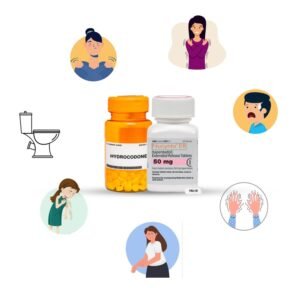

Medical Disclaimer
What is tapentadol used for is a common question, but the information in this article is provided for educational purposes only and should not be treated as medical advice, diagnosis, or treatment. GlobalPharmacare.net shares neutral, research-based content to help readers better understand medicines and related safety information. Because tapentadol is a controlled opioid medication with important risks, including dependence, misuse, and breathing-related warnings, any treatment decision should be made with a licensed healthcare professional. Readers should consult a qualified medical provider before starting, stopping, or changing any medication or pain-management plan.
What is tapentadol used for? It is used for certain cases of moderate to severe pain, especially when other treatment options are not enough or are not well tolerated. According to U.S. FDA labeling, immediate-release tapentadol is indicated for acute pain severe enough to require an opioid analgesic, while extended-release tapentadol is used for severe and persistent pain and also has a labeled use for neuropathic pain associated with diabetic peripheral neuropathy in adults. Many readers also want to know how it compares with Nucynta, which pain types it may be used for, and what safety issues matter most.
What Is Tapentadol?
Tapentadol is a pain medicine in the opioid class. In simple terms, it is used in carefully selected situations where pain is serious enough to need stronger treatment and medical oversight. In the United States, the best-known brand name is Nucynta, while Nucynta ER refers to the extended-release version. Readers who want more brand-specific context can also review What Is Nucynta Used For.
Because tapentadol is an opioid, it is not the same as an over-the-counter pain reliever. Instead, it comes with significant warnings and requires professional supervision. That is why people searching for what is tapentadol used for are often really trying to understand where it fits in pain management rather than looking for a casual pain relief option.
What Is Tapentadol Used For in Pain Management?
The main answer to what is tapentadol used for is pain relief in selected moderate to severe pain situations. Immediate-release tapentadol is FDA-labeled for acute pain severe enough to require an opioid analgesic when alternative treatments are inadequate. Extended-release tapentadol is labeled for severe and persistent pain that may require longer treatment with a daily opioid rather than occasional use.
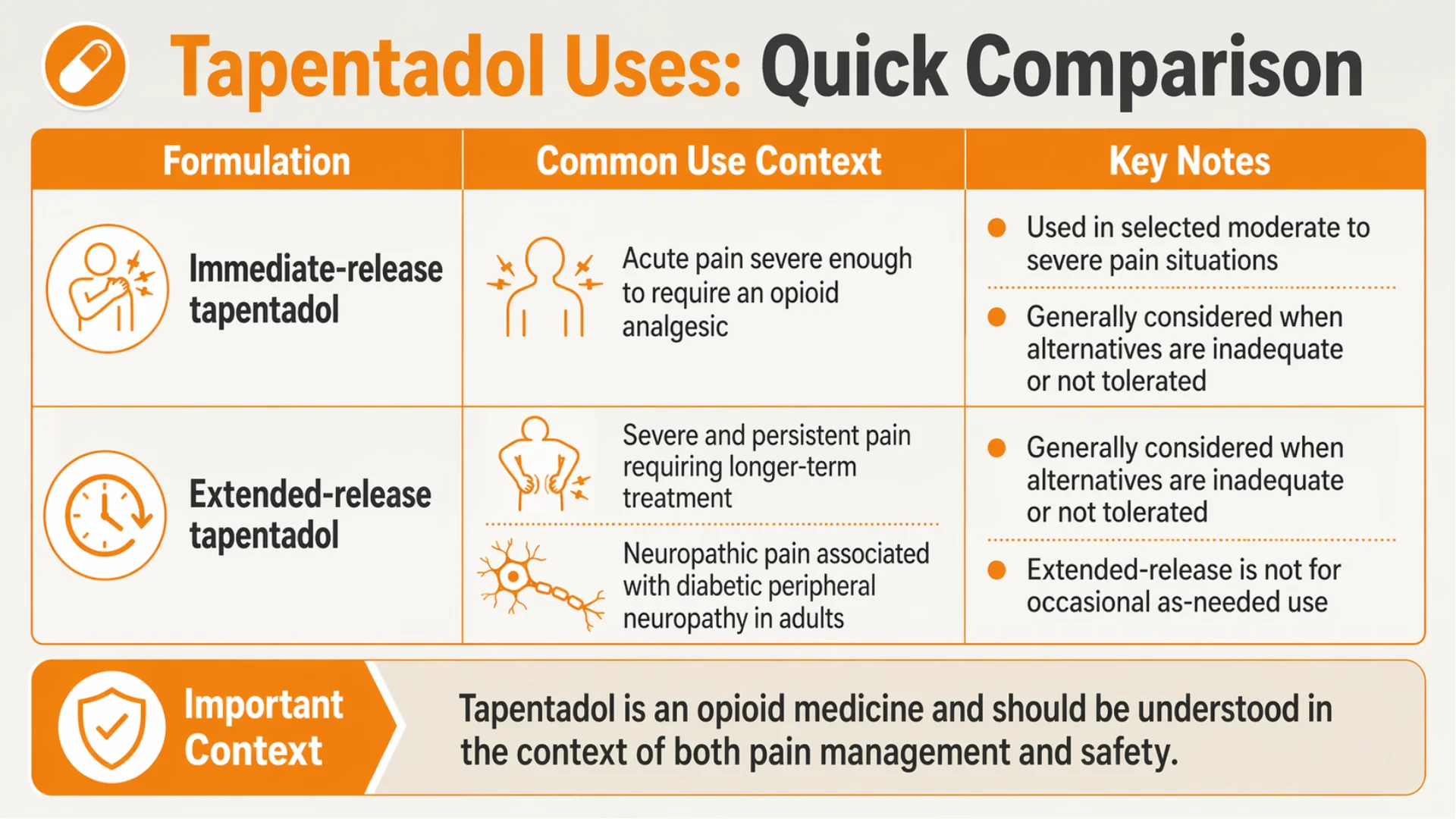
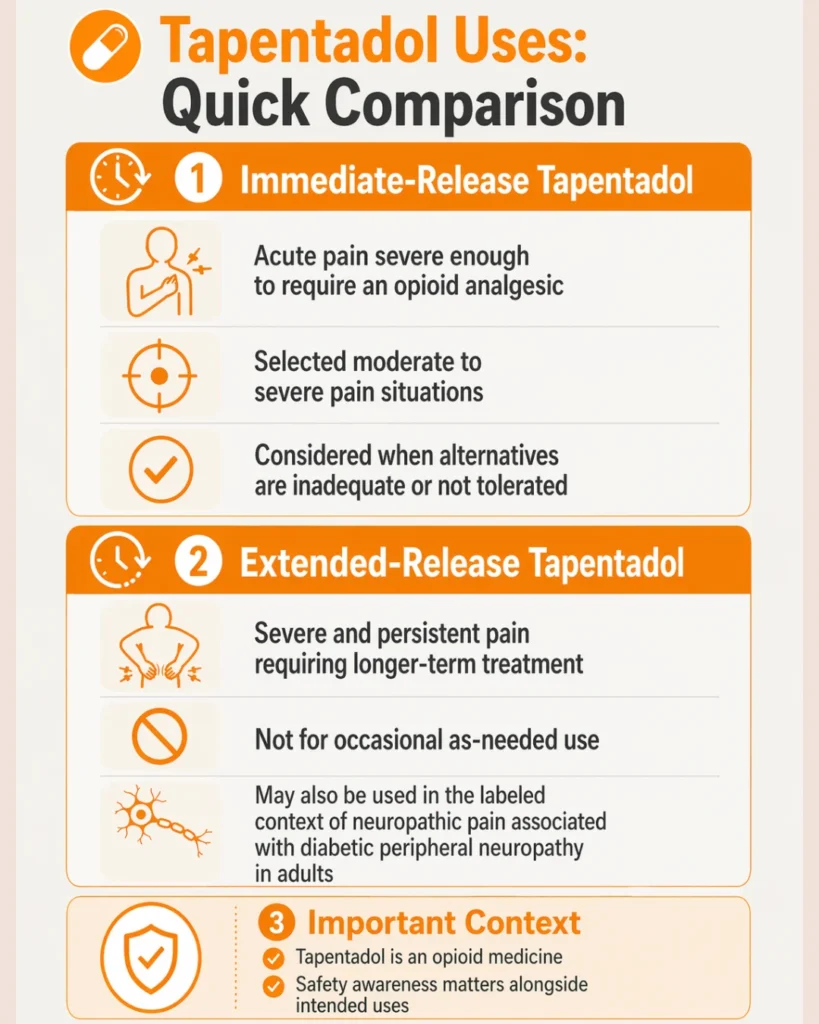
In practice, tapentadol is usually discussed in two broad settings. First, it may be considered for pain that starts suddenly and is severe enough to require short-term management. Second, it may be used in some cases of severe ongoing pain when a clinician determines that continuous treatment is appropriate.
However, tapentadol is not usually viewed as a first-step option for every painful condition. FDA labeling places opioid use in a narrower clinical context, especially when other treatments are ineffective, not tolerated, or otherwise unsuitable. As a result, understanding what is tapentadol used for also means understanding that it is part of a broader treatment decision.
What Types of Pain Is Tapentadol Commonly Discussed For?
Acute Pain
Many readers asking what is tapentadol used for are asking about acute pain. In U.S. labeling, immediate-release Nucynta is indicated for acute pain severe enough to require an opioid analgesic. In general, this refers to pain that begins suddenly and is intense enough that standard options may not be sufficient.
Severe Ongoing Pain
Another common question involves ongoing severe pain. Extended-release Nucynta ER is labeled for severe and persistent pain that requires an extended treatment period with a daily opioid analgesic. In addition, the labeling makes clear that this version is not intended for occasional as-needed use.
Neuropathic Pain Discussions
Readers also ask whether tapentadol is used for nerve pain. This comes up because Nucynta ER has a labeled indication for neuropathic pain associated with diabetic peripheral neuropathy in adults under specific conditions. However, that does not make tapentadol a general-purpose answer for every kind of nerve pain.
Therefore, when people search what is tapentadol used for, the answer often depends on whether they are asking about acute pain, persistent severe pain, or a specific neuropathic pain context.
Important Safety Information About Tapentadol
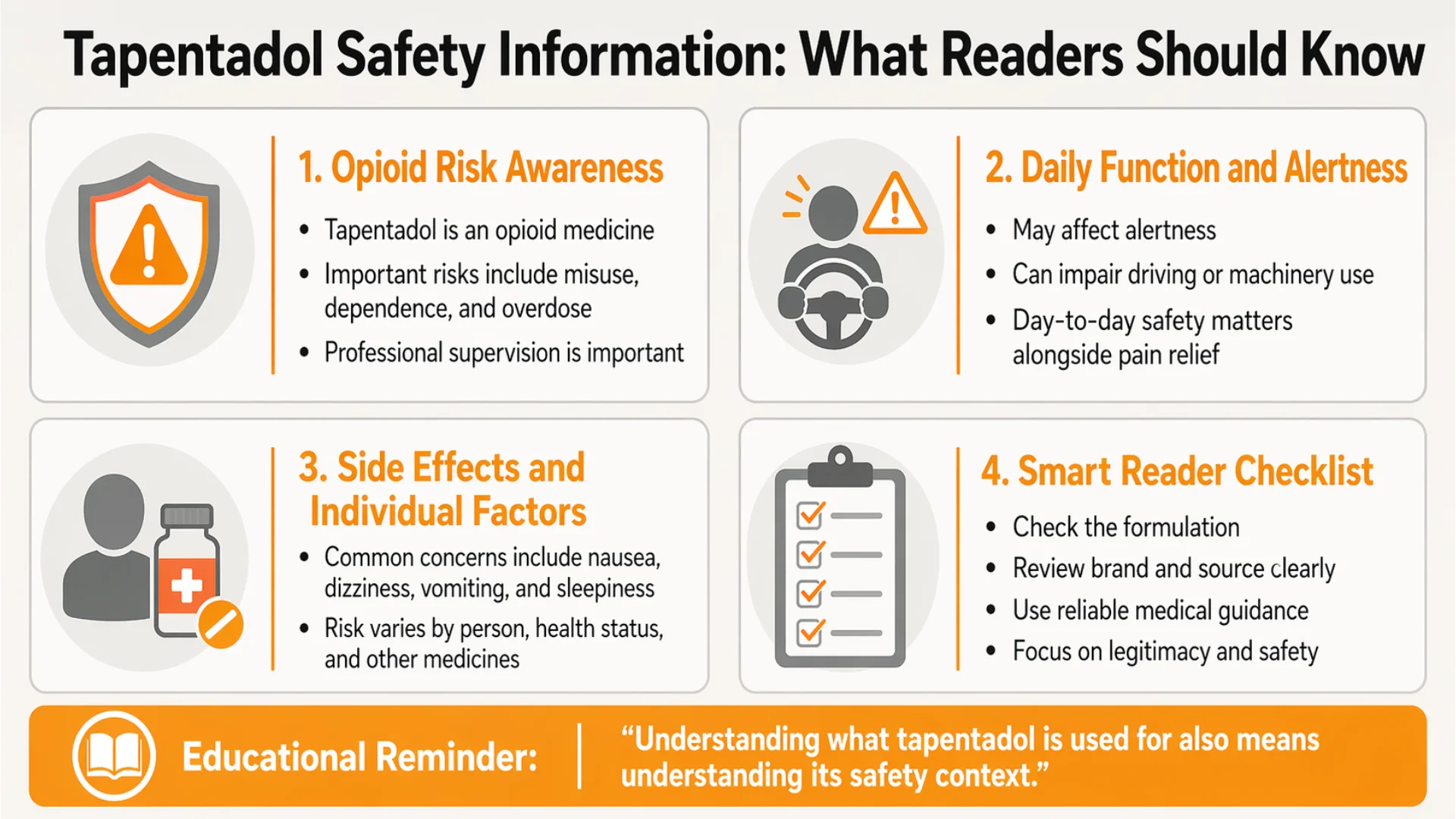
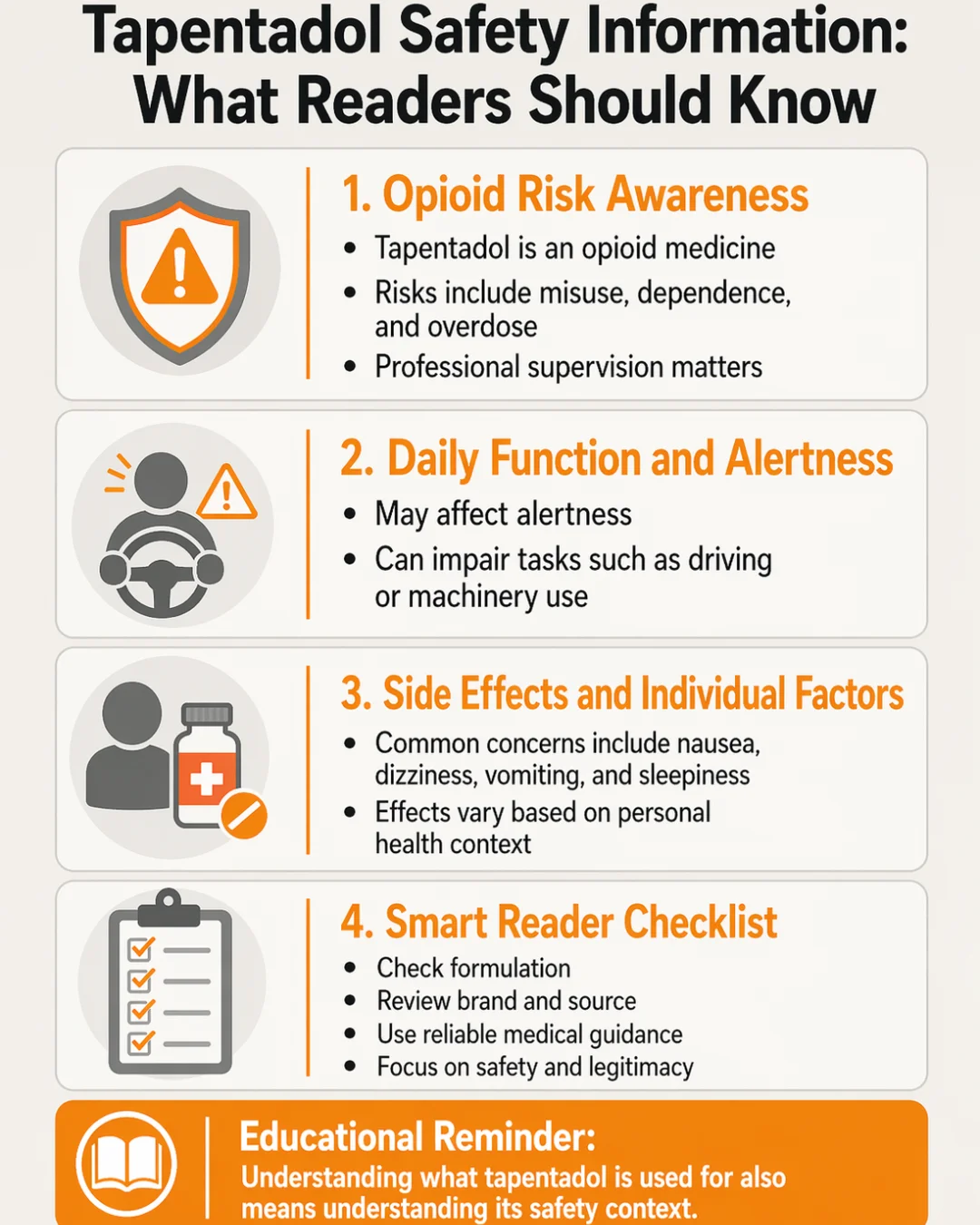
Any discussion of what is tapentadol used for should also cover safety. Since tapentadol is an opioid, it carries serious warnings related to addiction, abuse, misuse, overdose, and life-threatening breathing problems. Resources such as MedlinePlus outline these risks clearly and explain why medical supervision matters.
Drowsiness and Daily Function
Tapentadol may affect alertness and day-to-day functioning. It can impair the mental or physical ability needed for activities such as driving or operating machinery. Consequently, readers should understand that pain management and safety go together.
Dependence and Misuse Concerns
Like other opioids, tapentadol may be habit-forming, especially with longer use. In addition, dependence and withdrawal concerns can become relevant if opioid treatment is stopped improperly. For that reason, treatment decisions usually involve careful monitoring rather than casual self-management.
Side Effects and Individual Risk Factors
Side effects can vary by person, health condition, and other medicines being used. Common concerns include nausea, dizziness, vomiting, and sleepiness. Readers who want a fuller overview can review more about tapentadol side effects.
Overall, the safety profile is one of the biggest reasons professional guidance is essential when evaluating what is tapentadol used for in real-world care.
Nucynta, Generic Tapentadol, and Brand-Name Questions
Many readers search about the difference between Nucynta and tapentadol because they want clarity on brand versus generic naming. In simple terms, Nucynta is a brand name for tapentadol. For a more focused explanation, see Nucynta generic name.
At the same time, generic availability can differ by country, formulation, and timing. Because of that, readers should not assume that every product marketed online as “generic Nucynta” is an approved equivalent in every market. Product legitimacy, formulation details, and sourcing all matter.
For a global audience, the most practical takeaway is to read product information carefully and verify whether a listing clearly identifies the brand, formulation, and source. That makes brand-name questions easier to understand in the broader context of what is tapentadol used for and how it may appear across different markets.
Why Readers Compare Tapentadol With Other Pain Medicines
People often compare tapentadol with tramadol, hydrocodone, or Percocet to understand differences in use, tolerability, and overall fit. Those comparisons are understandable. However, they can oversimplify decisions that depend on pain type, treatment history, concurrent medicines, and personal risk factors.
For example, readers exploring tapentadol and hydrocodone are often trying to understand context rather than just asking which option is “stronger.” In reality, suitability depends on the full clinical picture.
Moreover, questions like “Is tapentadol stronger than tramadol?” do not always have a simple one-line answer. Safety, tolerability, and treatment goals matter just as much as relative potency.
Frequently Asked Questions
Tapentadol is used for certain cases of moderate to severe pain. In U.S. labeling, immediate-release tapentadol is indicated for acute pain severe enough to require an opioid analgesic, while extended-release tapentadol is used for severe and persistent pain and certain neuropathic pain cases associated with diabetic peripheral neuropathy in adults.
H3: Is tapentadol used for nerve pain?
It may be discussed in nerve pain contexts, and Nucynta ER has a labeled U.S. indication for neuropathic pain associated with diabetic peripheral neuropathy in adults under defined conditions. However, it is not a universal answer for every type of nerve pain.
Nucynta is a brand name for tapentadol. In general, “Nucynta” refers to the branded version, while “tapentadol” refers to the drug name itself.
Availability depends on the country and formulation. Because approval status can vary, readers should check current market-specific information and rely on trustworthy pharmacy or regulatory sources.
Comparisons with tramadol, hydrocodone, and similar medicines are common. However, the best choice depends on the pain condition, safety profile, previous treatment response, and clinician assessment rather than a simple strength comparison.
Conclusion
So, what is tapentadol used for? In educational terms, tapentadol is used for certain kinds of moderate to severe pain, especially acute severe pain and some forms of severe ongoing pain. Extended-release tapentadol also has a labeled U.S. use for neuropathic pain associated with diabetic peripheral neuropathy in adults under specific conditions.
Just as importantly, tapentadol is an opioid, so safety information should always be considered alongside any discussion of benefits or intended uses. Readers researching tapentadol-related options should focus on reliable product information, legitimacy, and professional medical guidance. To explore related listings and category information, you can review the Tapentadol section on GlobalPharmacare.net.
Actionable Steps
- Identify whether your question is about acute pain, severe ongoing pain, or nerve pain context.
- Review product details carefully, including formulation, brand name, and source.
- For example, if you are checking listing information, a product page such as Aspadol (Tapentadol) 100mg can help you understand how product details are presented.
- Use licensed medical guidance for any personal treatment decision or safety concern.
Key Takeaways
- Tapentadol is an opioid analgesic used in selected moderate to severe pain situations.
- Immediate-release tapentadol is associated with acute severe pain, while extended-release tapentadol is associated with severe and persistent pain.
- Nucynta is a brand name for tapentadol, but brand and generic availability can vary by market and formulation.
- Tapentadol also carries serious opioid-related risks, including misuse, dependence, and breathing-related warnings.
- Understanding what is tapentadol used for requires looking at both pain type and safety considerations.
Author Note
Paul Harris is a clinical content specialist focused on patient education in the pharmaceutical space. He develops clear, evidence-based content that helps readers understand medication uses, safety considerations, and regulatory context in a more accessible way. His work follows strong editorial standards and E-E-A-T principles, with close attention to trusted health authorities such as the FDA, NHS, and NICE. By translating complex drug information into practical educational guidance, Paul supports safer, more informed reading for a global audience.