Medical Disclaimer
This tapentadol guide is for educational and informational purposes only. Tapentadol is a controlled opioid analgesic and carries serious risks, including misuse, dependence, addiction, overdose, and death.
The information in this article does not replace professional medical advice, diagnosis, or treatment. Always consult a licensed healthcare professional before starting, stopping, or changing any medication. GlobalPharmacare.net does not provide medical advice, issue prescriptions, or recommend self-medication. Use of any medication must comply with the laws and regulations of your location. If you are experiencing a medical emergency, contact local emergency services immediately.
Tapentadol is a prescription pain medication often researched by patients and caregivers who want to understand options for moderate to severe pain. This guide explains how the medicine works, common uses, possible side effects, generic options, and important comparisons with other pain medicines.
Many people research this topic because they want to understand how Nucynta relates to generic versions, how the medicine compares with tramadol, hydrocodone, or Percocet, and what safety factors they should discuss with a licensed healthcare professional.
This article serves as the main educational hub for the Tapentadol content cluster on GlobalPharmacare.net. It gives a complete overview without replacing medical guidance. In addition, it connects readers to focused articles for deeper research.
What Is Tapentadol?
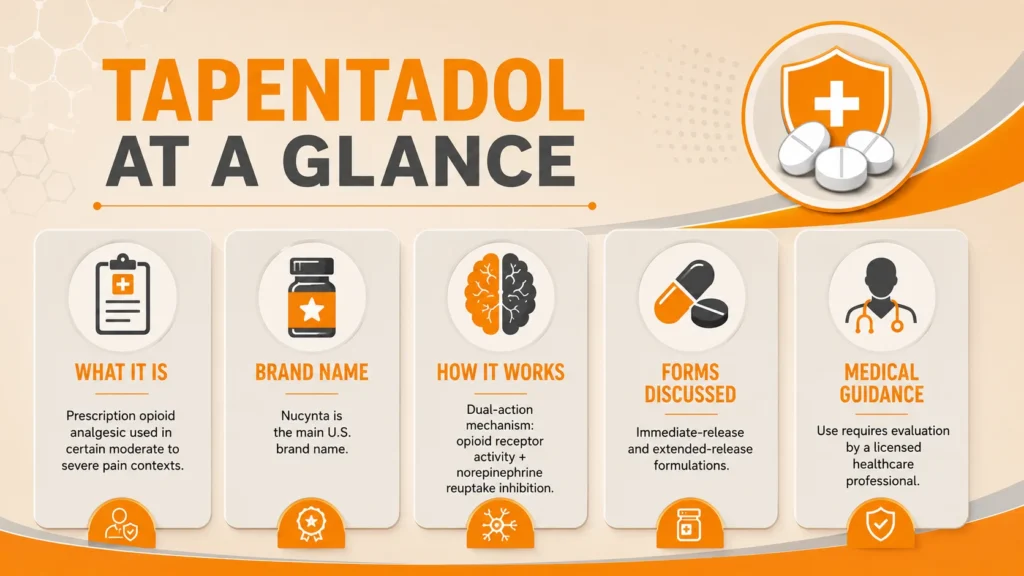
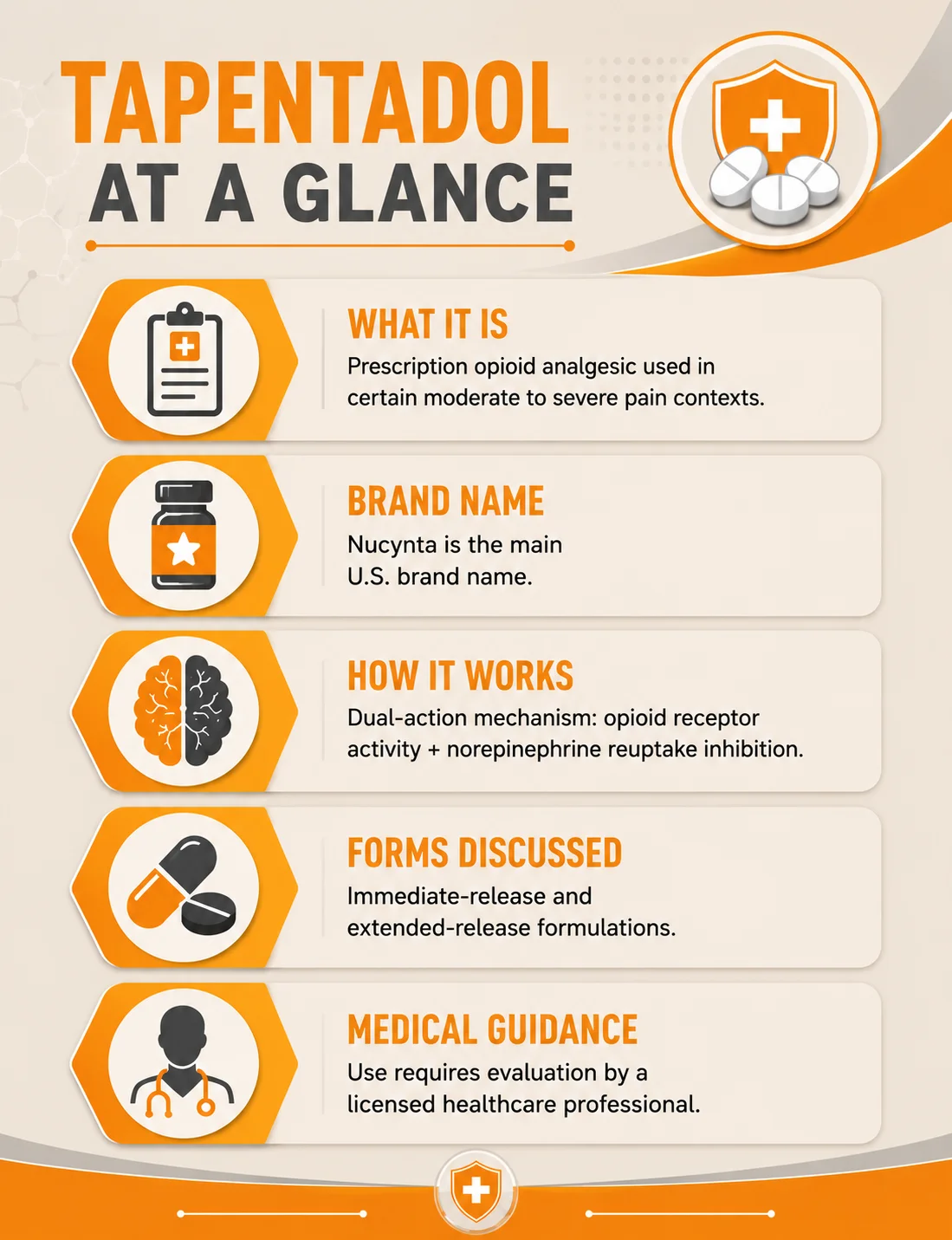
Tapentadol is a centrally acting opioid analgesic used in certain cases of moderate to severe pain. It differs from many traditional opioids because it combines two mechanisms in one medication.
In the United States, the brand name Nucynta is widely associated with this medication. Readers who want regulatory product details can review the official prescribing information.
The medicine has been discussed in both immediate-release and extended-release forms. Immediate-release products are often associated with short-term pain settings, while extended-release products are usually discussed in ongoing pain management contexts under close clinical supervision.
However, the medication is not appropriate for everyone. A healthcare professional must consider medical history, other medicines, risk factors, and treatment goals before deciding whether it fits a patient’s care plan.
Why This Medication Is Different
Most people compare pain medicines by strength alone. That approach can oversimplify the topic. Tapentadol matters because it works through opioid receptor activity and norepinephrine reuptake inhibition.
As a result, researchers often discuss it as a dual-action analgesic. This dual mechanism helps explain why it appears in comparisons with tramadol, hydrocodone, and oxycodone-based products.
Key Takeaways
It is a prescription opioid analgesic.
Nucynta is the main U.S. brand name.
It works through a dual-action mechanism.
It requires professional medical evaluation.
Tapentadol Uses and Pain Types Commonly Discussed
People often search for tapentadol uses when they want to understand where this medicine may fit within pain management. In general, clinicians discuss it in relation to moderate to severe pain when non-opioid options are not suitable or have not provided enough relief.
For a deeper look at approved and commonly discussed uses, visit What Is Tapentadol Used For?.
Key Takeaways
Acute pain may follow surgery, injury, or another short-term medical event. In these cases, healthcare professionals may consider different pain-control options based on severity, patient risk, and expected recovery time.
However, opioid medications require careful oversight. Therefore, patients should not use this information to self-select or adjust treatment.
Ongoing Pain Conditions
Extended-release forms are often discussed for ongoing pain that requires continuous management. These situations need careful monitoring because long-term opioid therapy can involve dependence, tolerance, side effects, and interaction risks.
In addition, clinicians may review non-opioid treatments, lifestyle factors, physical therapy, and other care options as part of a broader plan.
Neuropathic Pain Context
Some discussions also include nerve-related pain, especially when pain has burning, shooting, tingling, or electric-like qualities. Still, nerve pain can have many causes, and treatment plans vary widely.
Consequently, diagnosis matters. A licensed healthcare professional should identify the underlying pain type before discussing medication choices.
Key Takeaways
The medicine is commonly discussed for moderate to severe pain.
Pain type and patient history influence treatment decisions.
Acute, persistent, and some nerve-related pain contexts appear in research discussions.
Professional guidance remains essential.
How Tapentadol Works
Tapentadol works through two main actions. First, it activates mu-opioid receptors in the brain and spinal cord. This action changes how the nervous system perceives pain signals.
Second, it inhibits norepinephrine reuptake. Norepinephrine plays a role in the body’s natural pain-control pathways. By affecting this pathway, the medicine may support pain modulation in a different way than traditional opioids.
Dual-Action Pain Modulation
The dual mechanism is one of the most important points in this guide. It helps explain why the medicine does not fit neatly into the same category as every other opioid.
In simple terms, the medication may:
Reduce pain perception through opioid receptor activity
Support descending pain-control pathways through norepinephrine activity
This does not mean it is safer for every patient. Instead, it means its pharmacology differs from some other pain medicines.
Why Mechanism Matters
Mechanism matters because it can affect how clinicians compare medicines. For example, two medicines may both treat pain, yet they may differ in metabolism, side effect patterns, drug interactions, and patient suitability.
Therefore, comparison articles should not focus only on “which is stronger.” A more useful comparison looks at ingredients, risks, formulation, patient factors, and medical context.
Brand Name Nucynta and Generic Tapentadol
Nucynta is the original branded product associated with this active ingredient in the United States. When readers search for Nucynta generic, they usually want to know whether non-brand versions exist and how availability differs by region.
Readers who want a naming-focused explanation can also review Nucynta Generic Name.
Brand vs Generic Medicines
A generic medicine contains the same active ingredient as the brand-name product. Regulators require approved generic drugs to meet standards for quality and bioequivalence. The FDA explains these requirements in its overview of FDA generic drug standards.
However, generics may differ in inactive ingredients, color, shape, packaging, or manufacturer. These differences do not necessarily mean the medicine works differently, but patients with sensitivities should discuss concerns with a healthcare professional.
Authorized Generic Products
An authorized generic is different from a standard generic. It is usually marketed without the brand name but produced under the brand company’s approval or arrangement. The FDA explains this category in FDA’s authorized generic guidance.
This distinction matters because buyers often see different labels, manufacturers, and product descriptions online. As a result, they should verify product identity carefully.
Why Availability Can Vary
Generic tapentadol availability depends on several factors, including local regulations, patents, exclusivity periods, approved manufacturers, and supply conditions.
In addition, legal access differs across countries. A product that appears online may not be approved or lawful in a reader’s location. Therefore, consumers should confirm local rules and consult appropriate professionals before making any medication-related decision.
Key Takeaways
Nucynta is the main brand name linked to this medicine.
Generic options depend on market and regulatory conditions.
Authorized generics are a separate product category.
Buyers should verify product approval and legal availability.
Tapentadol Side Effects and Safety Considerations
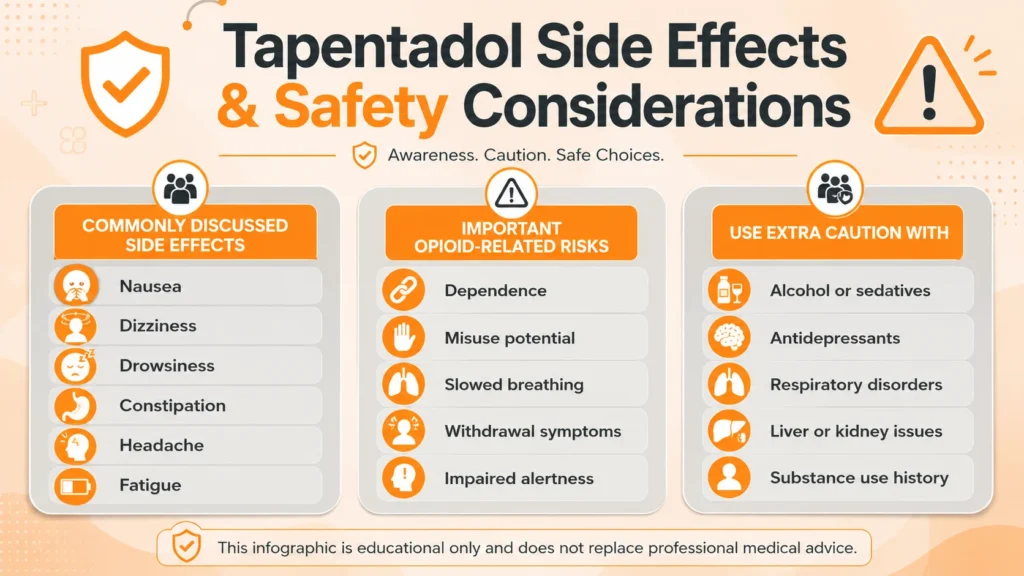
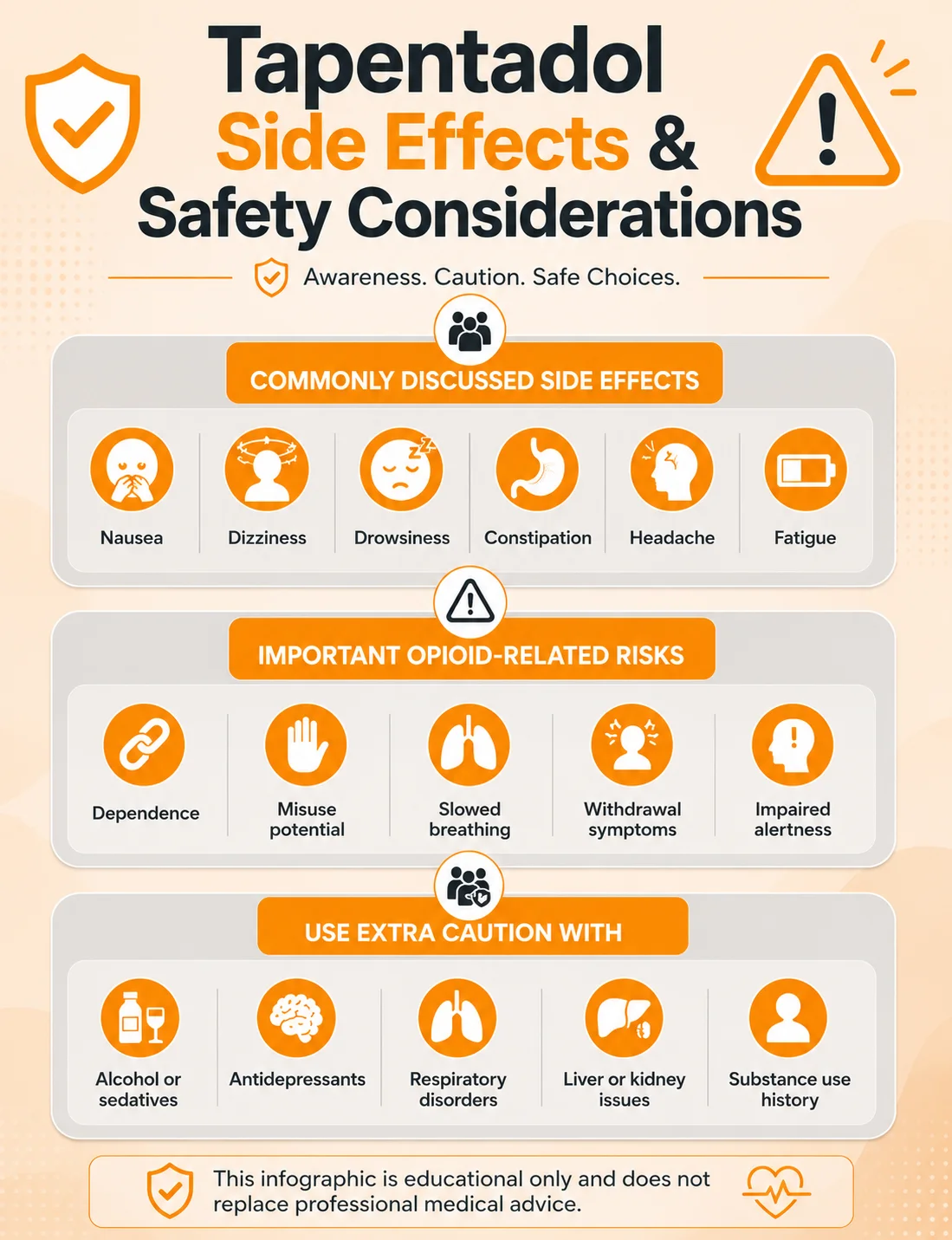
Like all opioid medicines, tapentadol side effects require careful attention. Some effects may feel mild, while others can become serious and need urgent medical care.
For a focused overview, read Tapentadol Side Effects.
Commonly Discussed Side Effects
Commonly reported side effects may include:
Nausea
Dizziness
Drowsiness
Constipation
Headache
Dry mouth
Fatigue
Not everyone experiences the same effects. In addition, side effects can vary based on other medicines, age, health conditions, and individual sensitivity.
Serious Opioid-Related Risks
Opioid medicines can cause serious risks, including dependence, misuse, withdrawal symptoms, slowed breathing, overdose, and impaired alertness. Readers can learn more about responsible opioid awareness through MedlinePlus information on safe opioid use.
These risks are one reason medical supervision matters. Patients should not combine opioid medicines with alcohol, sedatives, or other central nervous system depressants unless a licensed healthcare professional has reviewed the risks.
Drug Interactions
Drug interactions can increase the chance of sedation, breathing problems, serotonin-related effects, or other adverse reactions. Antidepressants, sleep medicines, anti-anxiety medicines, alcohol, and some muscle relaxants may require special attention.
Moreover, patients should share a complete medication list with their healthcare provider. This list should include prescription drugs, over-the-counter products, and supplements.
Special Populations
Some people may face higher risk. This includes those with breathing disorders, liver problems, kidney disease, sleep apnea, substance use history, older age, or complex medication regimens.
Therefore, individualized medical assessment is not optional. It is central to safer pain management.
Tapentadol vs Other Common Pain Medicines
Many readers compare pain medicines because they want practical context. However, comparisons should remain educational and should not encourage self-directed switching.
Each medicine has its own ingredients, mechanism, risk profile, and clinical role. As a result, the best choice depends on the patient and the healthcare professional’s judgment.
Tapentadol vs Tramadol
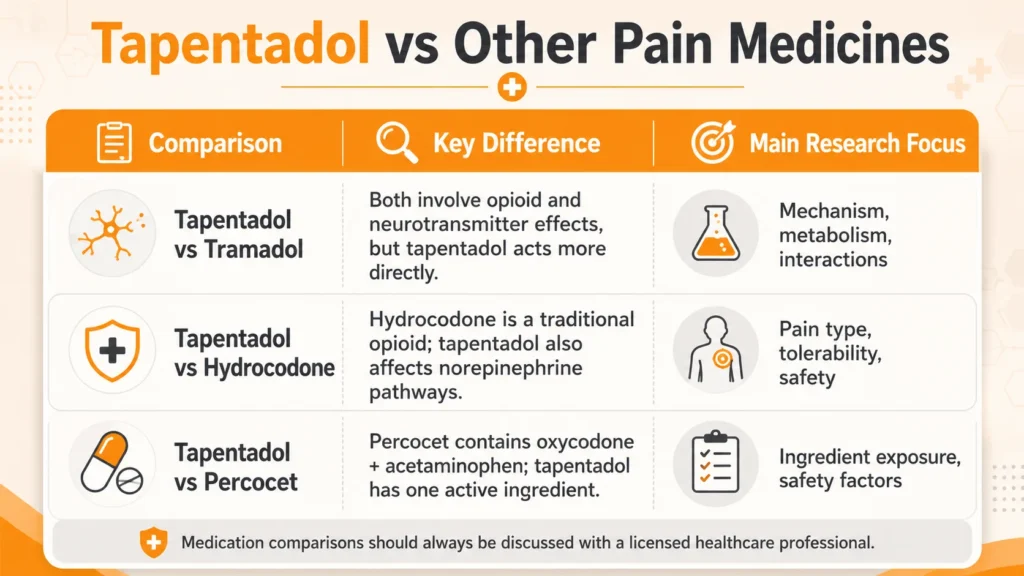
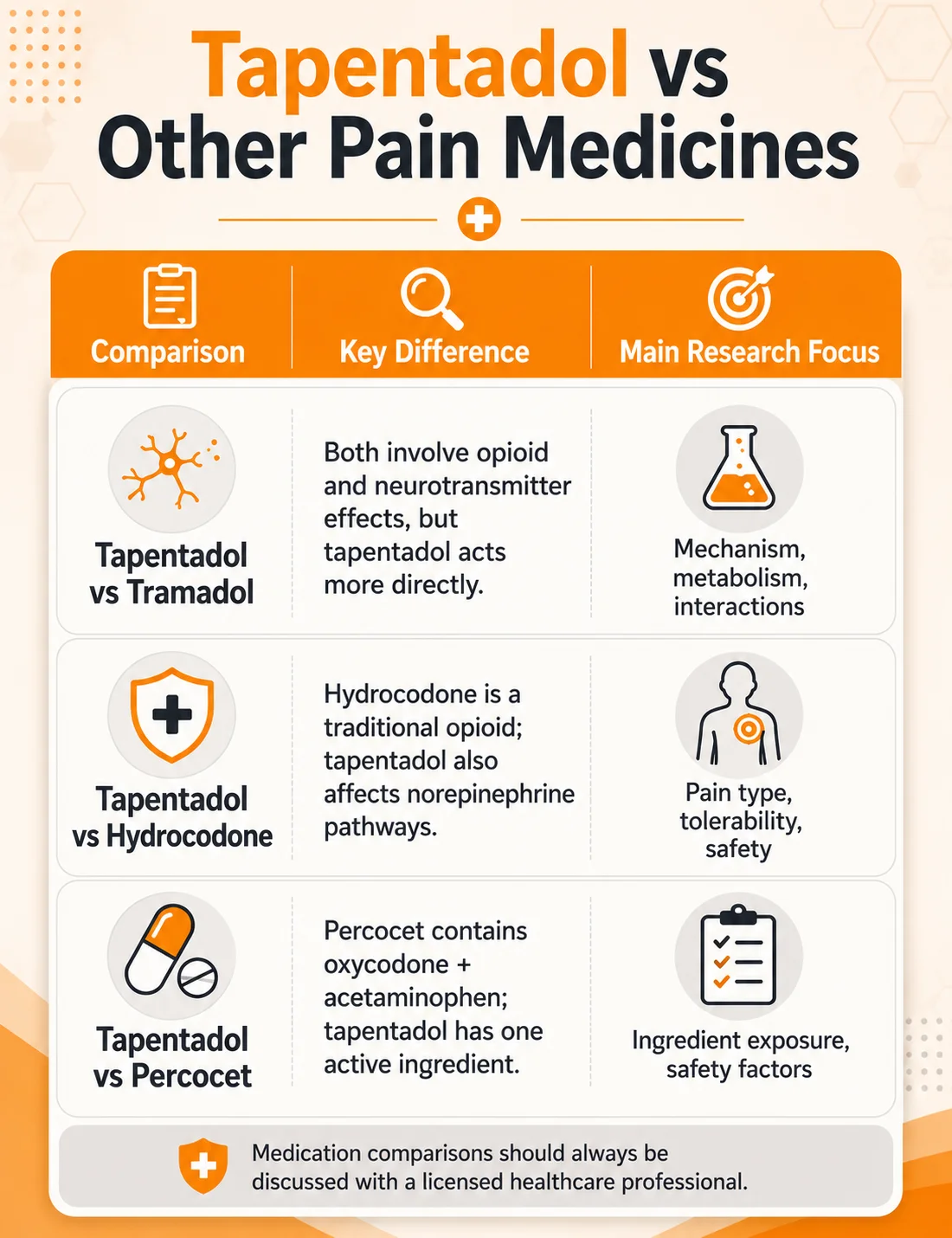
The comparison between Tapentadol vs Tramadol is common because both medicines have opioid and neurotransmitter-related activity.
However, they differ in how they work. Tramadol depends more heavily on metabolism to produce some of its effects, while tapentadol has a more direct mechanism. This difference may influence how clinicians think about predictability, interactions, and patient-specific response.
Still, both medicines carry opioid-related risks. Therefore, neither should be viewed as risk-free.
Tapentadol vs Hydrocodone
The Tapentadol vs Hydrocodone comparison focuses on a dual-action analgesic versus a more traditional opioid.
Hydrocodone has long appeared in pain management discussions, often in combination products. Tapentadol differs because it also influences norepinephrine pathways.
In practice, clinicians may consider the type of pain, patient history, other medicines, and side effect concerns before selecting an option.
Tapentadol vs Percocet
The Tapentadol vs Percocet comparison often centers on formulation.
Percocet contains oxycodone and acetaminophen. Tapentadol contains one active ingredient. This matters because acetaminophen has its own safety profile, especially when used with other products that also contain it. Readers can review MedlinePlus information on acetaminophen safety considerations.
Therefore, comparison decisions should look beyond pain relief alone. Ingredient exposure, interactions, liver health, and patient risk all matter.
Comparison Summary
- Tramadol and tapentadol both involve opioid and neurotransmitter effects.
- Hydrocodone is a more traditional opioid option.
- Percocet combines oxycodone with acetaminophen.
- Each comparison requires medical context.
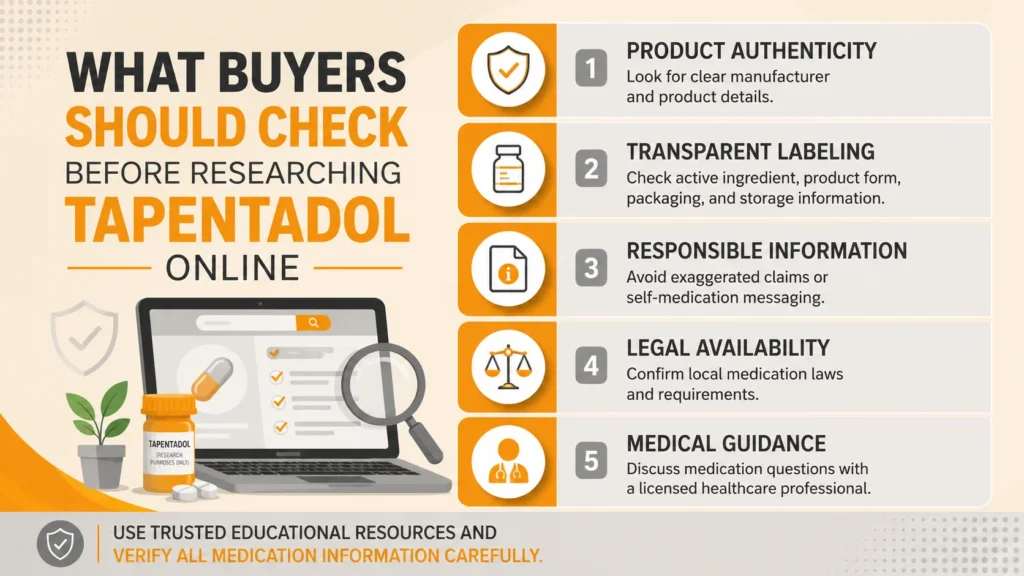
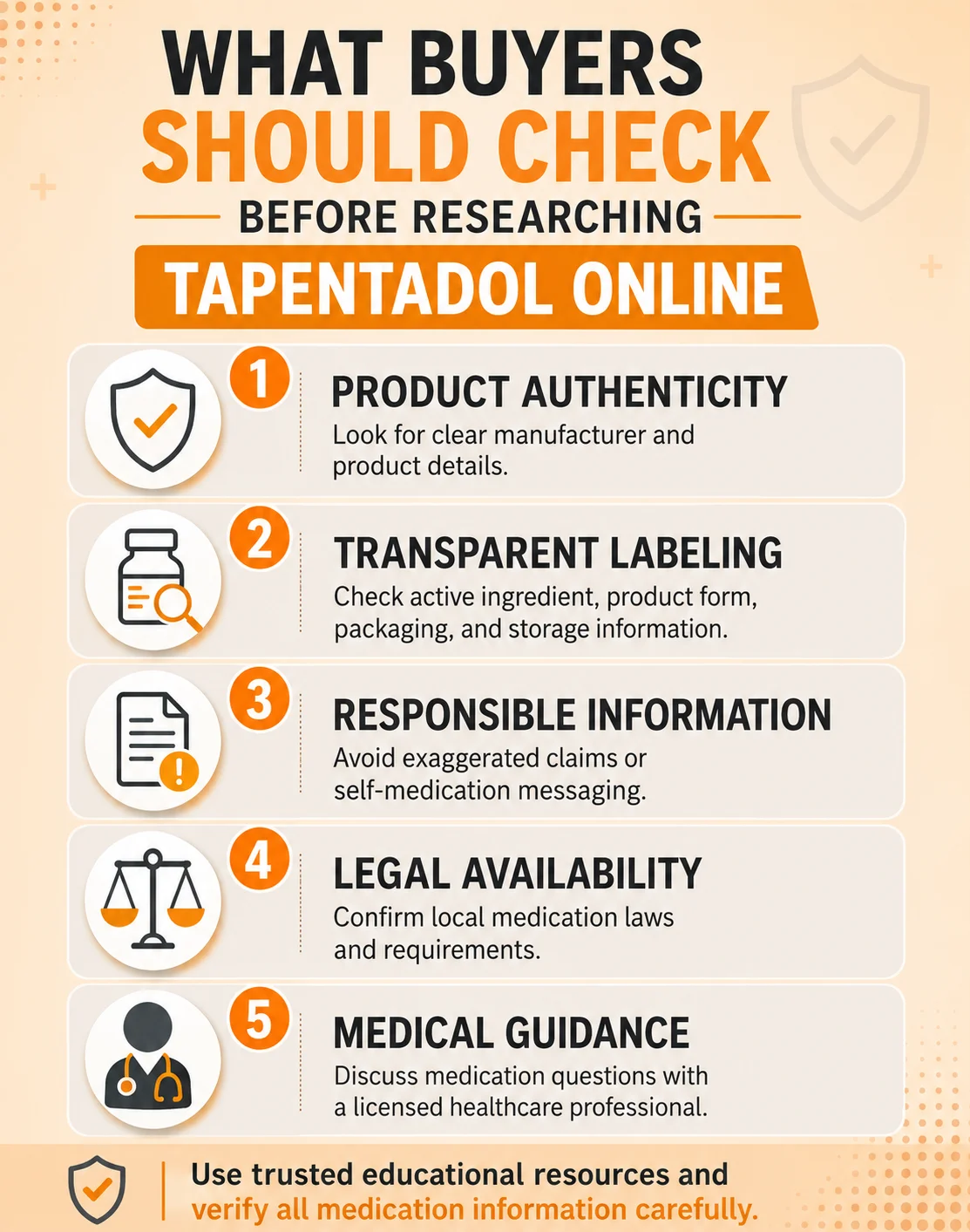
What Buyers Should Know Before Researching Tapentadol Online
Online research can help patients understand product names, categories, and safety topics. However, medication information online can also be confusing, incomplete, or unreliable.
Readers who want to explore product listings can review the tapentadol category on GlobalPharmacare.net.
Product Authenticity
Authenticity matters when researching any prescription medicine online. A trustworthy platform should provide clear product details, manufacturer information, secure site features, and accessible support.
In contrast, vague product descriptions, unrealistic claims, missing contact details, or pressure-based messaging should raise concern.
Transparent Labeling
Reliable product information should clearly state:
Active ingredient
Manufacturer or supplier details
Product form
Packaging information
Storage guidance
Safety disclaimers
This information helps readers compare options more responsibly.
Educational Content Over Sales Claims
A trustworthy pharmacy website should not promise guaranteed outcomes or present opioid medicines as simple consumer products. Instead, it should provide balanced information, emphasize risks, and encourage consultation with licensed healthcare professionals.
Moreover, buyers should avoid any source that encourages self-medication or bypassing legal requirements.
Regulatory Awareness
Medication laws vary by country. Import rules, prescription requirements, and product availability can differ widely.
Therefore, readers should confirm that any product research or purchase complies with local laws and medical standards.
Frequently Asked Questions
Yes. It is classified as an opioid analgesic. It also has norepinephrine reuptake inhibition activity, which makes its mechanism different from many traditional opioids.
Nucynta is a brand name for medicines containing the same active ingredient. However, product names and availability may vary by country.
Generic availability depends on regional regulations, patent status, approved manufacturers, and supply conditions. Buyers should verify legal availability in their location.
It is commonly discussed for moderate to severe pain, including some acute, ongoing, and nerve-related pain contexts. A healthcare professional must decide whether it fits a specific patient’s needs.
Both medicines have opioid and neurotransmitter-related effects. However, they differ in metabolism, mechanism, and clinical considerations.
Hydrocodone is usually described as a traditional opioid. This medication has an added norepinephrine-related mechanism, which makes the comparison more complex than strength alone.
Percocet combines oxycodone with acetaminophen. By contrast, tapentadol is a single active ingredient medication. This difference affects how clinicians review ingredient exposure and safety factors.
Buyers should check product authenticity, labeling, pharmacy transparency, legal requirements, and professional medical guidance.
Key Takeaways
- Tapentadol is a prescription opioid analgesic with a dual-action mechanism.
- Nucynta is the main U.S. brand name associated with this active ingredient.
- Generic and authorized generic availability can vary by country and manufacturer.
- Common side effects include nausea, dizziness, drowsiness, constipation, and headache.
- Serious risks include dependence, misuse, respiratory depression, overdose, and withdrawal.
- Comparisons with tramadol, hydrocodone, and Percocet should focus on mechanism, ingredients, and safety.
- Online buyers should verify authenticity, labeling, legal access, and pharmacy transparency.
- Medical decisions should always involve a licensed healthcare professional.
Conclusion: A Complete Guide for Informed Research
Understanding this medicine requires more than asking whether it is stronger than another pain medication. A complete review should include its mechanism, approved and commonly discussed uses, brand and generic status, side effects, interaction risks, and comparison with other opioid medicines.
This guide also shows why online research should remain careful and balanced. Opioid medicines carry serious risks, so readers should avoid any source that minimizes safety concerns or encourages self-treatment.
GlobalPharmacare.net provides educational resources and product information to help users research pain-management topics responsibly. Readers who want to continue exploring product details can review Aspadol Tapentadol 100mg as part of broader informational research.
Actionable Steps
- Review the main uses, mechanisms, and safety considerations in this guide.
- Read the dedicated articles on Nucynta, generic availability, and medicine comparisons.
- Compare product information through trusted resources rather than unsupported claims.
- Confirm whether a product is legally available in your region.
- Check active ingredient details, manufacturer information, and labeling.
- Speak with a licensed healthcare professional before making any medication decision.
- Use GlobalPharmacare.net as an educational starting point, not a substitute for medical care.
Author Note
Paul Harris is a Senior Clinical Researcher and Lead Content Strategist for GlobalPharmacare.net. With more than 15 years of experience in pharmaceutical journalism and healthcare communications, Paul focuses on making complex medication information easier for patients and caregivers to understand.
His work covers patient safety, drug bioequivalence, generic medication awareness, and the global regulatory landscape of pain management. Paul works with medical reviewers and editorial teams to help ensure that GlobalPharmacare.net resources remain accurate, transparent, and aligned with high standards for experience, expertise, authoritativeness, and trustworthiness.