

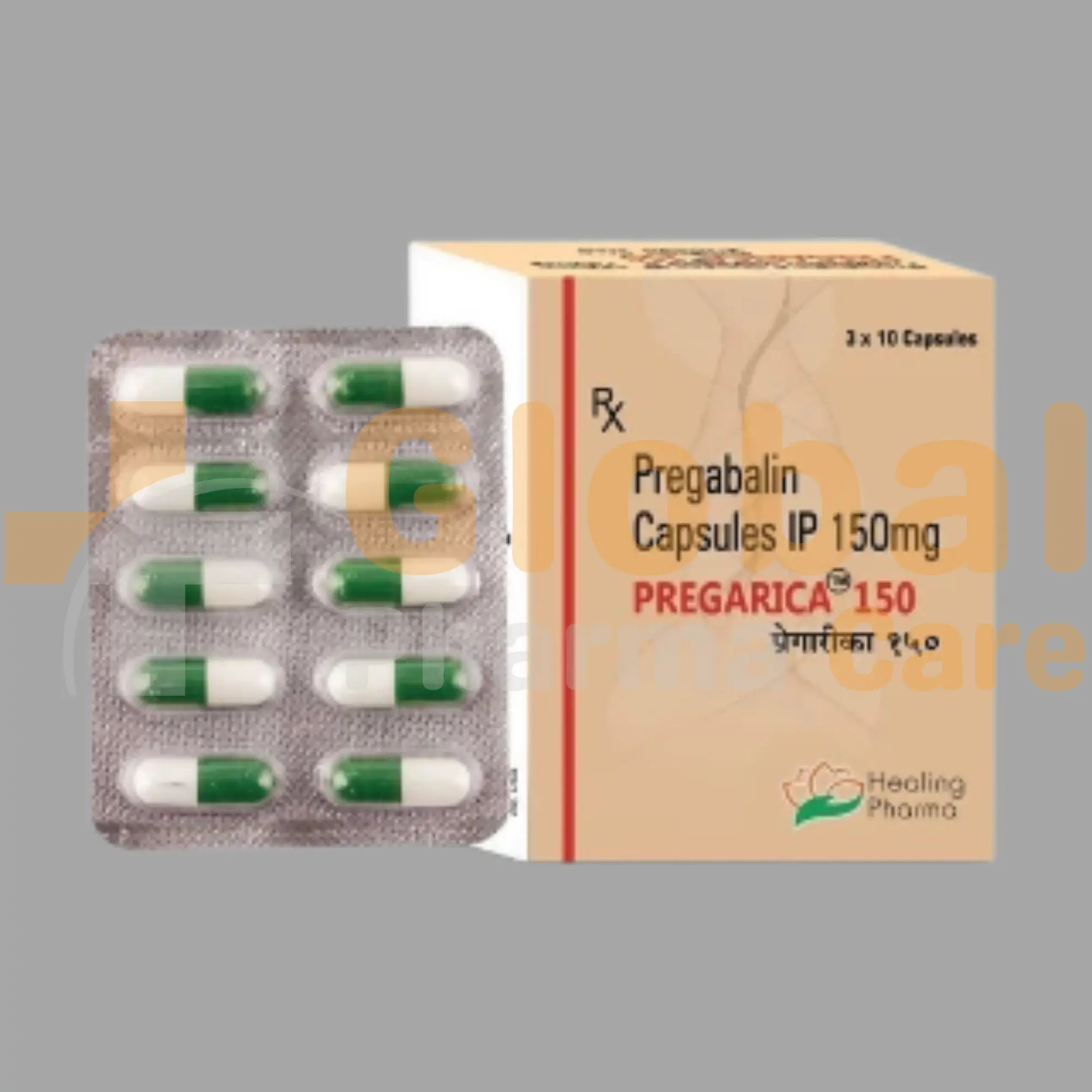
Pregarica 150 mg: Uses, Dosage, Side Effects & Safety
Price range: $92.00 through $170.00
- Active Ingredient (Generic Name): Pregabalin
- Indication: Neuropathic pain/ Epilepsy/ Seizures/ Fibromyalgia
- Manufacturer: Healing Pharma, India
- Packaging: 10 capsules/ strip
- Strength 150mg
Description
Introduction to Pregarica 150 mg
Pregarica 150 mg is a branded version of pregabalin, a well-known medicine for treating conditions linked to nerve pain and abnormal brain activity. The 150 mg strength is one of the most frequently prescribed doses, offering a balance between therapeutic effectiveness and tolerability.
Pregarica works by calming overactive nerve signals in the brain and spinal cord. This helps reduce chronic pain, improve sleep, and manage certain neurological conditions. It is available in select markets and trusted by physicians as part of comprehensive treatment plans.
What is Pregarica 150 mg Used For?
Neuropathic Pain
Pregarica 150 mg is widely prescribed for nerve pain, which may result from:
- Diabetic peripheral neuropathy
- Post-herpetic neuralgia (pain following shingles)
- Spinal cord injury pain
- Central neuropathic pain
By reducing abnormal nerve signaling, it helps relieve burning, stabbing, or electric shock-like pain sensations.
Fibromyalgia
Fibromyalgia is a long-term condition characterized by widespread musculoskeletal pain, fatigue, and sleep problems. Pregarica 150 mg can:
- Reduce pain intensity
- Improve sleep quality
- Support better daily function
- Lower associated anxiety symptoms
Anxiety (Off-Label in the U.S.)
In many countries, pregabalin is approved for generalized anxiety disorder (GAD). In the United States, its use for anxiety is off-label but still common in clinical practice. Pregarica 150 mg may help reduce worry, tension, restlessness, and physical symptoms of anxiety.
Seizures
Pregarica 150 mg is sometimes prescribed as an adjunctive treatment for partial-onset seizures in adults, usually in combination with other anti-seizure medicines.
Dosage and Administration
The 150 mg capsule is a common starting or maintenance dose:
- Doctors may prescribe Pregarica 150 mg once or twice daily, depending on the condition.
- It can also serve as a stepping stone to higher doses when needed.\
Maximum Daily Doses by Condition
- Diabetic neuropathy: up to 300 mg/day
- Post-herpetic neuralgia & spinal cord injury pain: up to 600 mg/day, divided into 2–3 doses. This higher dose is reserved for patients who do not achieve enough relief at lower doses.
- Fibromyalgia: up to 450 mg/day (doses above this provide no added benefit and increase side effects)
- Seizures: up to 600 mg/day
- Anxiety: 150–600 mg/day (approved in the EU and other countries; off-label in the U.S.)
How to Take Pregarica 150 mg
- Swallow the capsule whole with water
- Can be taken with or without food
- Take doses at consistent times daily
- Do not crush, chew, or split the capsule
Side Effects of Pregarica 150 mg
Common Side Effects
- Drowsiness or dizziness
- Tiredness or fatigue
- Blurred vision
- Dry mouth
- Swelling in hands or feet
- Weight gain
- Difficulty concentrating
These effects often improve as the body adjusts.
Serious Side Effects (Seek Medical Help)
- Severe allergic reactions (angioedema)
- Respiratory depression (slow or shallow breathing), especially if combined with alcohol, opioids, or sedatives
- New or worsening suicidal thoughts or mood changes
- Severe skin reactions (rash, blistering, peeling)
- Unexplained muscle pain or weakness
Risk of Dependence and Misuse
Pregarica 150 mg is a Schedule V controlled substance in many regions. It has a lower risk of misuse compared to stronger drugs but still carries the potential for dependence.
Signs of misuse may include:
- Taking larger doses than prescribed
- Experiencing withdrawal when stopping
- Relying on the medicine for daily function
Precautions and Warnings
- Avoid alcohol: It raises sedation and breathing risks.
- Other CNS depressants: Combining with opioids, benzodiazepines, or sleeping pills increases danger.
- Elderly patients: More prone to dizziness, drowsiness, and falls.
- Kidney impairment: Dose adjustment may be required.
- Pregnancy/Breastfeeding: Only use if clearly recommended by a doctor.
Pregarica 150 mg vs Other Pregabalin Brands
Pregabalin is marketed globally under various brand names such as Lyrica, Pregalin, Nervigesic, and Neugaba. Pregarica is one of the trusted alternatives, offering the same active ingredient and therapeutic benefits, often at a more affordable price point.
Withdrawal and Discontinuation
Stopping Pregarica 150 mg suddenly may cause withdrawal symptoms:
- Anxiety, restlessness
- Insomnia or poor sleep
- Nausea, headaches
- Flu-like symptoms
- Seizures (in epilepsy patients)
Safe tapering with gradual dose reduction over at least one week is recommended under medical supervision.
FAQs About Pregarica 150 mg
How long does it take to work?
Most patients feel improvement within 1–2 weeks, with full effects in 4–6 weeks.
Can I drink alcohol with Pregarica 150 mg?
No. Alcohol increases risks of dizziness, drowsiness, and breathing problems.
Is Pregarica 150 mg addictive?
It carries a low but real risk of misuse and dependence, especially in people with a history of substance abuse.
What’s the price of Pregarica 150 mg online?
Prices differ by region and pharmacy. Always buy from reliable and licensed sources like GlobalPharmaCare.net.
Conclusion
Pregarica 150 mg is a widely used pregabalin formulation for nerve pain, fibromyalgia, seizures, and anxiety (off-label in the U.S.). The 150 mg strength makes it a common choice for both starting and maintaining treatment.
When used responsibly and under medical supervision, Pregarica 150 mg can provide substantial relief and help patients regain quality of life.
DISCLAIMER
This content is for informational purposes only and should not replace professional medical advice, diagnosis, or treatment. Always consult your healthcare provider before starting, adjusting, or stopping Pregarica 150 mg.
Additional information
| Select Pills | 100, 200, 300 |
|---|
Related products
-
- Pregabalin
Buy Lyrica 300 mg Online – Pregabalin Capsules for Stronger Nerve Pain & Fibromyalgia Relief
- Price range: $120.00 through $330.00
- Select options This product has multiple variants. The options may be chosen on the product page
-
- Pregabalin
Lyrikare 500mg (Pregabalin) – Relieve Anxiety, Fibromyalgia & Nerve Pain
- Price range: $125.00 through $330.00
- Select options This product has multiple variants. The options may be chosen on the product page
-
- Pregabalin
Pregalin 150 mg: A Complete Guide to Uses, Dosage, and Side Effects
- Price range: $65.00 through $165.00
- Select options This product has multiple variants. The options may be chosen on the product page