

Medical Disclaimer
This article on modafinil for brain fog is for informational purposes only and does not provide medical advice, diagnosis, or treatment. Brain fog can have many underlying causes, some of which may require medical attention.
Modafinil is a Prescription-Only Medicine (POM) in the US, UK, and Australia, and its use for brain fog or cognitive enhancement is considered off-label. Using modafinil without medical supervision may increase the risk of side effects. Always consult a licensed healthcare professional before using modafinil
Brain fog is a common yet frustrating experience—often described as feeling mentally “cloudy,” slow, or unfocused. As modern work demands, irregular sleep, and digital overload increase, many people begin researching modafinil for brain fog as a possible way to improve alertness and mental clarity.
Modafinil is a prescription wakefulness agent that is frequently discussed for off-label cognitive use. This article takes a balanced, evidence-aware look at modafinil for brain fog, explaining what it may help with, where it falls short, and which safer alternatives may be worth considering.
What Is Brain Fog and What Causes It?
Brain fog is not a formal medical diagnosis. Instead, it is a collection of cognitive symptoms that can arise from lifestyle factors, medical conditions, or psychological stressors.
Common Symptoms of Brain Fog
People experiencing brain fog often report:
- Difficulty concentrating or sustaining attention
- Slower thinking or reduced mental sharpness
- Short-term memory lapses
- Mental fatigue despite adequate effort
A clear medical overview of symptoms and causes is available in this guide on brain fog symptoms and causes.
Lifestyle, Medical, and Cognitive Contributors
Common contributors include poor sleep quality, chronic stress, nutritional deficiencies, hormonal changes, certain medications, and underlying health conditions. Because the causes vary widely, no single treatment works for everyone.
Key Takeaways
- Brain fog is a symptom cluster, not a diagnosis
- Causes range from lifestyle stressors to medical issues
- Identifying the root cause is essential
How Modafinil Works in the Brain
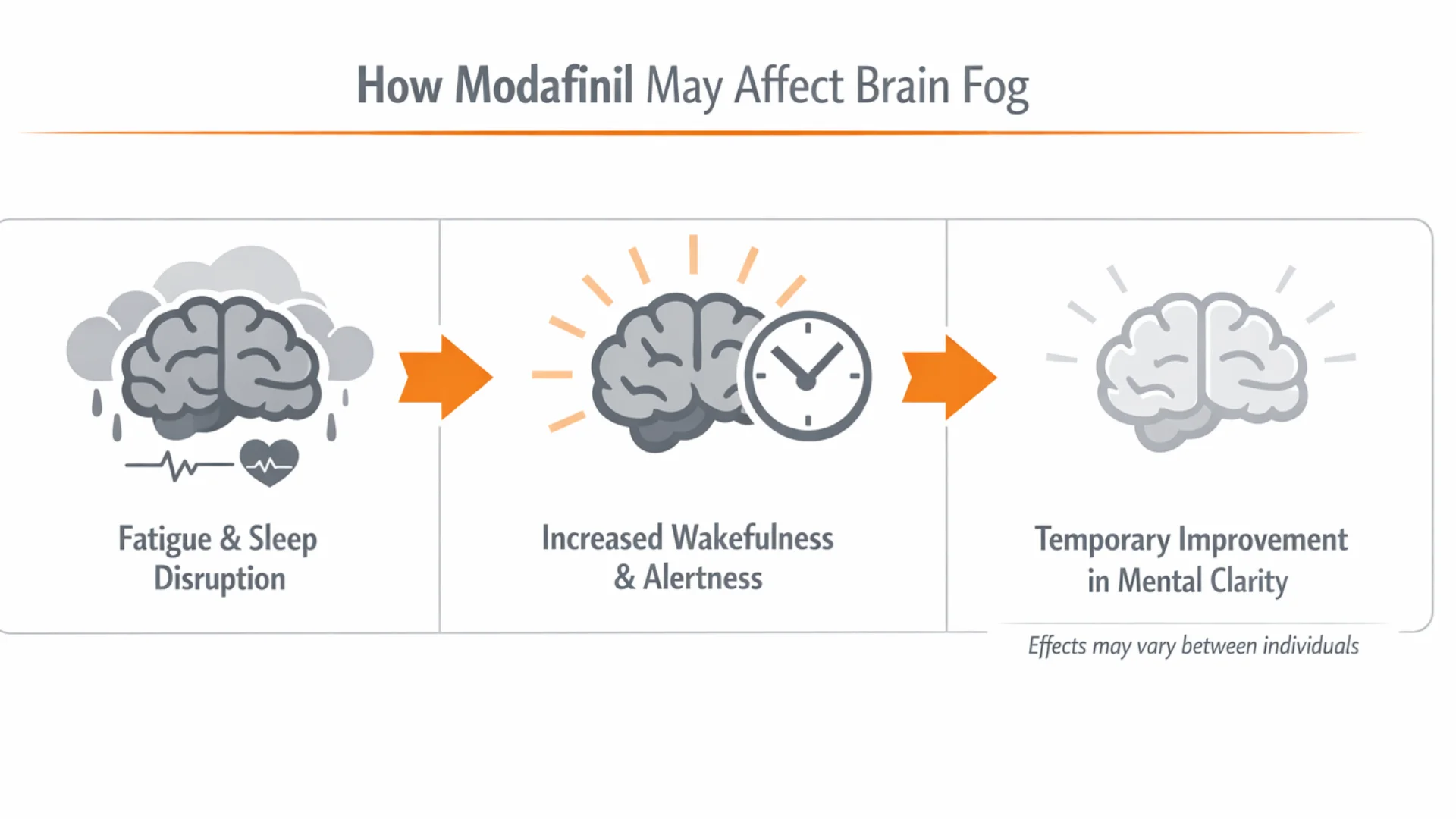
Modafinil was originally developed to treat sleep-wake disorders such as narcolepsy. Its growing reputation as a “smart drug” has led many people to explore modafinil for brain fog, especially when fatigue is involved.
Wakefulness vs Cognitive Enhancement
Modafinil primarily promotes wakefulness and alertness. For individuals whose brain fog is driven by sleep deprivation, this increased alertness may feel like improved cognition.
Research on sleep deprivation and cognitive performance explains how lack of sleep impairs attention and working memory.
A deeper comparison between modafinil and stimulant medications is covered in Modafinil vs Ritalin: Understanding Their Uses, Benefits, and Differences.
Neurochemical Effects (Simplified)
Modafinil affects neurotransmitters related to alertness, such as dopamine and orexin. These systems help maintain wakefulness but do not correct deeper causes of brain fog like inflammation, stress, or nutrient imbalance.
Key Takeaways
- Modafinil improves alertness, not intelligence
- Benefits depend on baseline fatigue
- Effects are indirect
Potential Benefits of Modafinil for Brain Fog
Focus, Alertness, and Mental Stamina
Some users report improved concentration and reduced mental fatigue when using modafinil for brain fog, particularly during periods of sleep loss or heavy workloads.
Differences between popular formulations are explained in Modalert vs Modvigil: Key Differences, Benefits, Side Effects & Where to Buy.
When Benefits Are Most Commonly Reported
Reported benefits are most likely when brain fog is related to:
- Shift work or jet lag
- Short-term burnout
- Acute sleep disruption
Key Takeaways
- May help fatigue-related brain fog
- Effects vary between individuals
- Not a universal solution
Limitations and Side Effects to Consider
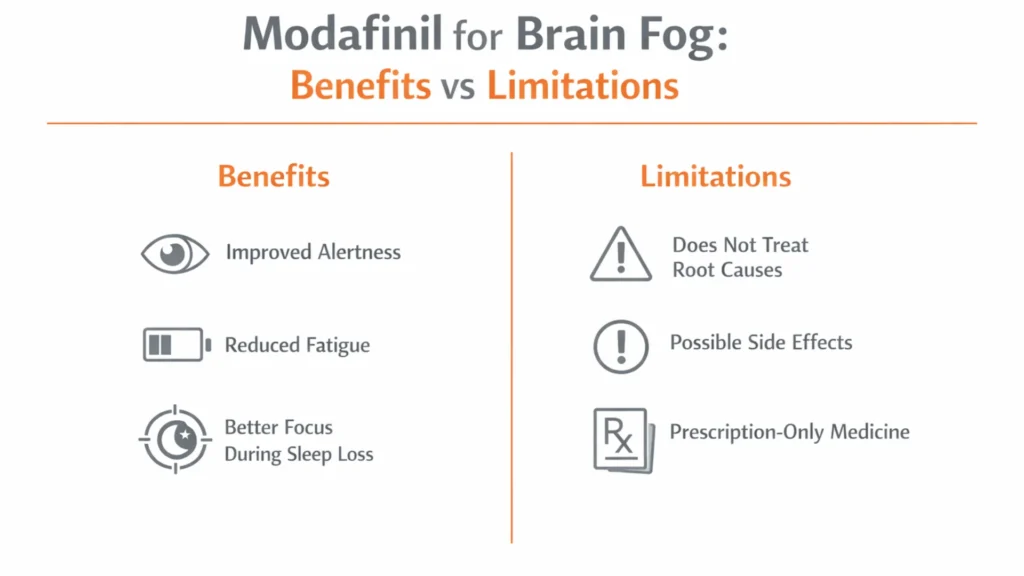
While modafinil is well-studied, it has limitations—especially when used outside its approved indications.
Common Side Effects and Tolerance
Some users report headaches, anxiety, digestive discomfort, or sleep disruption. Over time, perceived benefits may decrease.
An official safety overview is provided in this resource on modafinil side effects and safety.
A practical breakdown is available in Everything You Need to Know About Modalert 200 mg Side Effects and How to Avoid Them
Why Modafinil May Not Resolve Brain Fog
Modafinil does not treat underlying contributors such as chronic stress, poor diet, inflammation, or hormonal imbalance.
Clinical context is explained in this article on why brain fog happens.
Key Takeaways
- Side effects can outweigh benefits
- Tolerance may develop
- Root causes often remain untreated
Safety, Legality, and Prescription Status (US, UK, AU)
Prescription-Only Classification
Modafinil is prescription-only in the United States, United Kingdom, and Australia due to safety and monitoring requirements.
UK prescribing information can be found through the electronic Medicines Compendium modafinil listings.
Risks of Unsupervised Use
Using modafinil without medical oversight increases the risk of side effects, drug interactions, and masking underlying conditions.
Key Takeaways
- Prescription-only in all three regions
- Not legally sold over the counter
- Medical supervision is essential
Safer Alternatives to Modafinil for Brain Fog
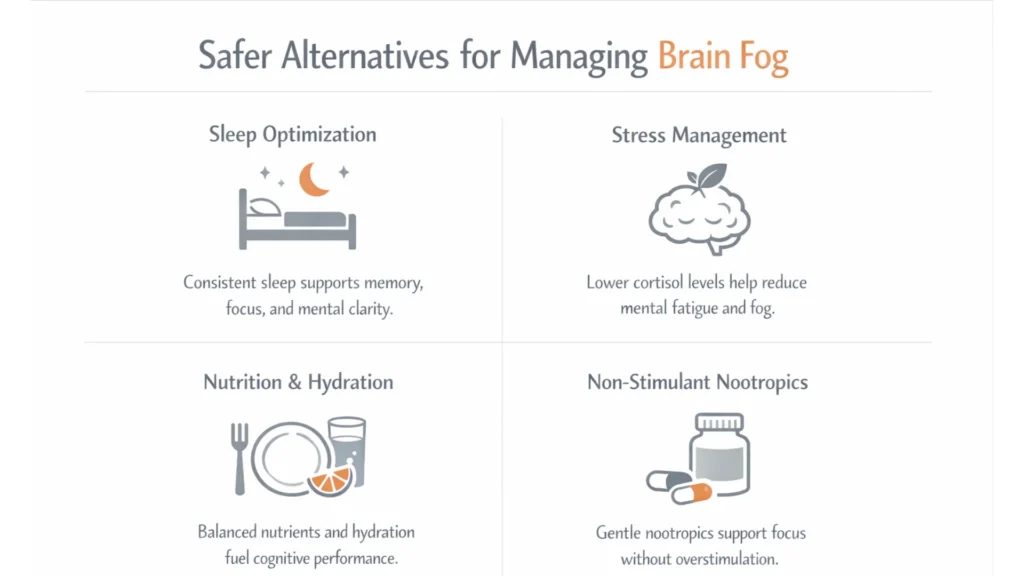
For many individuals, gentler strategies may offer more sustainable cognitive support than modafinil for brain fog.
Nootropics and Cognitive Supplements
Certain nootropics focus on nutritional support and stress modulation rather than stimulation.
Educational product options are available in the nootropics category.
A non-stimulant comparison is discussed in Adrafinil vs Modafinil – Key Differences, Effects & What to Choose.
Non-Pharmaceutical Strategies
Foundational approaches remain essential:
- Consistent sleep routines
- Balanced nutrition and hydration
- Stress management and physical activity
Key Takeaways
- Gentler options suit long-term use
- Lifestyle factors strongly influence cognition
- Supplements work best as part of a holistic plan
Choosing the Right Approach for Mental Clarity
When Professional Advice Is Needed
Persistent or worsening brain fog should be evaluated by a qualified healthcare professional.
Matching the Solution to the Cause
The most effective strategy targets the underlying contributor—sleep, stress, nutrition, or medical conditions.
Key Takeaways
- Individualized approaches work best
- Random experimentation is rarely effective
- Professional guidance improves outcomes
Frequently Asked Questions (FAQs)
It may help when brain fog is caused by fatigue, but it does not address all underlying causes.
Long-term use without medical supervision is not recommended.
In some individuals, anxiety or poor sleep may worsen cognitive symptoms.
No. It is prescription-only in the US, UK, and Australia.
Lifestyle changes, stress management, and selected nootropics are commonly explored.
Conclusion
Modafinil for brain fog may provide short-term relief when cognitive symptoms are primarily driven by fatigue, sleep deprivation, or disrupted sleep schedules. By promoting wakefulness and alertness, it can temporarily reduce the mental sluggishness that many people describe as brain fog. However, it is important to recognize that modafinil is not a cure-all. Its effects are largely symptomatic, and it does not address deeper contributors such as chronic stress, nutritional imbalances, inflammation, or hormonal changes.
Additionally, the potential for side effects, tolerance, and its prescription-only status limit the suitability of modafinil for long-term or unsupervised cognitive use. For individuals seeking sustainable mental clarity, a more balanced approach is often more effective. This includes optimizing sleep quality, managing stress, supporting brain health through nutrition, and considering non-stimulant nootropics as part of a broader wellness strategy.
Ultimately, the most effective way to manage brain fog is to match the solution to the underlying cause. In cases where symptoms persist or worsen, professional medical guidance remains essential. Thoughtful, informed decision-making—not quick fixes—offers the best path toward lasting cognitive clarity.
Medical Disclaimer
This comparison of Modalert vs Waklert is provided for educational purposes and reflects common user discussions within the UK nootropics community. In the United Kingdom, modafinil and armodafinil are classified as Prescription-Only Medicines (POM). They are licensed strictly for the treatment of narcolepsy and should only be used under the supervision of a GMC-registered physician. Using these medications off-label for “cognitive enhancement” or “focus” carries potential health risks, including cardiovascular strain and serious dermatological reactions. This guide does not provide medical advice or encourage the unlicensed importation of regulated substances. Always consult a healthcare professional before starting any new medication.
Author Note
This guide was authored and clinically reviewed by Paul Harris, PharmD, a Doctor of Pharmacy with over 15 years of experience in neuropharmacology and medication safety. His work focuses on helping readers understand how wakefulness-promoting agents affect cognitive health.