Medical Disclaimer
This educational comparison of modalert vs adderall and modalert vs vyvanse is provided for informational purposes only and is not medical advice. Modalert (modafinil), Adderall (amphetamine salts), and Vyvanse (lisdexamfetamine) are different medications with distinct effects and safety considerations. In many countries, including the United States and Australia, these medicines are regulated as prescription-only treatments.
If you are researching modafinil vs adderall or other wakefulness and ADHD medications, decisions about treatment should always be made with a qualified healthcare professional who can evaluate your individual health needs.
Many readers searching modalert vs adderall want to understand how these medicines differ in terms of focus, alertness, and clinical use. While they are often discussed together in productivity or attention-related conversations, these medications belong to different pharmacological classes and work through distinct mechanisms in the brain.
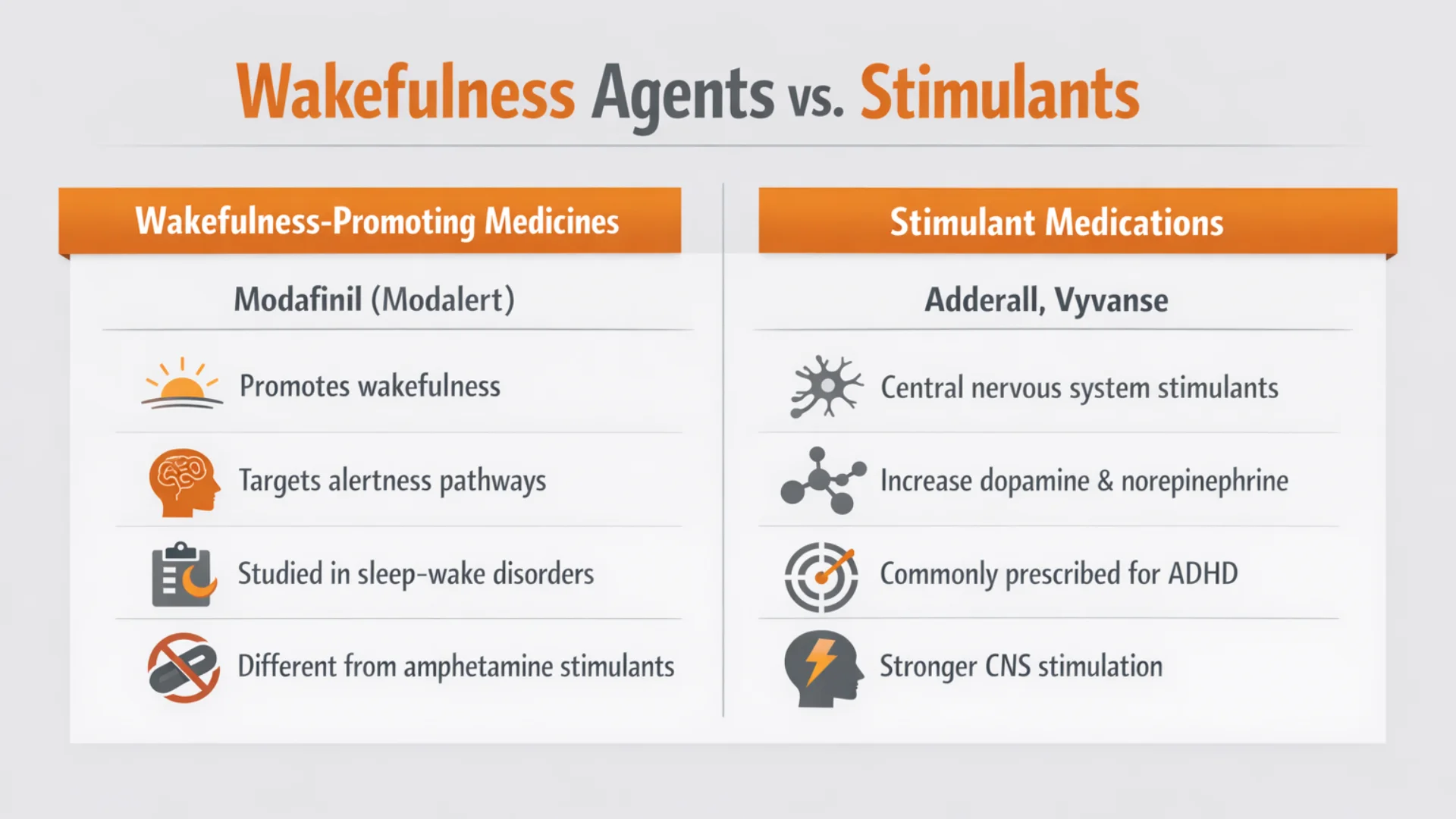
Modalert contains modafinil, a wakefulness-promoting compound studied primarily in sleep-wake disorders. In contrast, Adderall and Vyvanse are amphetamine-based stimulant medications most often prescribed for attention-deficit/hyperactivity disorder (ADHD).
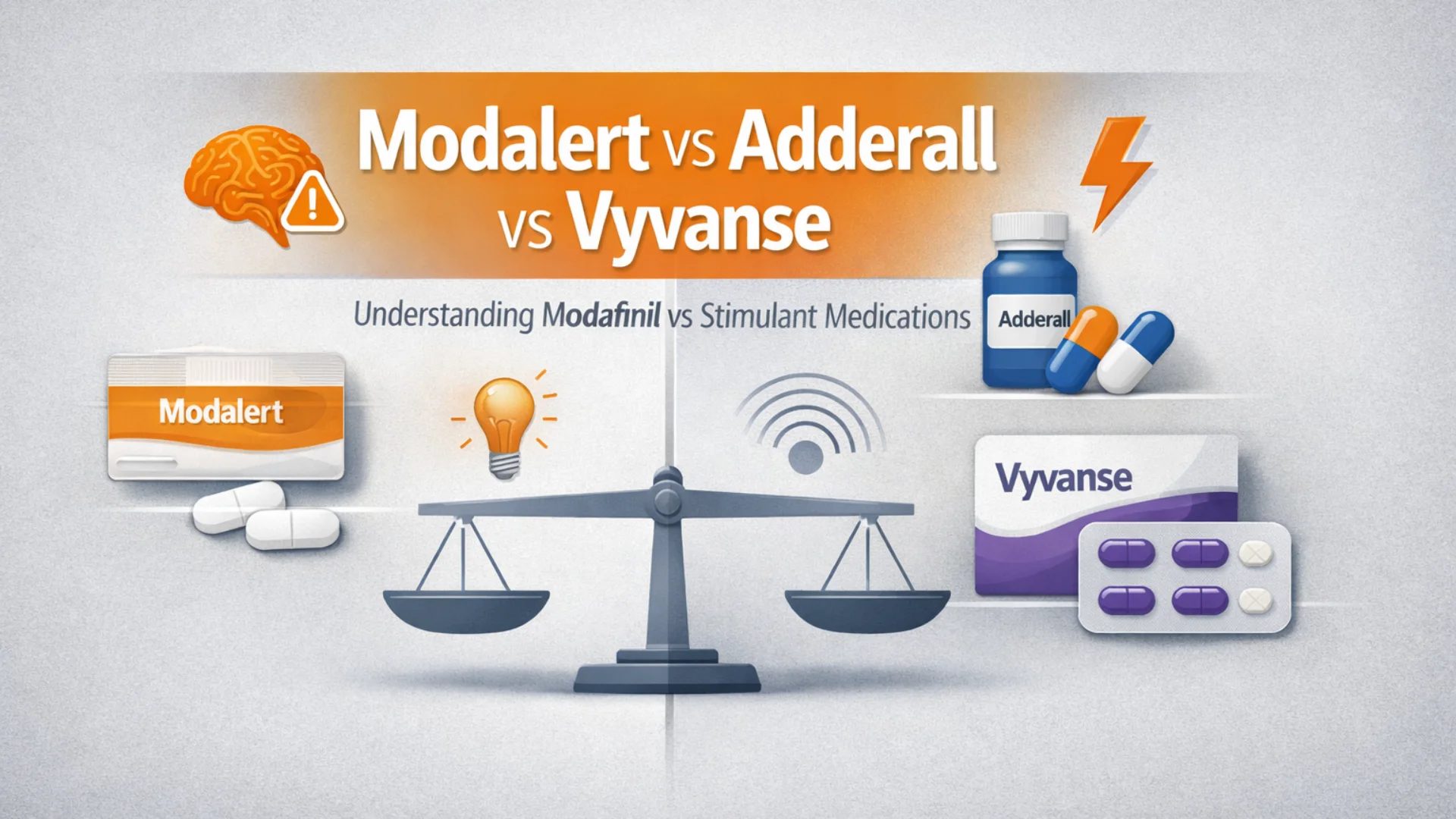
Because these medicines influence alertness through different neurological pathways, comparisons such as modafinil vs adderall, modalert vs vyvanse, and modafinil vs stimulant medications require proper context. Readers exploring the broader topic of modafinil medicines can review the detailed guide:
Modalert (Modafinil): Uses, Safety, Legality & Buying Guide.
Understanding how these medications differ in pharmacology, regulation, and clinical use helps explain why discussions around modalert vs adderall appear frequently in both medical and educational contexts.
Therefore, understanding these distinctions is essential when discussing modafinil vs stimulant medications.
What Is Modalert?
Modalert is a pharmaceutical formulation containing modafinil, a compound developed to promote wakefulness.
The medication is manufactured by Sun Pharmaceutical Industries and has been studied in relation to sleep-wake conditions associated with excessive daytime sleepiness, such as narcolepsy and shift-work sleep disorder.
Extensive clinical research on modafinil pharmacology can be explored through modafinil research publications on PubMed.
Unlike traditional stimulant medications, modafinil is not classified as an amphetamine. Instead, researchers believe it influences several neurological pathways related to alertness, including dopamine transport systems and hypothalamic wakefulness circuits.
Because of this pharmacological profile, modafinil is commonly described in clinical literature as a wakefulness-promoting agent rather than a conventional stimulant.
Readers comparing modafinil formulations may also find it helpful to explore:
Modalert vs Modvigil: Key Differences, Benefits, Side Effects & Where to Buy.
What Is Adderall?
Adderall is a prescription medication composed of mixed amphetamine salts, including dextroamphetamine and amphetamine.
It belongs to the category of central nervous system stimulant medications and is most commonly prescribed for the management of ADHD.
Stimulant medications work by increasing the activity of neurotransmitters such as dopamine and norepinephrine, which play important roles in attention regulation, impulse control, and executive function.
By influencing these signaling pathways, stimulant medications can support attention regulation in individuals diagnosed with ADHD. Medical guidance on treatment approaches can also be reviewed through ADHD treatment guidelines.
Due to their pharmacological properties and potential for misuse, stimulant medications such as Adderall are often regulated as controlled substances in many healthcare systems.
What Is Vyvanse?
Vyvanse contains lisdexamfetamine, a compound categorized as a prodrug stimulant.
A prodrug means the medication is initially inactive and must be metabolized by the body to become active. After ingestion, lisdexamfetamine converts into dextroamphetamine, which then produces stimulant effects within the central nervous system.
This design was developed to provide a gradual activation process, which may influence the onset and duration of effects compared with some other stimulant medications.
Vyvanse is primarily prescribed for ADHD management, and in certain clinical contexts it may also be used for other physician-guided indications.
Like other amphetamine-based medications, Vyvanse is typically regulated under prescription-only frameworks in most countries.
Modafinil vs Amphetamine Stimulants
When examining modalert vs adderall or modafinil vs vyvanse, one of the most significant differences involves their pharmacological mechanisms.
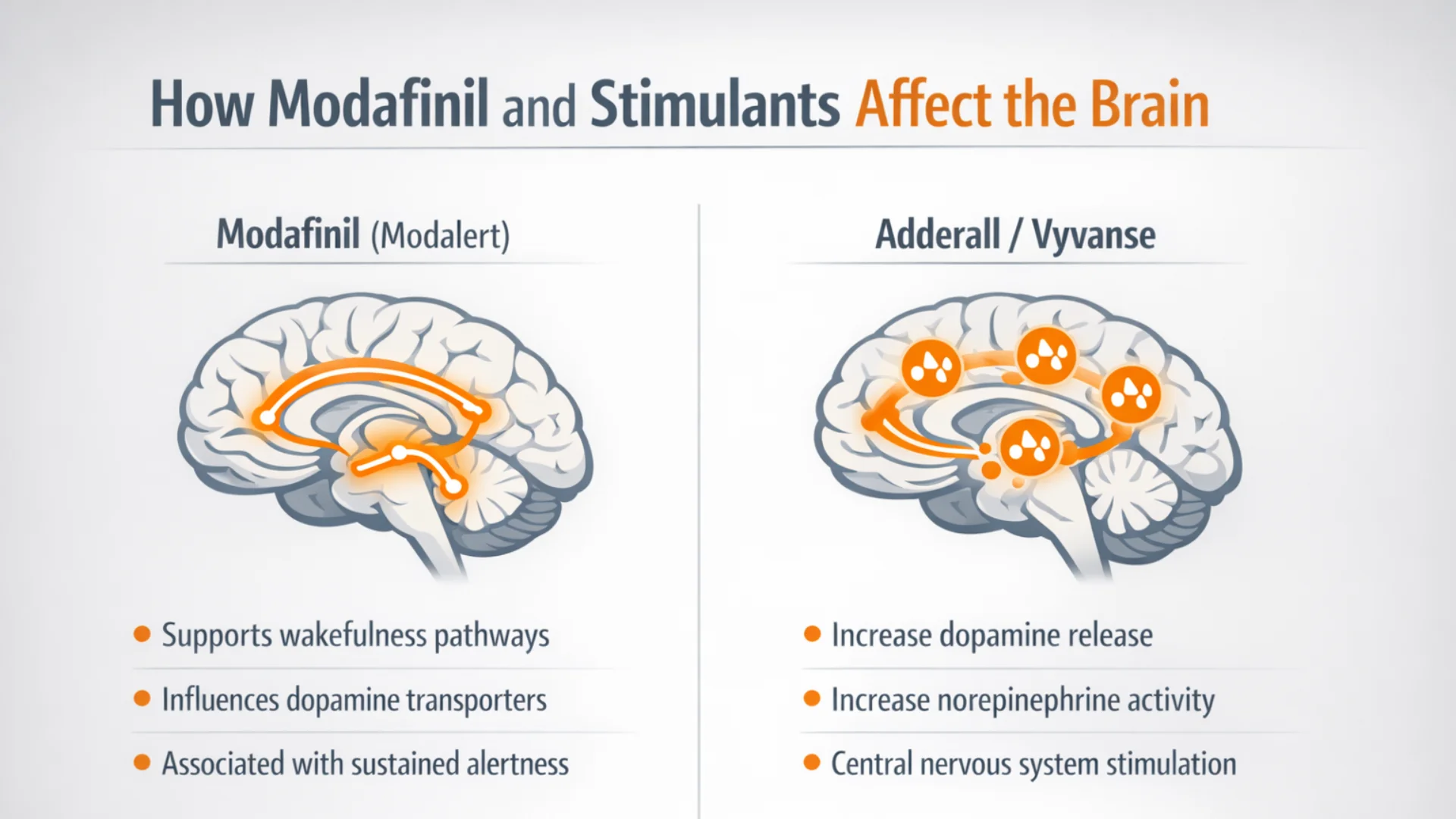
Amphetamine stimulants primarily increase dopamine and norepinephrine activity by:
- Promoting neurotransmitter release
- Inhibiting reuptake in nerve cells
This leads to broader central nervous system stimulation.
Modafinil, however, appears to influence multiple wakefulness-related systems. Research suggests involvement of dopamine transporters and hypothalamic pathways associated with alertness regulation.
Another important difference is pharmacokinetics, which refers to how a drug is absorbed, distributed, metabolized, and eliminated in the body.
Because these medicines belong to distinct drug classes, they are not considered interchangeable treatments.
Modalert vs Adderall vs Vyvanse: Differences in Effects
In many online discussions, people compare modalert vs adderall vs vyvanse based on perceived differences in alertness, focus, and duration.
Common comparison points include:
- Onset of effects
- Duration of wakefulness support
- Type of cognitive stimulation
- Subjective alertness
Some individuals describe modafinil-based medicines as supporting wakefulness and sustained alertness, while stimulant medications are often associated with stronger central nervous system stimulation.
However, responses to these medicines vary widely between individuals. Therefore, comparisons such as modafinil vs adderall or modalert vs vyvanse should always be interpreted within a clinical and diagnostic context.
Quick Comparison of Pharmacological Profiles
This table provides a simplified overview of the pharmacological differences between modafinil medicines and stimulant medications.
| Feature | Modalert | Waklert | Adderall / Vyvanse |
|---|---|---|---|
| Compound | Modafinil | Armodafinil | Amphetamine |
| Half-Life | 12–15 h | 15+ h | 10–13 h |
| Onset | 30–60 min | 60–90 min | 30–60 min |
| Effect | Wakefulness | Alertness | CNS stimulation |
| Context | Sleep-wake use | Long alertness | ADHD treatment |
| Best Place | View Modalert | View Waklert | Prescription Only |
Clinical Uses and Prescribing Context
Medical professionals prescribe these medicines for different clinical purposes, depending on the patient’s diagnosis and medical history.
Examples of conditions associated with these medications include:
- Narcolepsy
- Shift-work sleep disorder
- Attention-deficit/hyperactivity disorder (ADHD)
Wakefulness-promoting agents such as modafinil are commonly studied in relation to sleep disorders. Educational information about these conditions is available through the narcolepsy overview.
When selecting a treatment approach, physicians consider several factors, including:
- Diagnostic criteria
- Individual health history
- Potential medication interactions
- Cardiovascular considerations
Readers interested in safety discussions may also review:
Is Modafinil Bad for Your Heart? Side Effects, Risks & Safety.
Availability and Practical Considerations
Another reason individuals search for modalert vs adderall vs vyvanse relates to practical considerations such as availability, prescription requirements, and regulatory frameworks.
Amphetamine-based stimulant medications, including Adderall and Vyvanse, are typically classified as controlled substances in many countries. As a result, prescribing and dispensing procedures are often strictly regulated. These systems usually involve:
- Detailed physician evaluation
- National prescription monitoring programs
- Highly regulated pharmacy distribution networks
Modafinil-based medicines belong to a different pharmacological category, and their regulatory status can vary significantly between healthcare systems. For those researching specific brand-name formulations, Modalert 200mg is the most frequently cited reference for high-quality, branded modafinil produced by Sun Pharma.
Because regulatory frameworks differ between countries, patients researching modafinil medicines often explore reputable pharmaceutical sources that follow international manufacturing standards. Educational resources and product information about formulations such as Modalert 200mg are commonly referenced when discussing modafinil-based wakefulness medicines.
Safety and Side Effect Considerations
Both stimulant medications and wakefulness-promoting agents have potential side effects, and safety profiles may vary between individuals.
Examples described in clinical literature include:
- Headache
- Insomnia
- Appetite changes
- Cardiovascular considerations
Because amphetamine stimulants affect the central nervous system broadly, physicians often evaluate cardiovascular health and medical history before prescribing them.
Wakefulness-promoting medicines may involve different safety considerations but still require medical supervision.
Readers looking for a deeper overview can explore:
Modalert Side Effects: What to Know About Safety & Risks.
Regulatory Status
The regulatory classification of these medicines varies across countries.
Examples include:
United States
- Many stimulant medications are classified as Schedule II controlled substances
United Kingdom
- Both stimulant medications and modafinil are typically prescription-only medicines
Australia
- These medications are regulated within national prescription frameworks
Readers interested in global regulations can also review:
Is Modalert Legal? UK, US & Australia Regulations Explained.
Because of these frameworks, obtaining these medicines generally requires evaluation and authorization from a licensed healthcare professional.
Why These Medicines Are Often Compared
Despite their pharmacological differences, modalert vs adderall comparisons frequently appear online.
This happens because both medicines may influence alertness, wakefulness, and cognitive performance, even though they belong to different therapeutic categories.
Additionally, discussions about productivity, academic performance, and shift-work alertness often bring these medications into the same conversation.
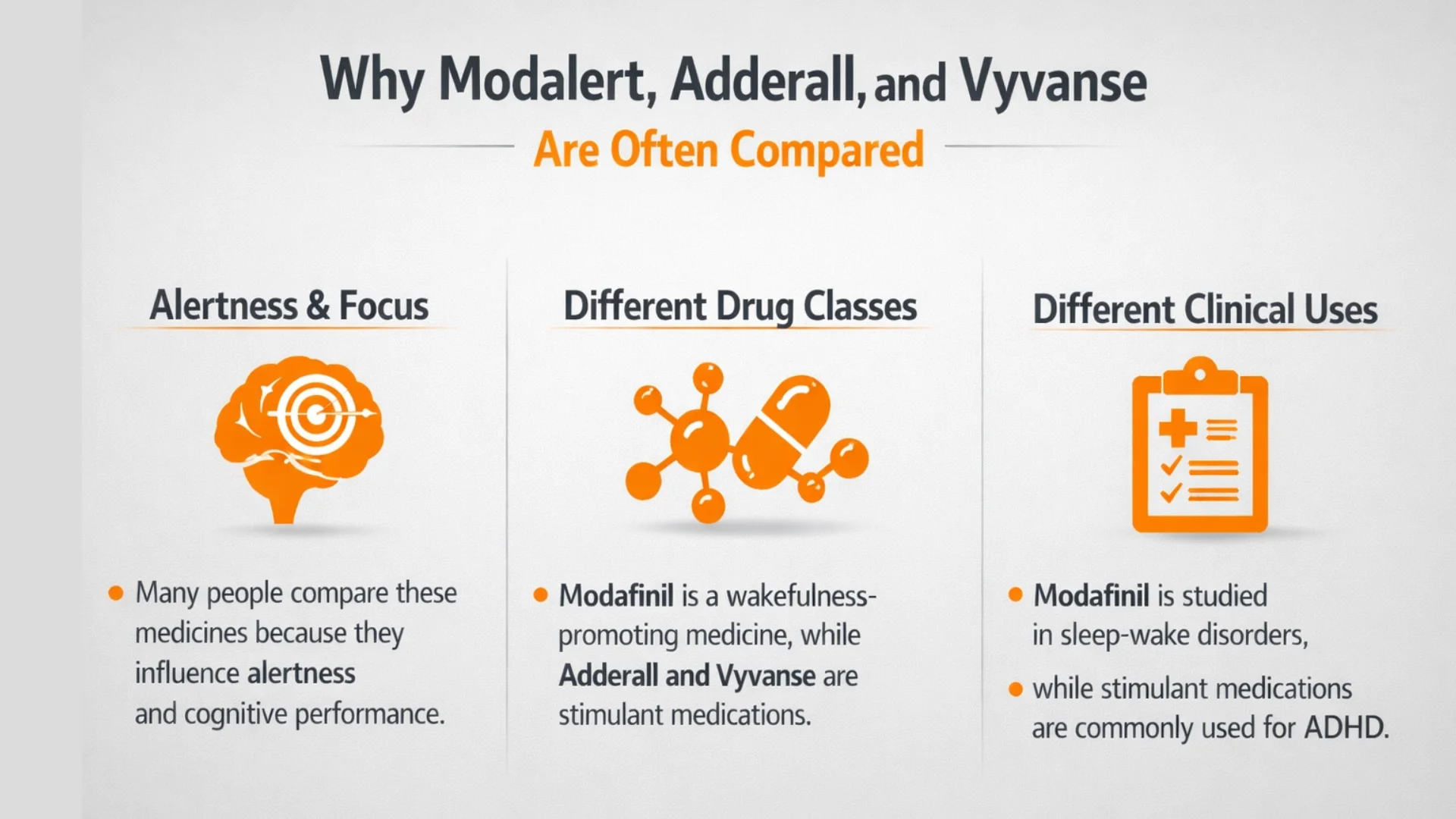
Understanding the differences between modafinil vs adderall, modafinil vs vyvanse, and modafinil vs stimulant medications helps clarify how each drug functions within modern clinical practice.
Frequently Asked Questions
Modalert contains modafinil, a wakefulness-promoting compound, while Adderall contains mixed amphetamine salts classified as stimulant medications. This difference explains why modalert vs adderall comparisons involve two separate pharmacological categories.
Modalert and Vyvanse influence alertness through different mechanisms. Vyvanse is an amphetamine-based stimulant, while modafinil belongs to a wakefulness-promoting drug class.
Modafinil is generally categorized as a wakefulness-promoting agent rather than a traditional central nervous system stimulant.
They are usually prescribed in different contexts. Modafinil is associated with sleep-wake disorders, while Adderall is commonly prescribed for ADHD.
They are often compared because both medicines may influence alertness and focus, even though they belong to different drug classes.
Conclusion
Comparisons such as modalert vs adderall or modalert vs vyvanse are common in discussions about focus and wakefulness. However, these medicines belong to distinct pharmacological classes and are used in different medical contexts.
Modalert contains modafinil, a wakefulness-promoting compound studied primarily in sleep-wake disorders. Adderall and Vyvanse are amphetamine-based stimulant medications commonly prescribed for ADHD.
Because these medicines operate through different neurological mechanisms and regulatory systems, they are not interchangeable treatments.
Ultimately, treatment decisions should always be guided by medical evaluation, diagnosis, and professional supervision. Understanding the distinctions between modalert vs adderall, modafinil vs stimulant medications, and related comparisons helps provide clearer insight into their roles in modern pharmacology.
Key Takeaways
- Modalert contains modafinil, a wakefulness-promoting compound.
- Adderall and Vyvanse are amphetamine stimulants used primarily for ADHD treatment.
- Modafinil and stimulant medications work through different neurological pathways.
- Regulatory frameworks for stimulant medicines are often more restrictive.
Comparisons like modalert vs adderall appear frequently because both medicines influence alertness and cognitive function.
Author Note
Paul Harris is a clinical pharmacologist specializing in central nervous system medications and wakefulness-promoting treatments. With a Doctor of Pharmacy (Pharm.D.) background and experience in both hospital and community pharmacy, he focuses on helping readers understand how different drug classes—such as modafinil-based medicines and ADHD stimulants—work within modern clinical practice. At GlobalPharmaCare.net, Paul writes evidence-based guides that explain the pharmacology, safety considerations, and regulatory differences between widely discussed medications.