
Medical Disclaimer
This modalert vs waklert comparison is provided for educational and research purposes only. Modalert (modafinil) and Waklert (armodafinil) are distinct compounds with different pharmacological and pharmacokinetic properties. In many countries, including Australia, they are classified as prescription-only medicines. Any decisions about their use or switching between them should be discussed with a qualified healthcare professional. This article does not provide medical advice or treatment recommendations.
Wakefulness-promoting medications are frequently discussed in research related to sleep-wake disorders and cognitive alertness. Two widely recognized medicines in this category are Modalert and Waklert, both produced by Sun Pharmaceutical Industries. Although they are often mentioned together, the two medicines are not identical. Modalert contains modafinil, while Waklert contains armodafinil, a related but chemically distinct compound.
In many countries, these medicines are prescription-only wakefulness-promoting agents used within clinical settings to support individuals with specific sleep-wake disorders. Researchers and healthcare professionals often compare them because they share a similar therapeutic role but differ in pharmacological structure and behavior. For readers seeking broader background information about modafinil medicines, our Modalert (Modafinil) guide provides additional context on safety, history, and regulatory considerations.
This article examines modalert vs waklert, including their pharmacology, duration of effects, and the research context surrounding these medicines. Understanding the difference between modalert and waklert can help readers interpret medical literature and discussions related to modafinil vs armodafinil in clinical research.
What Is Modalert?
Modalert is a brand formulation of modafinil, a wakefulness-promoting compound widely discussed in medical literature on alertness and sleep-wake regulation. Research often examines modafinil in relation to disorders associated with excessive daytime sleepiness.
Manufactured by Sun Pharmaceutical Industries, Modalert belongs to a class of medicines sometimes referred to as eugeroics, meaning agents that promote wakefulness without acting in the same manner as traditional stimulants. Although modafinil has been extensively studied, its precise mechanism of action remains only partially understood.
Research suggests modafinil interacts with multiple neurotransmitter systems in the brain. For example, it may influence dopamine pathways associated with alertness and cognitive wakefulness. Additional clinical information about the compound can be found in this reference on modafinil drug information.
Because of its central nervous system activity, modafinil-based medicines are commonly classified as prescription treatments in many countries and are typically used under medical supervision.
Key Points
- Modalert contains modafinil, a wakefulness-promoting compound
- Manufactured by Sun Pharmaceutical Industries
- Discussed in research related to excessive daytime sleepiness
- Mechanism of action involves several neurotransmitter pathways
What Is Waklert?
Waklert is a brand of armodafinil, a compound closely related to modafinil but chemically more refined. Armodafinil represents the R-isomer of modafinil, meaning it contains only one of the two mirror-image molecular structures found in the original compound.
Like Modalert, Waklert is also produced by Sun Pharmaceutical Industries and belongs to the same general class of wakefulness-promoting medicines. Because armodafinil contains only the longer-acting isomer, some pharmacological discussions suggest it may provide a more sustained wakefulness profile in certain individuals.
Clinical discussions surrounding waklert vs modalert often focus on this structural difference and its potential influence on pharmacokinetics such as absorption and elimination. Readers interested in detailed pharmacology can review additional data in armodafinil drug information.
Key Points
- Waklert contains armodafinil, a purified isomer of modafinil
- Designed to deliver a potentially longer-lasting wakefulness profile
- Manufactured by Sun Pharmaceutical Industries
- Often examined in research comparing armodafinil vs modafinil
Modafinil vs Armodafinil Pharmacological Difference
To fully understand modalert vs waklert, it is helpful to examine the chemical difference between modafinil and armodafinil.
Modafinil consists of two molecular mirror images:
- R-isomer
- S-isomer
Both exist together in equal proportions within the modafinil molecule.
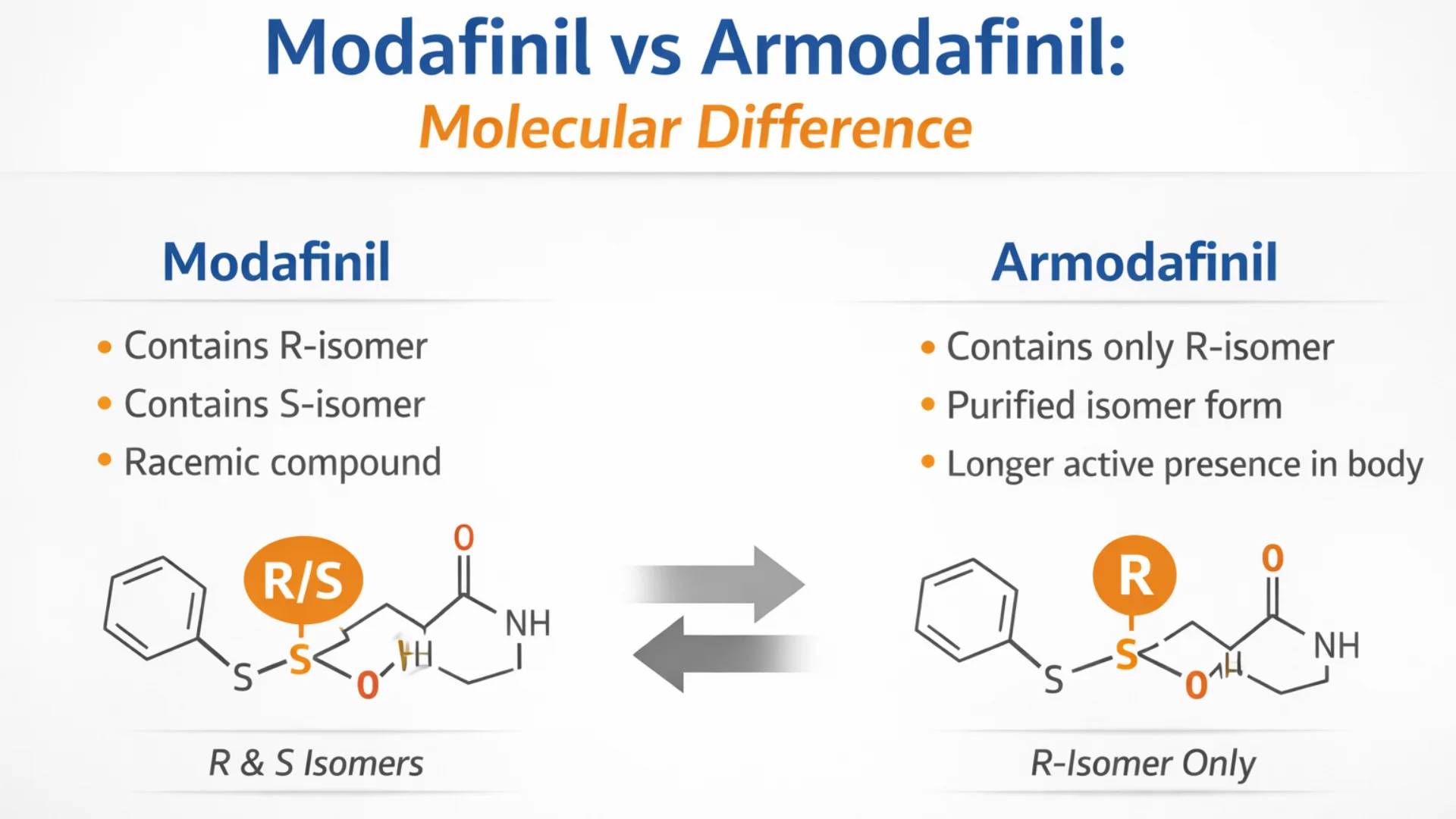
Armodafinil, by contrast, contains only the R-isomer, which researchers believe remains active in the body longer. Studies examining the pharmacokinetics of armodafinil and modafinil suggest that the R-isomer maintains active plasma concentrations for an extended period compared with the S-isomer.
Simplified Molecular Comparison
- Modafinil = R-isomer + S-isomer
- Armodafinil = R-isomer only
The S-isomer tends to be metabolized more quickly, whereas the R-isomer remains active longer. As a result, removing the shorter-acting component may contribute to the extended duration sometimes associated with armodafinil.
However, responses to these compounds vary widely between individuals, which is why clinical comparisons of modafinil vs armodafinil often emphasize variability in outcomes.
Modalert vs Waklert Duration and Effects
One of the most commonly discussed aspects of modalert vs waklert is the duration of wakefulness-promoting effects.
Pharmacokinetic research indicates that armodafinil-based medicines may maintain active plasma levels slightly longer than modafinil in some individuals. Because Waklert contains only the longer-acting isomer, some discussions suggest it may support wakefulness later into the day.
When comparing waklert 150 vs modalert 200, discussions usually focus on pharmacokinetic characteristics rather than assuming a direct equivalence between strengths. For example, readers reviewing modafinil formulations may encounter products such as Modalert 200 mg tablets in clinical discussions of modafinil brands.
Key Pharmacokinetic Factors
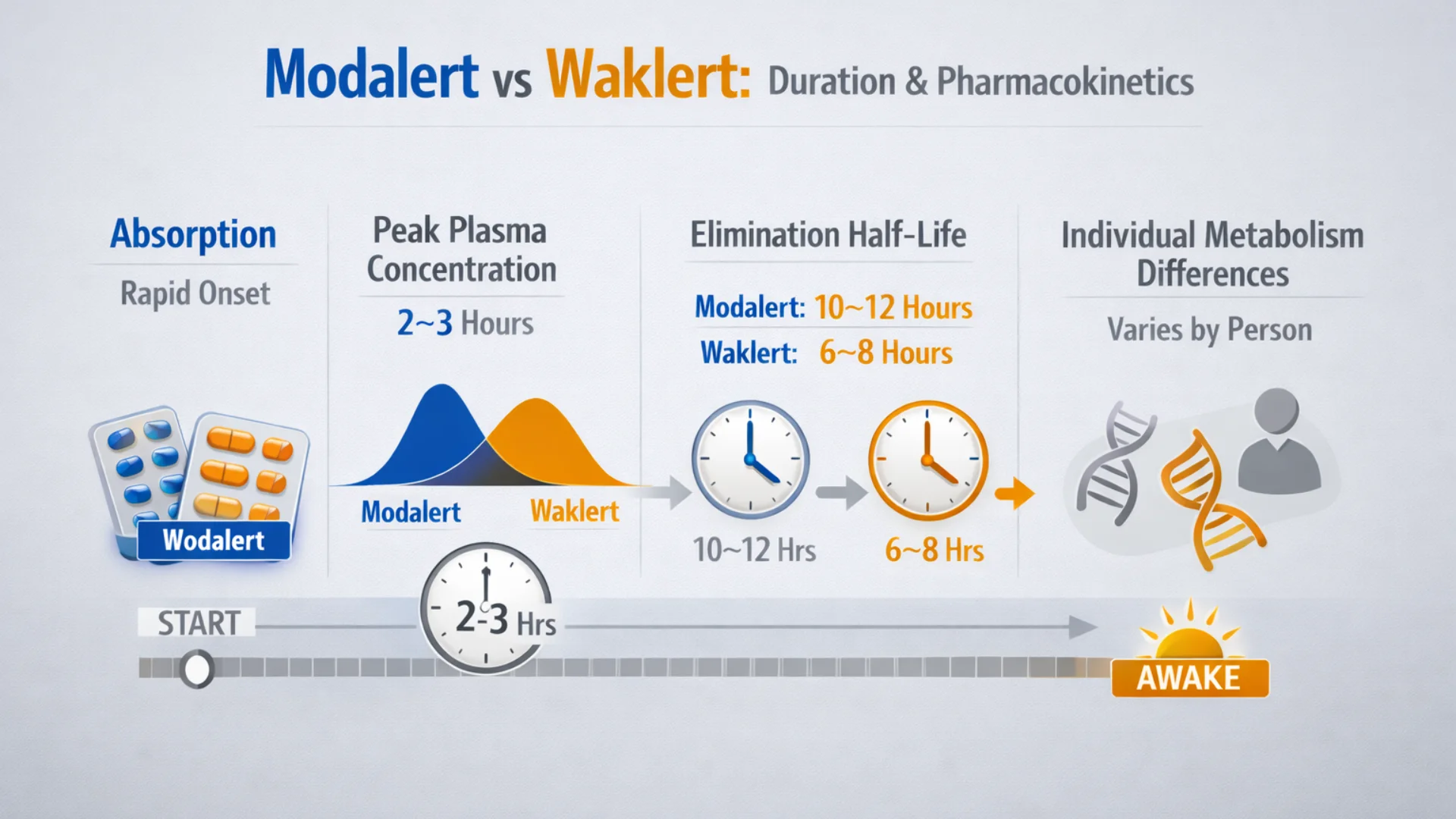
Several pharmacokinetic variables influence how these medicines behave in the body:
- Absorption rate
- Peak plasma concentration timing
- Elimination half-life
- Individual metabolism
Therefore, comparisons of modalert or waklert often emphasize variability rather than assuming identical effects across individuals.
For readers exploring additional comparisons among modafinil formulations, our article on modalert vs modvigil examines another commonly discussed brand comparison.
Research and Clinical Evidence
Both modafinil and armodafinil have been studied in numerous clinical trials focused on sleep-wake regulation and alertness.
Research on modafinil dates back several decades and often examines its role in conditions associated with excessive daytime sleepiness. For example, studies have explored wakefulness-promoting medicines in relation to:
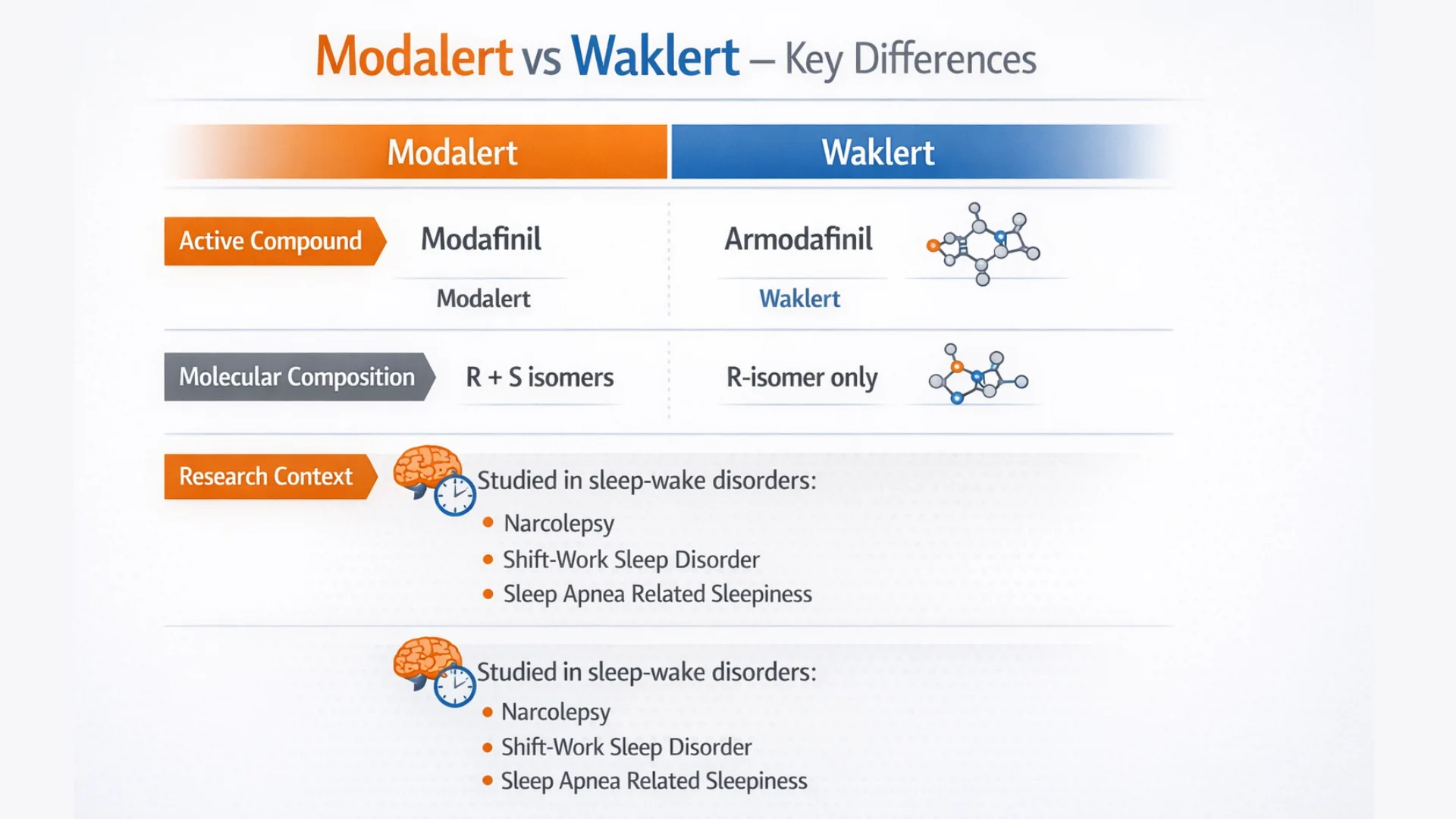
- Narcolepsy
- Shift-work sleep disorder
- Obstructive sleep apnea-related sleepiness
Readers can explore more information about sleep disorders such as narcolepsy in this narcolepsy overview resource.
In addition, researchers sometimes examine wakefulness-promoting medicines in broader fatigue-related contexts. Some discussions reference potential management approaches outlined in treatment options for chronic fatigue syndrome resources.
Overall, clinical literature generally indicates that both compounds can promote wakefulness under controlled conditions. However, the magnitude and duration of effects vary among individuals.
Safety Profile Comparison
Safety considerations are an important part of any modalert vs waklert discussion.
Because both medicines affect the central nervous system, they share several similar safety considerations. Clinical reports and post-marketing data have identified commonly reported adverse reactions
Commonly Reported Reactions
These may include:
- Headache
- Nausea
- Insomnia
- Reduced appetite
- Anxiety or nervousness
Readers seeking a more detailed discussion can review our overview of modalert side effects for additional context.
Due to their neurological activity, these medicines are generally used under the supervision of a qualified healthcare professional when prescribed.
Regulatory Status
The regulatory classification of modafinil and armodafinil medicines varies internationally.
In many countries, medicines containing these compounds are categorized as prescription-only medications because of their effects on the central nervous system. Regulatory authorities may impose restrictions on prescribing, dispensing, or importation depending on local medical frameworks.
Readers interested in international policy differences can explore our guide on is modalert legal, which explains how regulations vary across regions.
Modalert vs Waklert Which One Is Prescribed?
The decision between modalert vs waklert is typically determined through clinical evaluation rather than personal preference.
Healthcare professionals may consider several factors before selecting a wakefulness-promoting medicine:
Factors Influencing Prescribing
- The underlying sleep-wake disorder
- Patient response to previous treatments
- Potential side effects
- Coexisting medical conditions
Because individual physiology and metabolism differ, some patients may respond differently to modafinil compared with armodafinil.
Therefore, comparisons such as waklert vs modalert in clinical settings usually focus on pharmacological characteristics and patient response rather than declaring one universally superior.
Regional Considerations
Healthcare regulations and prescribing frameworks vary significantly between countries.
In some regions, modafinil-based medicines may be widely prescribed within sleep medicine practices, while other regions may apply stricter regulatory controls.
Readers interested in regional prescribing practices can review Modalert vs Waklert in the UK, which discusses how these medicines are addressed within UK regulatory frameworks.
Understanding these regional differences can help readers interpret global medical discussions around modafinil vs armodafinil.
Frequently Asked Questions
The main difference lies in their active compounds. Modalert contains modafinil, while Waklert contains armodafinil, which represents the R-isomer of modafinil. This structural difference may influence pharmacokinetics and duration of effects.
Research discussions typically focus on pharmacokinetic differences rather than labeling one as stronger. Armodafinil may remain active longer in some individuals, but responses vary.
Modafinil contains two isomers (R and S), while armodafinil contains only the R-isomer. Because the R-isomer persists longer in the body, armodafinil may produce a longer wakefulness profile in certain cases.
There is no universal answer. The choice between modalert vs waklert depends on medical evaluation, patient response, and clinical considerations.
Yes. In many countries, modafinil and armodafinil medicines are classified as prescription-only drugs because they affect the central nervous system.
Conclusion
Comparisons of modalert vs waklert often focus on the pharmacological differences between modafinil and armodafinil, two closely related wakefulness-promoting compounds.
Modalert contains modafinil, which includes both the R- and S-isomers of the molecule. Waklert contains armodafinil, the purified R-isomer that may remain active in the body for a longer period.
Research literature suggests that these structural differences may influence pharmacokinetics and the duration of wakefulness effects. However, individual responses can vary significantly, and the choice between modalert or waklert generally depends on clinical evaluation and patient-specific factors.
Overall, the modalert vs waklert comparison reflects the broader pharmacological distinction between modafinil and armodafinil rather than a simple difference in strength or effectiveness. For this reason, discussions of waklert vs modalert in medical literature usually emphasize pharmacology, research evidence, and clinical context rather than declaring one option universally superior.
Key Takeaways
Overall, understanding the pharmacological and structural differences between these compounds helps place modalert vs waklert discussions into proper clinical context.
- Modalert vs Waklert is primarily a comparison between modafinil and armodafinil.
- Modalert contains a mixture of two molecular isomers, while Waklert contains only the R-isomer.
- Armodafinil may maintain active plasma levels longer in some individuals.
- Both medicines are studied in the context of sleep-wake disorders such as narcolepsy.
- Regulatory status and prescribing practices vary between countries.
Author Note
About the Author Paul Harris, Pharm.D.
Paul Harris is a clinical pharmacologist specializing in neuropharmacology and enantiomer-based drug research. He holds a Doctor of Pharmacy (Pharm.D.) and has more than a decade of experience studying the pharmacokinetic differences between racemic medicines and their purified isomers. At GlobalPharmacare.net, Paul focuses on translating complex pharmacology into clear, evidence-based information for readers interested in sleep-wake research and medication science.